Almaty has officially been named host of the 2029 Asian Winter Games, replacing the Trojena ski resort in Saudi Arabia’s Neom mega development, after the original plans were indefinitely postponed amid growing concerns over finances, sustainability and construction timelines.
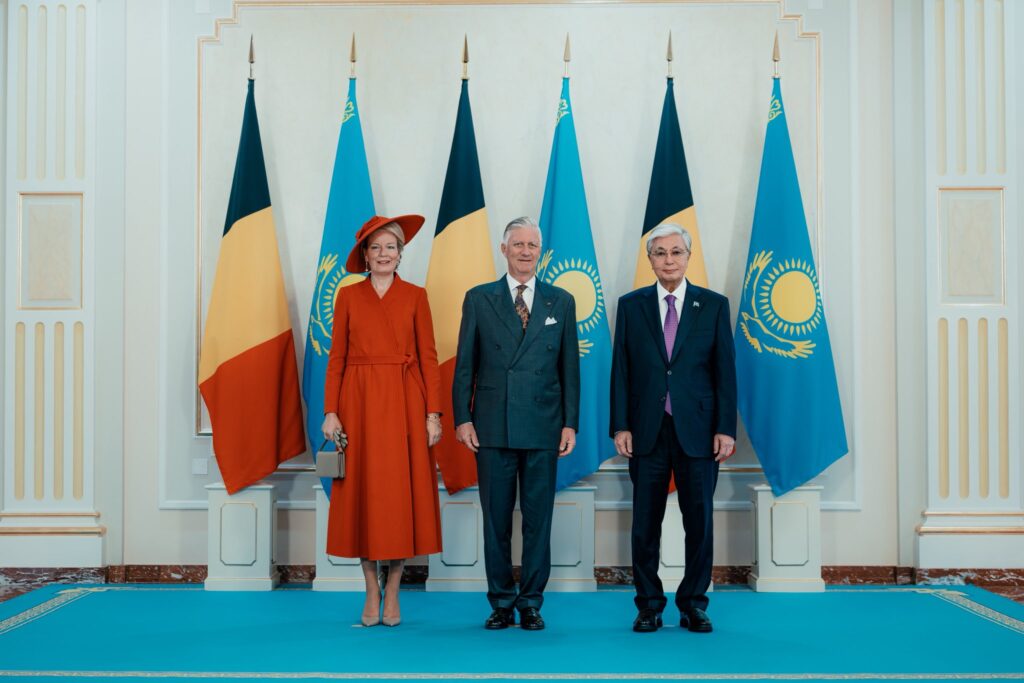
The announcement was made on Saturday, 7 December at a ceremony in Milan, where the Olympic Council of Asia confirmed that Kazakhstan’s largest city would stage the 10th edition of the Asian Winter Games in 2029. A Host City Contract was signed between the OCA and the National Olympic Committee of the Republic of Kazakhstan, formally completing the relocation process.
From desert ambition to alpine certainty
The 2029 Games were initially awarded in 2022 to Trojena, a futuristic year round mountain resort planned within the vast Neom project in north western Saudi Arabia. At the time, Neom’s leadership presented the event as a bold statement of intent, promising winter sports competitions “in the heart of the desert”.
Those ambitions soon encountered mounting challenges. As reported by Travel Tomorrow, Saudi Arabia and the OCA jointly announced last month that the Neom Games would be postponed for an unspecified period. While no single explanation was given, the decision followed months of questions surrounding financial feasibility, sustainability claims, safety considerations and the pace of construction.
Trojena delays and financial pressures
Trojena lies at the centre of Saudi Arabia’s Vision 2030 strategy, aimed at diversifying the kingdom’s economy away from oil through tourism, sport and technology. Masterplanned by German architecture studio LAVA and featuring designs by international firms including Zaha Hadid Architects, UNStudio and Aedas, the 60 square kilometre resort was envisioned as a year round destination powered by renewable energy and artificial snowmaking.
However, widespread reports of delays have cast doubt on whether the project could be completed in time. Neom itself is reportedly undergoing a broad internal review, with indications that costs are being reassessed and the workforce potentially reduced. Combined with falling oil revenues and other major commitments, including the Riyadh Expo 2030 and the 2034 FIFA World Cup, the postponement of the Asian Winter Games has been widely interpreted as a pragmatic recalibration.
Saudi officials have acknowledged as much. Finance Minister Mohammed Al Jadaan previously stated that “no ego” would dictate how national projects are evaluated, underlining the need to pivot when circumstances require.
Almaty’s proven winter sports credentials
For the OCA, turning to Almaty offers stability and experience. The city successfully hosted the Asian Winter Games in 2011 and already benefits from established venues, mountain infrastructure and organisational know how. Nestled at the foot of the Trans Ili Alatau mountains, Almaty enjoys reliable natural winter conditions, reducing dependence on large scale artificial interventions.
Winter sports remain a cornerstone of the city’s tourism offer, with nearby resorts such as Shymbulak and Ak Bulak positioning Almaty as a regional hub for skiing and alpine activities.

A city gaining global tourism recognition
Beyond sport, Almaty has been steadily strengthening its international tourism profile. As Travel Tomorrow reported earlier this year, the city received the Special Recognition Award for Tourism Innovation and Urban Transformation at the Global Tourism Forum 2025 in Brussels. The award highlighted Almaty’s progress in sustainable development, smart urban planning and liveability, reinforcing its reputation as the cultural and tourism capital of Kazakhstan.
Investments in green spaces, pedestrian areas, cycling infrastructure and digital tourism services have helped transform the city into a year round destination. Combined with expanded air connectivity from Europe and visa free access for many travellers, Almaty has become increasingly accessible to international visitors.
A symbolic shift for the Asian Winter Games
The relocation of the 2029 Asian Winter Games reflects a broader shift in approach. While Neom embodied a vision of technological spectacle and desert transformation, Almaty represents continuity, realism and existing capacity. For the OCA, the move restores certainty after months of uncertainty. For Kazakhstan, it provides an opportunity to reaffirm its place on the Asian sporting and tourism map.
Saudi Arabia, meanwhile, has indicated that it will continue to host other winter sports events on a smaller scale in the coming years. The 2029 Games, however, will now unfold against a familiar alpine backdrop, rather than an untested futuristic landscape.