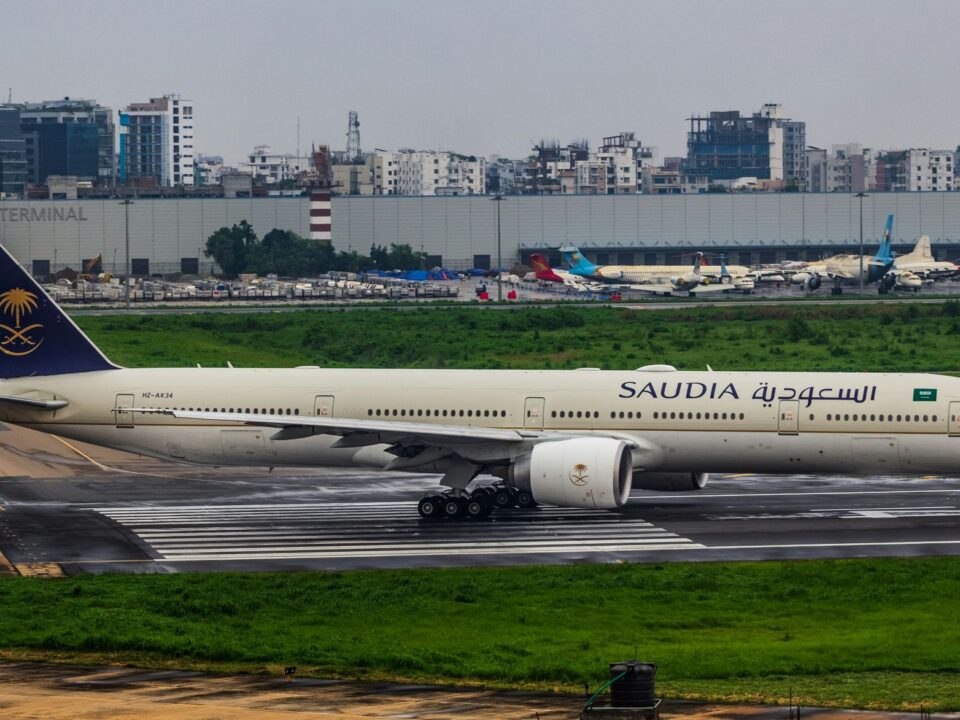
Dubai International is set to break a world record by becoming the first airport to handle 100 million passengers in a year, with figures recently released by the airport showing the Persian Gulf hub could pass the milestone as soon as late 2026.
First crowned the world’s busiest international airport back in 2014, the latest achievement is partly being attributed to a rise in arrivals for whom the Emirate city state is the final destination. Prior to 2019, the proportion of travellers who were transferring through Dubai, rather than starting or ending their journeys there, was as high as 60%. But post-COVID-19 growth in so-called O&D traffic (origin and destination) means 55% of passengers now begin or terminate their trip in Dubai, an Emirates hub.

The shift comes amid efforts to hit the Dubai Economic Agenda D33’s targets of becoming one of the world’s top five logistics hubs and doubling foreign trade by expanding connections to 400 new cities globally. That focus on connectivity continues with the rekindling of Austrian Airlines Vienna connection; new twice-weekly flights operated by FlyArystan from Aktau, Kazakhstan, Fly Jinnah from Lahore, Pakistan, and Varesh Airlines from Sari in Iran; alongside additional British Airways and Virgin Atlantic capacity from London Heathrow.
Meanwhile, huge investments in culture, tourism, and the Meetings, Incentives, Conferences, and Exhibitions (MICE) sector have seen Dubai develop a vibrant hospitality offer and a skyline of architectural interest, including the world’s tallest building, the Burj Khalifa, and the world’s tallest hotel, at Ciel Dubai Marina.

Robert Whitehouse, vice-president of research at Dubai Airports, said the latest data indicated the airport was well-buffered against global uncertainties and “reflects a balanced mix of inbound visitors, outbound travel from residents and the many people choosing to make Dubai their home.”
The trend of increasing O&D arrivals is also being seen at Abu Dhabi, Etihad’s base, where connecting flights have fallen to 50% of traffic, with destination arrivals driven by the same pivot from fossil fuel sales to culture and tourism, witness the recent inauguration of The Zayed National Museum and, in one of the most-anticipated openings in a while, the Guggenheim Abu Dhabi which is finally due to open its doors in 2026.
Doha, another of Dubai’s rivals, remains dominated by transfers, which represent a whopping 75% of traffic. For comparison, at least four other major international airports now have higher transfer proportions and therefore reliance, than Dubai. They are Amsterdam Schiphol (64%), Singapore Changi (63%), Frankfurt (48%), and Istanbul (48%).