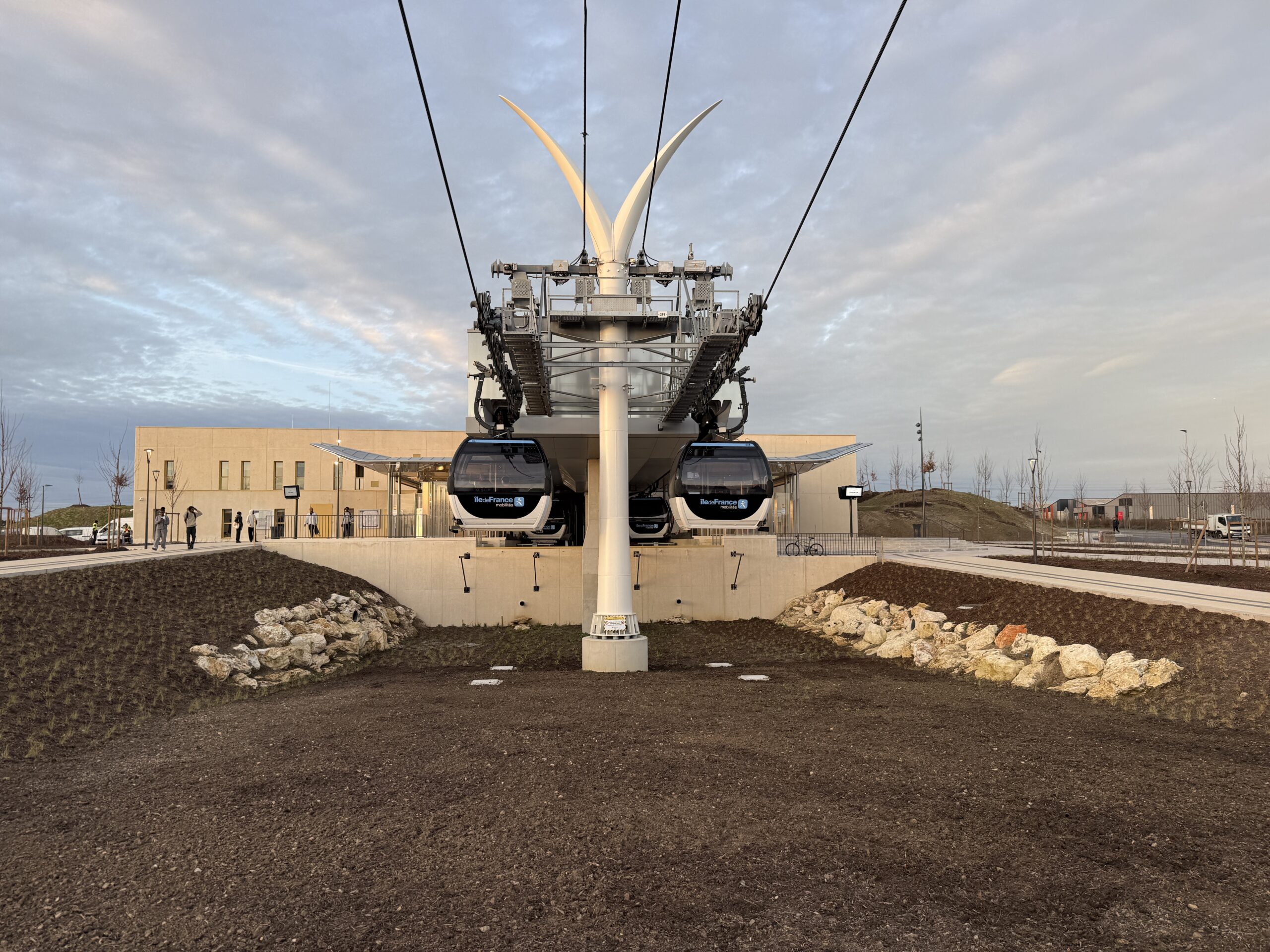



Paris has unveiled its new urban cable car system, which is now the longest of its kind in Europe. It is designed to connect some of the capital’s more isolated suburbs to the wider public transport network. The project primarily aims to ease the daily commute for residents travelling to employment hubs.
Already renowned for its extensive underground network, Paris is breaking new ground with the Paris Téléphérique, also known as the Câble C1, which carries passengers above the eastern edge of the city. The €138 million project took a decade to build and nearly 17 years to come to fruition from the time of its initial proposal. Valérie Pécresse, president of the Île-de-France region, famously described the process as “a ten-year obstacle course”.
🎆 J-10 pour les #BonnesRésolutions : en 2026, prenez de la hauteur !
— IDF Mobilités (@IDFmobilites) December 22, 2025
🚡 Vous n’avez pas encore testé le #CâbleC1, 1er téléphérique d’Île-de-France ?
De Créteil Pointe du Lac à Villeneuve-St-Georges en à peine 20 minutes : on monte, on traverse, on redescend… et on en prend… pic.twitter.com/wruWKxCJJf
Regional transport officials have defended the choice of a cable car over more traditional infrastructure. Grégoire de Lasteyrie, vice-president for transport at the Île-de-France regional council, said the system offered a far more affordable alternative to a new underground line. He noted that “an underground Métro would never have seen the light of day because the budget of more than a billion euros could never have been financed”.
Officially opened on 13 December, the line links the densely populated south-eastern Parisian suburb of Créteil to the working-class commuter town of Villeneuve-Saint-Georges, south of the capital, via five intermediate stops.
It is expected to significantly improve daily life in these long-underserved areas by cutting journey times of up to 40 minutes by car or bus to around 18 minutes, with cabins travelling at a speed of 22 km/h.
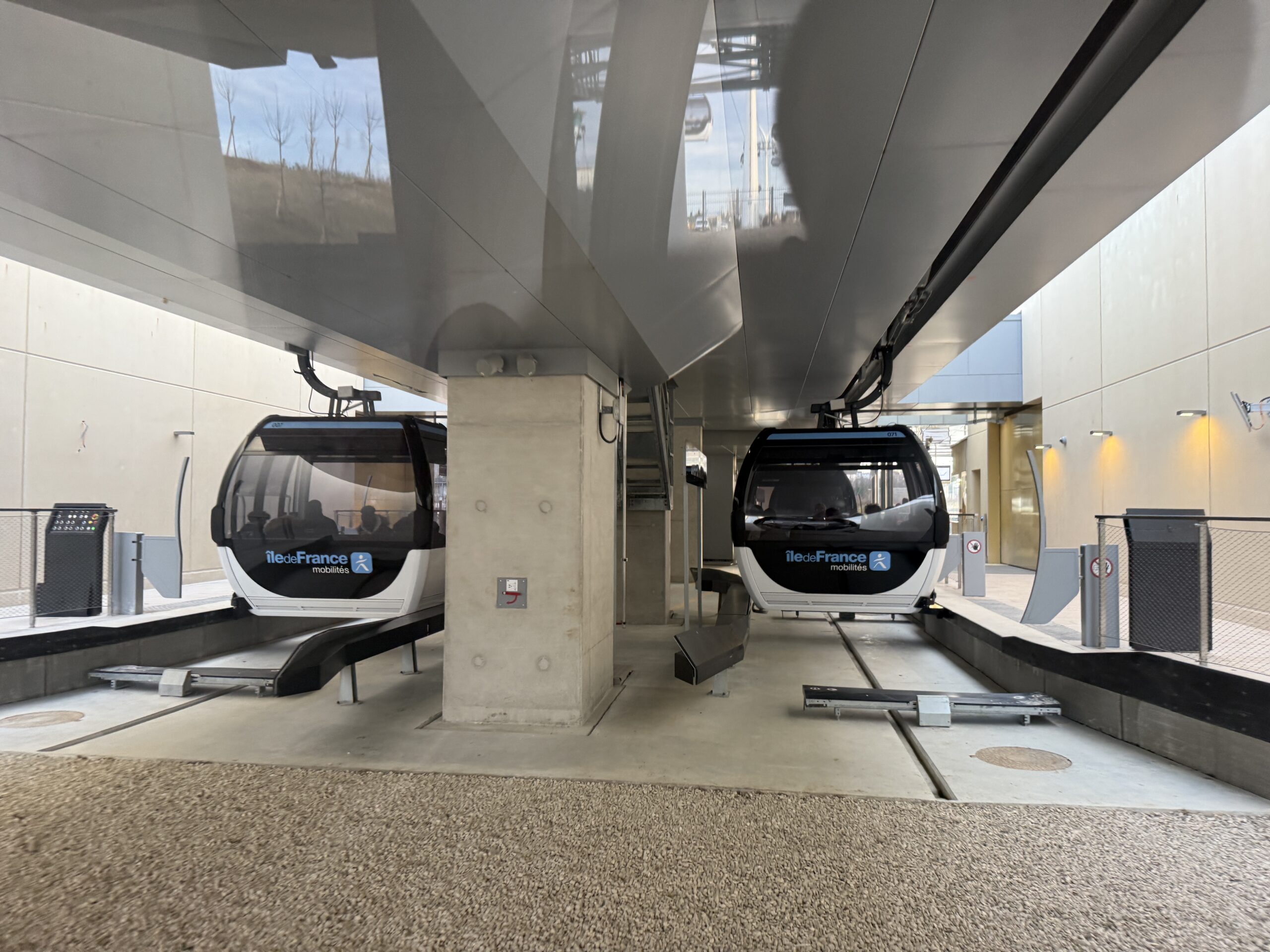
The line operates 105 gondolas, each of which can carry up to ten passengers. The line is fully accessible and can accommodate wheelchairs, pushchairs and bicycles.
Operating daily from 5:30 a.m. to 11:30 p.m., with a gondola departing every 23 to 37 seconds, the service is expected to carry around 11,000 passengers per day.
“This is a great step forward in terms of transport. The roads are often congested in the morning,” said Salimatou Bah, a resident of Limeil-Brévannes, speaking to Time Out. “We wondered if people would be hesitant, but I think it just takes a little time to adapt.”
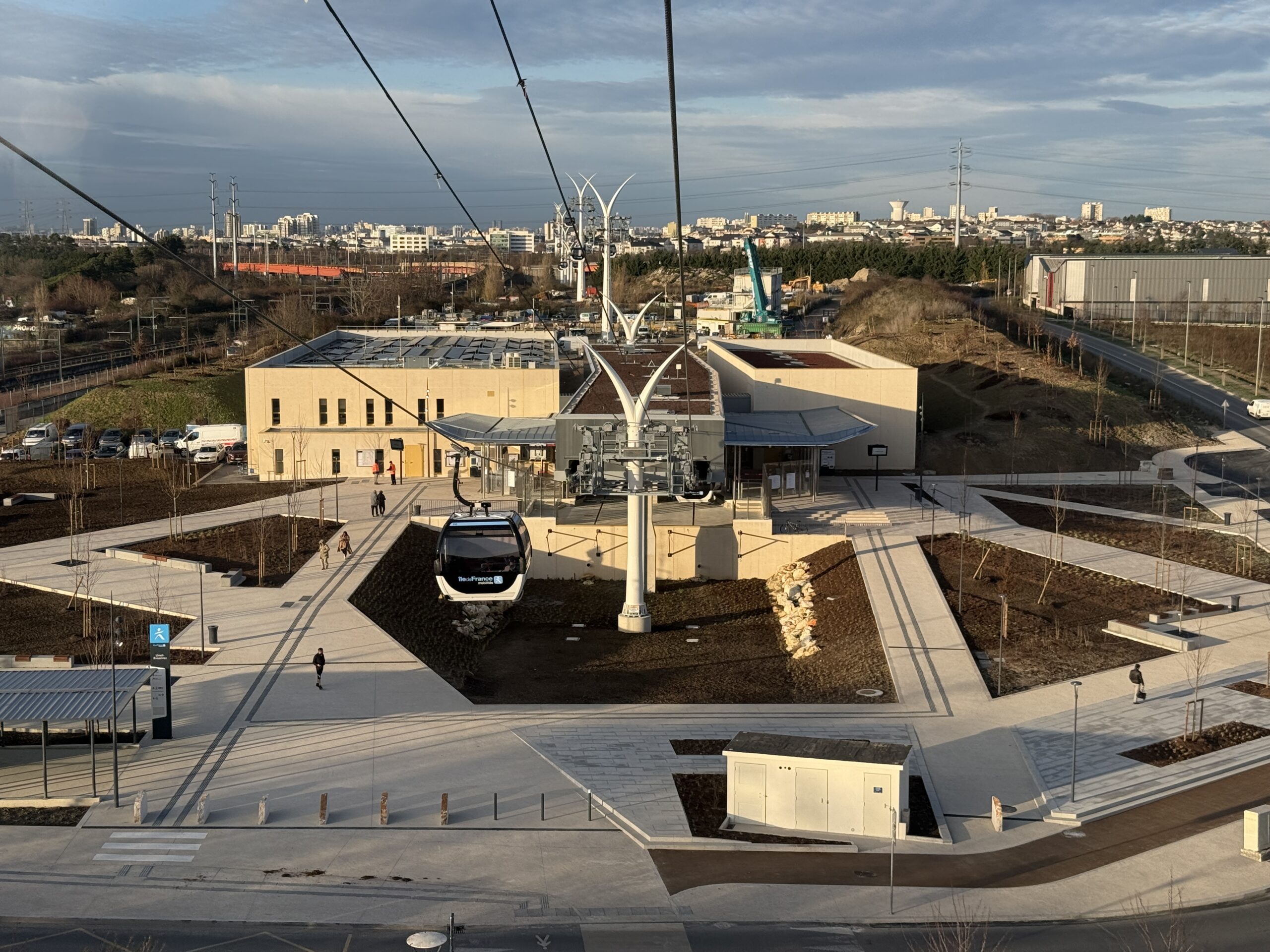
The cable car can be used with a standard Navigo travel pass, which is valid across Paris and the Île-de-France region, or with a single ticket priced at around €2.
In the event of technical issues, high winds exceeding 90 km/h, or the annual two-week maintenance period in August, a replacement bus service will operate, including overnight.
The line is operated by Transdev, an international transport company with operations across Europe, the UK, and the United States.
The Paris initiative has been broadly welcomed by transport experts as an innovative and potentially useful addition to the public transport network. UK specialists, however, do not see the idea being adopted across the Channel, cautioning that transport is not just about cutting travel times. A similar concept was proposed in the UK ahead of the 2012 Olympics, when London launched a cable car intended to ease daily commuting. It failed though to attract regular users and was later rebranded as a tourist attraction.
While the Paris system is the first urban cable car system of its kind in France, comparable networks have been operating successfully for years in cities such as La Paz and El Alto in Bolivia.