


A new project by cultural heritage experts in Uzbekistan is preserving the ancient sounds of rural communities in the double-landlocked nation for future generations.
Whether shepherd songs, the melodies heard at village festivities, or the drumbeats of local processions, the traditional music and instruments of the Central Asian republic are being captured or recreated for the digital record by researchers working with Uzbektelecom.
The “Ohang” initiative makes these haunting mountain calls and rhythms available to contemporary creatives who are increasingly seeking out inspiration from the Uzbek cannon but come up against barriers or labour under misperceptions about the origins of the folk music they hear.
“Non-specialists often confuse local motifs with Arabic, Azerbaijani, or Turkmen music,” said Uktam Khakimov, an Uzbek singer, musician, composer, and international performer who is an intangible cultural heritage specialist. “When searching on music stock platforms using queries like ‘Uzbek music,’ relevant results are often missing, or platforms suggest unrelated tracks.”
To address this, the new Ohang catalogue offers a free digital archive of Uzbekistan’s traditional music, embracing base melodies, rare instrument recordings, and samples in a one-stop, open resource.
“Our goal is to bring together the key traditional Uzbek melodies and make them accessible,” said a spokesperson for Uzbektelecom. “We want to share the musical culture of Uzbekistan and promote it among the younger generation.”
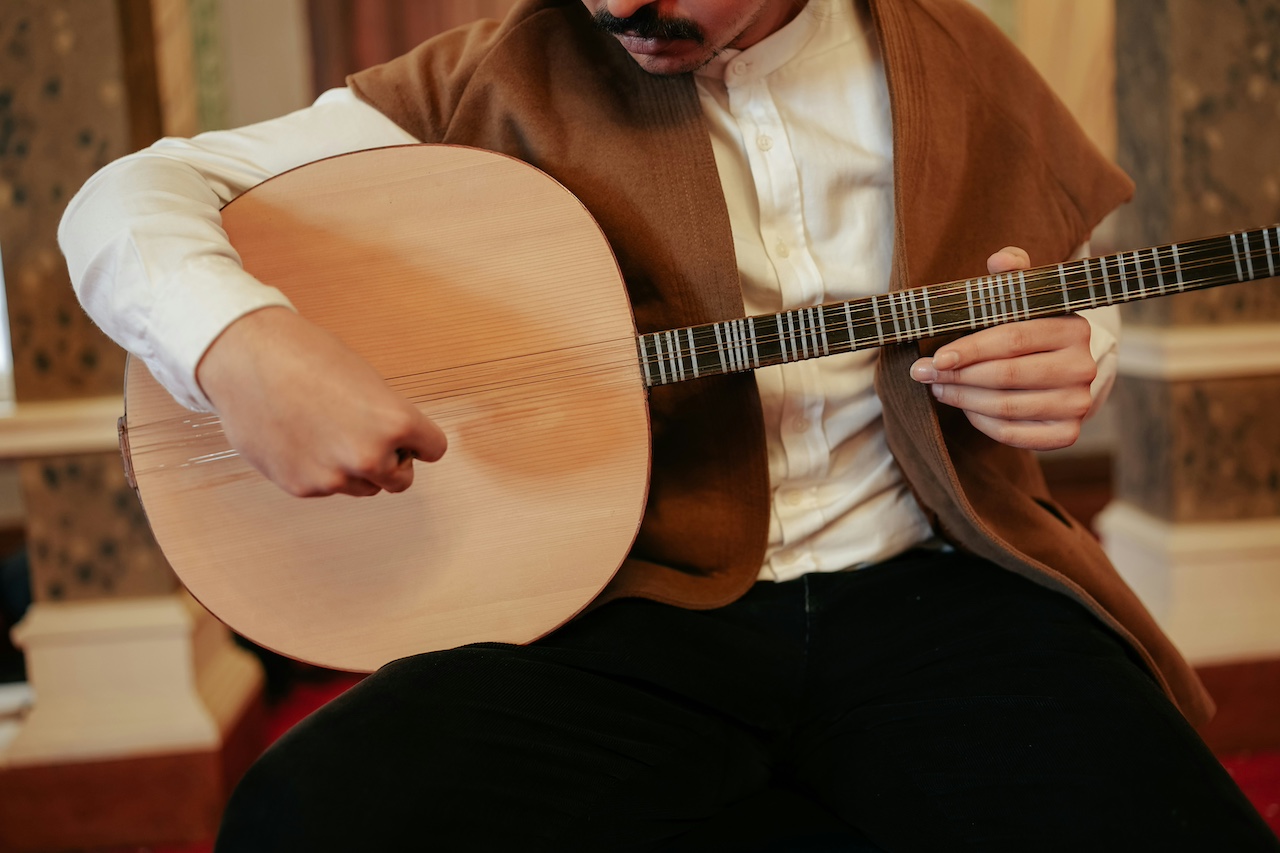
Musicians who still perform traditional pieces and artisan instrument makers have been brought together in a professional studio to deploy 24 traditional instruments and create a bank of over 200 recordings. These include the “gajir nay,” a “rare and distinctive” wind instrument made from the wing bone of a scavenger bird,” Khakimov explained.
As well as providing grist for the modern musical mill, Ohang aims to faithfully preserve the sound of traditional instruments, despite taking them out of their natural habitat. “For us, it was important that professional recording did not change the authentic sound,” Khakimov said. “We worked with sound engineers who understand how these instruments sound in real life.”
The project has also managed to capture for perhaps the first time material that has not been performed for around half a century and that might otherwise have passed out of human memory, such as “ancient surnay melodies,” Khakimov said, highlighting that “as far as we know, such recordings do not exist elsewhere.” He went on: “These recordings are important not only for creators, but also for future research.”
Future additions and interpellations are invited. The researchers hope that users of the platform will download and re-use tracks in video, film, music, or even promotional content—and perhaps undertake their own field expeditions to track down rare ancient grooves.
Material from initial field recordings will be launched officially on the platform in June 2026, but, as project coordinator Maftuna Abdugafurova says: “This is only the beginning.”