Two people broke their ankles, and a third person lost consciousness during a British Airways flight that encountered turbulence over the North Atlantic, a new air accident report has revealed.
The incident occurred en route from Los Angeles International to London Heathrow on 6 December 2024, as the aircraft, an Airbus A380, overflew Greenland at an altitude of 39,000 feet, according to an Air Accidents Investigation Branch (AAIB) document.
The affected flyers were one crew member and two passengers out of a manifest of 277 passengers and 24 crew. The crew member was injured about 20 minutes after the seat belt sign had been illuminated, just as she was attempting to strap herself into her seat. She was lifted into the air by the turbulence and broke her ankle when she fell to the floor.
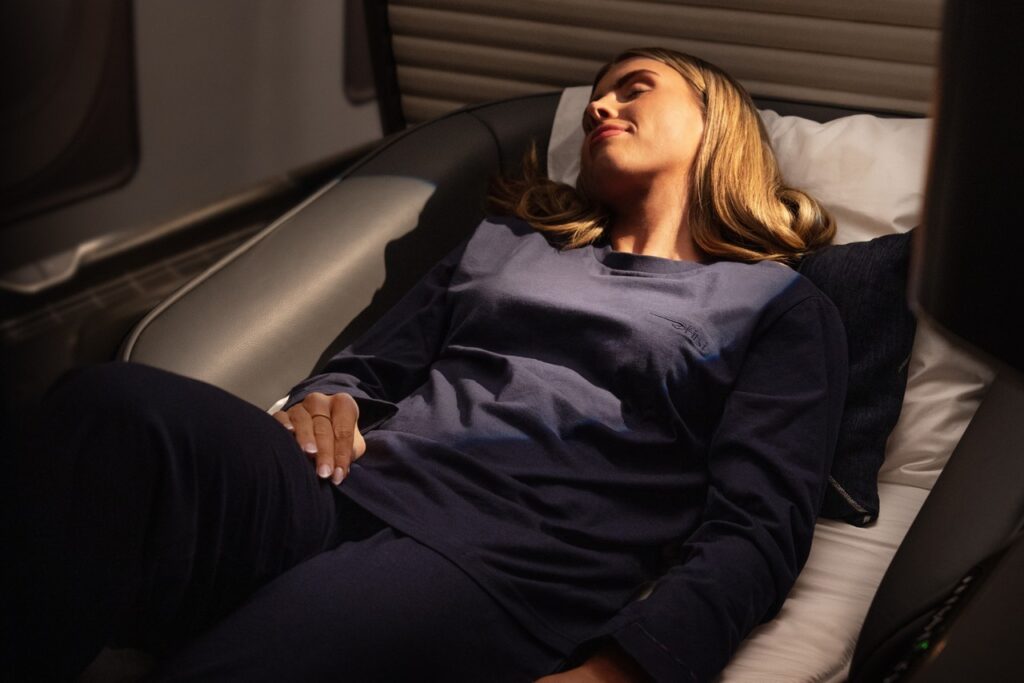
An upper deck passenger also broke an ankle in a similar way after leaving his seat to use the bathroom. The report said he had been sleeping when the seatbelt sign was turned on, and announcements were made and therefore did not realise the risk. The third passenger became unwell and passed out after the first two people were injured.
Two doctors who happened to be on board applied splints to the broken ankles and administered pain relief to the victims. The crew also used Medlink, a 24/7 medical guidance service for in-flight emergencies.
Although the captain explored the possibility of diverting to Gander in Canada or Keflavik in Iceland, weather issues and ice prevented an emergency landing at either destination. The plane therefore continued to Heathrow, using a “PAN-PAN” protocol which signals an urgent situation just below MAYDAY level. Ambulance crews met the aircraft on the tarmac and took the affected flyers to the hospital for further treatment.
Turbulence had not been predicted in pre-flight briefings, but after take-off, a live weather app used as part of the crew’s electronic flight bags warned of “potentially severe turbulence” south of Greenland. It was thanks to this that the pilot switched on the seat belt signs, saving more people from injury, the report said, noting: “Had the seat belt signs been off, more people might have been affected. The event highlights the benefits of live weather app technology and ground-based medical services in assisting with crew decision-making.” No technical issues were found to blame on the Airbus.
Experts forecast that air turbulence is likely to worsen with the ongoing effects of a warming planet and climate change. It is caused by changes in landscape, atmospheric pressure, and temperature, making some flight routes more susceptible than others. Storms, overflying mountainous landscapes and jet streams can be responsible. As warmer air holds more water and storms become more severe, air turbulence and the problems associated with it, including wear and tear on aircraft, are also likely to increase. But the British Airways incident reported here is one demonstration of how technology can help to mitigate the issue.