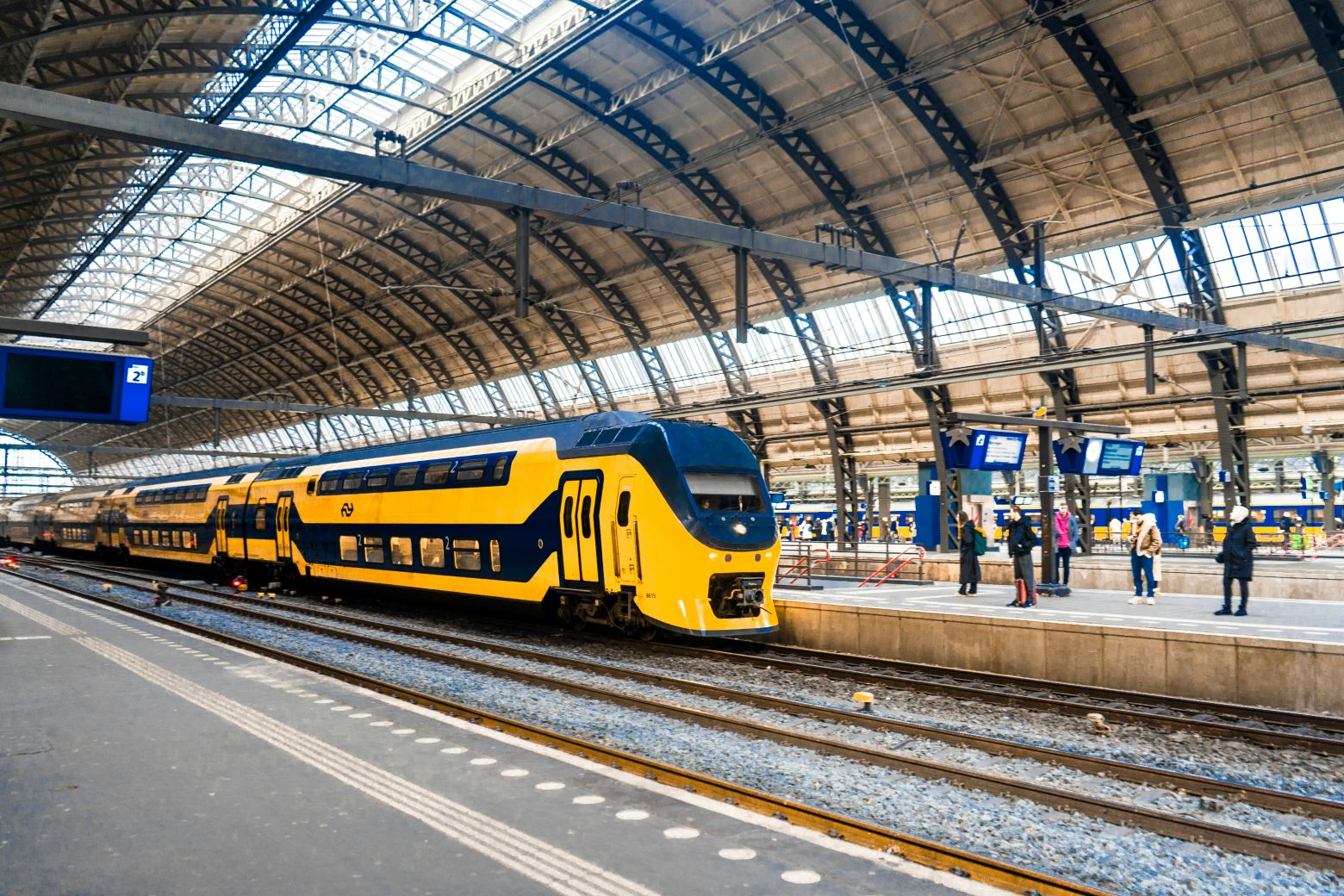

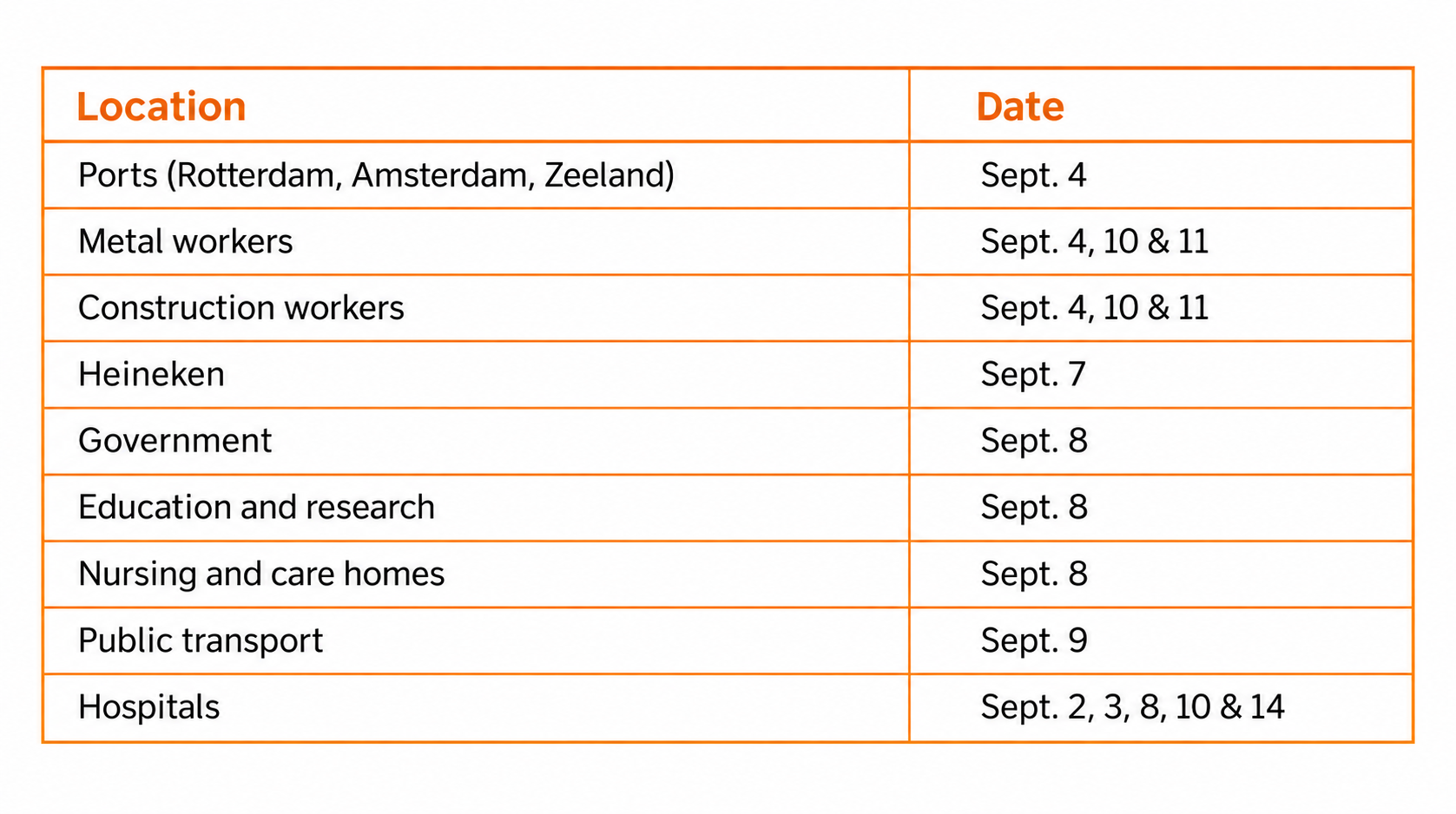
Dutch unions have announced a nationwide public transport strike for 9 September, which will bring most bus, tram, metro and rail services in the country to a halt, with only a small exception for transport to the airport.
Travellers planning to go to or cross the Netherlands using public transportation on that day should be ready with a plan B, as a major strike will freeze most services for 24 hours.
The strike, called by the Federation of Dutch Trade Unions (FNV) and the Christian National Trade Union Federation (CNV), is due to begin at 2 am on 9 September for NS and ProRail staff and end 24 hours later. Urban transport services will follow slightly different schedules.
The action was called to protest the government’s plan to cut social security spending, particularly unemployment and disability benefits.
Special provisions have been made for international air travellers, though, with four Airport Sprinter trains per hour running between Amsterdam Central, Schiphol airport and Hoofddorp. Travellers should expect extremely crowded carriages and should be prepared for delays and allow considerably more time to reach the airport.
This minimum service follows an earlier court injunction requiring rail access to Schiphol during strike actions. FNV also said it agreed not to treat the Schiphol service as strike work, allowing volunteers to operate the route during the stoppage.
International rail travellers will have no such luck. All major international services will be suspended in the Netherlands for the day, including Eurostar, EuroCity, EuroCity Direct, ICE and Nightjet trains.
Regional cross-border trains between the Netherlands, Belgium and Germany will not be operating either, with no Roosendaal–Antwerp service and no Liège–Aachen service.
No replacement buses will be provided to cover the stoppage as regional bus drivers will themselves be taking part in the strike.
In Amsterdam, public transport operator, GVB, will stop running services from 4am on 9 September. Buses, trams, metros and ferries will all be grounded for the remainder of the day.
Public transport will also be suspended in other major cities including Rotterdam and The Hague, while elsewhere in the country, services will either be cancelled or depend on staff availability.
FNV says the proposed cuts to unemployment and disability benefits would weaken the social safety net. Board member Henri Janssen said the plans “affect the livelihood of millions of workers and their families”, arguing that anyone can face illness, disability or involuntary unemployment.
Edwin Kuiper of FNV told Dutch broadcaster NOS that, because of the physically demanding nature of their work, public transport workers have an “above-average chance of requiring disability support”.
Top plan! Het 'Hermans 'netwerk' als 1e aanpakken. Weg met Sophie #ikbensophie en met Loek. Zou de staat veel belastinggeld. #Meavita #HBO hebben gescheeld. Corrumperende familie. #VVD https://t.co/aLwSI1MWnC
— Edwin Kuiper (@edwin_kuiper) June 26, 2026
Alternative transport modes – taxis or ride shares – taken on their own initiative, are no longer reimbursed by NS, since 4 September, when the previous allowance of up to €25 for replacement transport during strikes was scrapped. Affected travellers will have to get reimbursement for their pre-bought tickets via the Compensation for Delay refund scheme (Geld Terug bij Vertraging).
Travellers are advised to keep track of the situation through journey planning apps such as 9292 or NS, and where possible, work from home or make alternative travel arrangements.
Normal services are expected to resume on Thursday morning.