

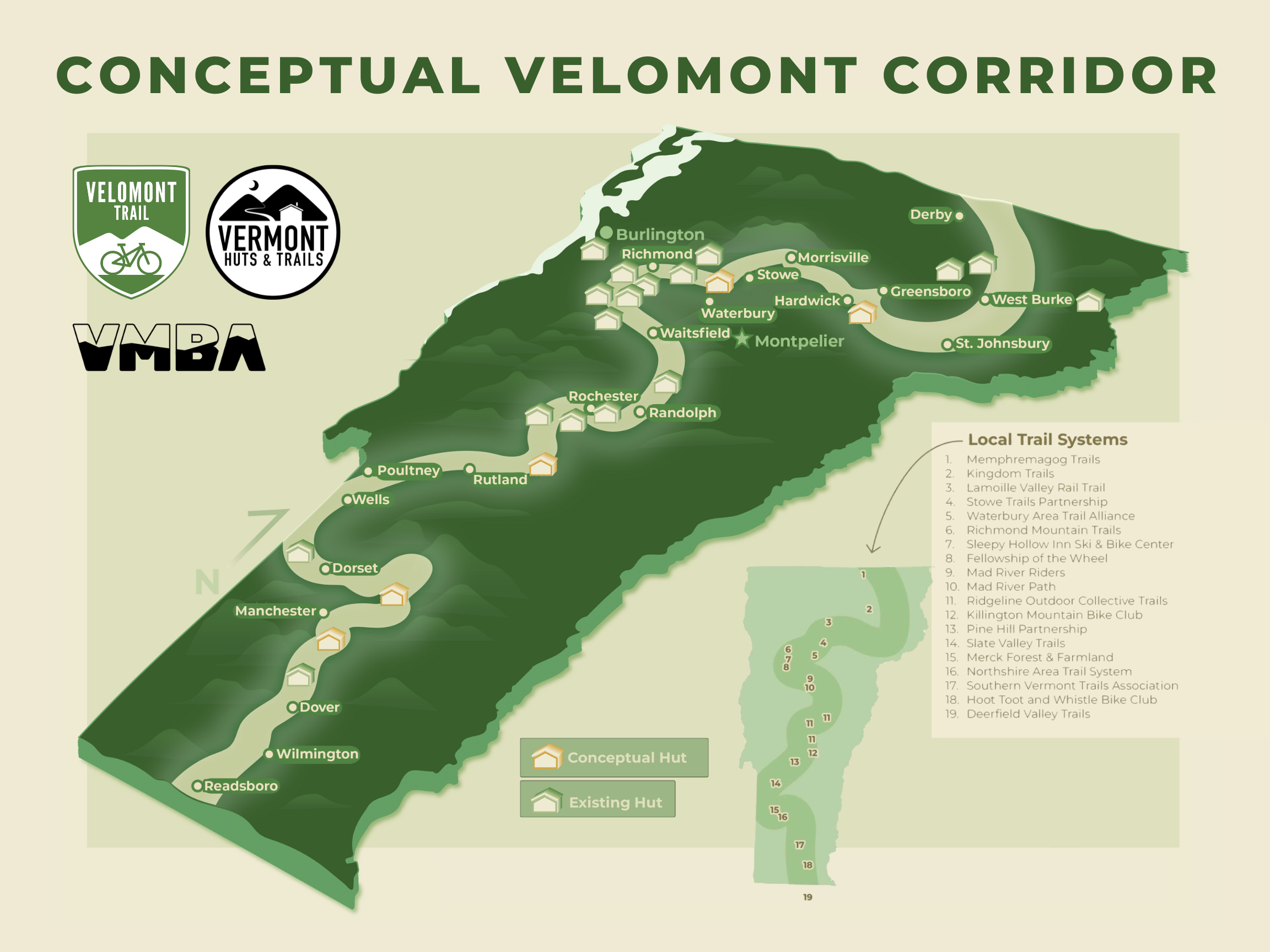
Vermont is developing a 485-mile trail network, approximately 780 km, that will connect 27 communities across the northeastern US state. Called the Velomont, it will combine new and existing trails with huts and hostels for overnight stays. Vermont Huts & Trails and the Vermont Mountain Bike Association are leading the project. The network is intended for several outdoor activities, with its trails designed primarily for mountain biking. Much remains under development, but cyclists can already explore its first completed section for trips lasting several days.
A section cyclists can already ride
The Heart of the Greens Loop opened in 2024 and connects Rochester and Pittsfield in central Vermont. It covers 38 miles, approximately 61 km, through the Green Mountains. Narrow trails, known as singletrack, are linked by stretches of quiet back roads. Riders can stop at natural swimming spots and enjoy views across the mountains and White River Valley. The route includes substantial climbing, making fitness an important consideration when planning the trip.
Experienced, fit mountain bikers may complete the loop in a day, but overnight stops allow a less compressed itinerary. The organisers suggest options spread over two or three days, including stays at a forest hut and a yurt. Riders can also extend their journey on neighbouring trail networks. Like other cycling holidays, the trip combines time on the bike with opportunities to explore the places along the route. It also offers a way to try bikepacking, which involves carrying supplies and overnight equipment on a bicycle for a journey lasting several days.
Forest huts, a yurt and a village inn
Chittenden Brook Hut sits in Green Mountain National Forest, roughly halfway around the loop for those starting in Rochester. Open throughout the year, it accommodates up to 10 guests and provides mattresses, heating and cooking equipment. Visitors bring their own food and sleeping bags. There is no running water, and water collected locally must be treated before use. The nearby Chittenden Brook Campground offers another overnight option for travellers carrying camping equipment.
Spikehorn Yurt lies around 2.5 trail miles, or 4 km, from downtown Rochester. A yurt is a round structure with a frame and a fabric covering. This one sleeps six and has a small kitchen, a two-burner cooktop and a wood stove. It is available for summer and early autumn stays, and guests must bring drinking water because the property has no reliable supply. For more conventional accommodation, the Stable Inn in Rochester occupies a restored timber building dating from the 1840s. It offers rooms with private or shared bathrooms, shared kitchens and access to restaurants in the village.
Connecting communities along the way
The wider Velomont plan links 36 existing trail networks and takes travellers directly into villages. These stops would allow cyclists to buy supplies, eat locally and stay overnight between stretches of forest riding. Equipped huts are also intended to reduce the amount of camping equipment visitors need to carry. The organisers want to make trips into remote areas easier to arrange, with several access points allowing travellers to choose shorter sections. However, overnight facilities do not remove the physical demands of mountain biking.
A comparable approach can be seen on the Trans Dinarica cycling route through eight Balkan countries. Its stages connect rural landscapes with places to eat and sleep. The route was developed with accommodation providers and local cycling specialists, helping travellers plan stops along their journey. While its terrain and accommodation differ from Vermont’s, it provides another example of a cycling route designed to bring visitors into communities beyond major tourist centres.
What still needs to be built
The Velomont’s development plans include 30 new huts and five new hostels in town centres. Construction is also intended to provide employment and training for young adults. The organisers say the project could help conserve up to 214,000 acres, approximately 86,600 hectares, of currently unprotected land. They describe the completed network as potentially the largest trail system supported by huts in the United States. The project is expected to be completed between 2031 and 2036, depending on funding.