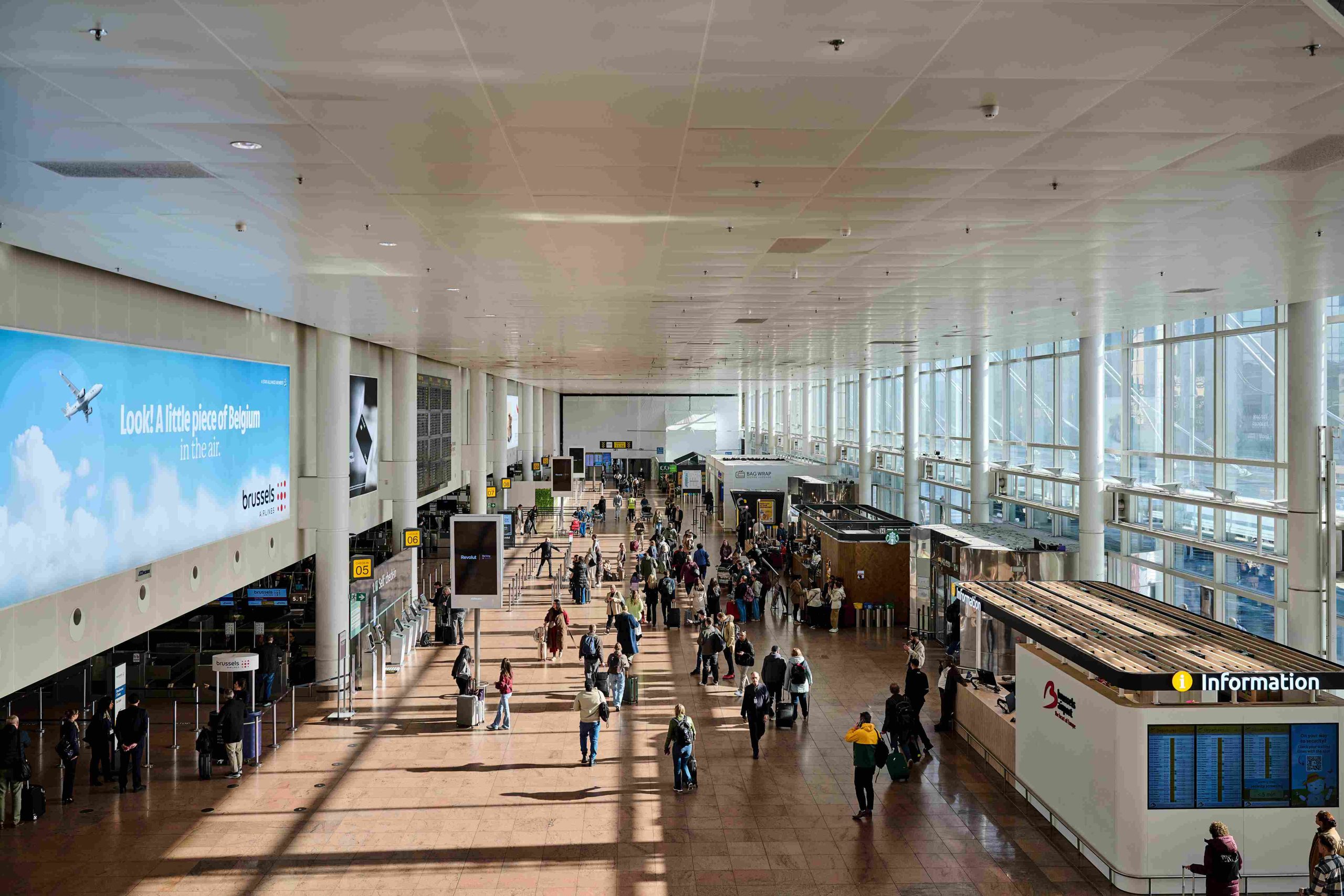


More strike woes threaten Belgian air traffic across the Christmas period with the news that the country’s air traffic controllers (ATC) have given notice of further industrial action over the festive season.
The strike period extends from 9 December 2026 to 9 January 2027, meaning that those travelling for Christmas market city breaks, for snow sports trips, to visit family and friends, or just to get away over the holiday could find their schedule disrupted. However, the unions have said they would seek to avoid the peak Christmas vacation time by aiming to organise any potential action before 20 December.
With talks between trade unions ACV-CSC-Transcom and VSOA-SLFP, and ATC operator Skeyes ongoing to 26 November 2026, the strike notice could be said to be a lever for staff grievances including working conditions, rest, safety, and the treatment of older employees, putting pressure on Skeyes management to reach an agreement and avoid continuing aviation misery over Christmas.
The timing of the announcement, a day after national strikes closed airspace and brought Belgian aviation to an hours-long standstill, means the mood of the negotiations is likely to be tense. That action, announced last-minute and taking place on 23 November, wiped 404 flights from schedules at Brussels Airport, affecting over 51,000 passengers. Flyers at Charleroi and Liège airports also experienced disruption.
#UnionAction 23 November ⚠️ The majority of the flights on that day will unfortunately be #cancelled due to the participation of some skeyes air traffic control staff in the national demonstration. Public transport to/from #brusselsairport will be affected as well. We apologise for the inconvenience. ➡️ More info: https://t.co/F1lgVltxEq
— Brussels Airport (@BrusselsAirport) November 21, 2026
Skeyes spokesperson Kurt Verwilligen has already said passengers and airlines were bearing the consequences of the dispute, and pointed the finger at unions, who, he noted, had previously failed to win members’ approval for a previously agreed labour plan for Charleroi operations.
The strike call comes as Federal Mobility Minister Jean-Luc Crucke has announced a draft bill that would impose minimum air traffic control staffing during industrial action. Belgian airports and airlines have frequently complained about the last two years’ intermittent strike action. They underline that the operational, economic, reputational—and, for passengers, personal—impacts of labour walkouts are disproportionate to what the strikers are trying to achieve. If the proposed legislation passes, some of those impacts could diminish.
For stakeholders such as Brussels Airlines, that point cannot be reached fast enough. Of the 23 November strike, it deplored the fact that its “passengers must once again bear the consequences of a strike, as will our colleagues, who will now work tirelessly to manage the large number of cancellations and minimise disruption for our customers.”
The sobering prospect of more looming air strikes is compounded by ongoing delays at Brussels Airport, where passengers continue to face huge queues to get through security and passport control, putting some at risk of missing flights and onward connections. As the airport races to improve infrastructure and staffing and deal with the EU’s introduction of EES protocols, wait times of up to four hours have been recorded—and that’s without the knock-on effects of strikes, which can mean two days’ worth of passengers converge on the airport at once.