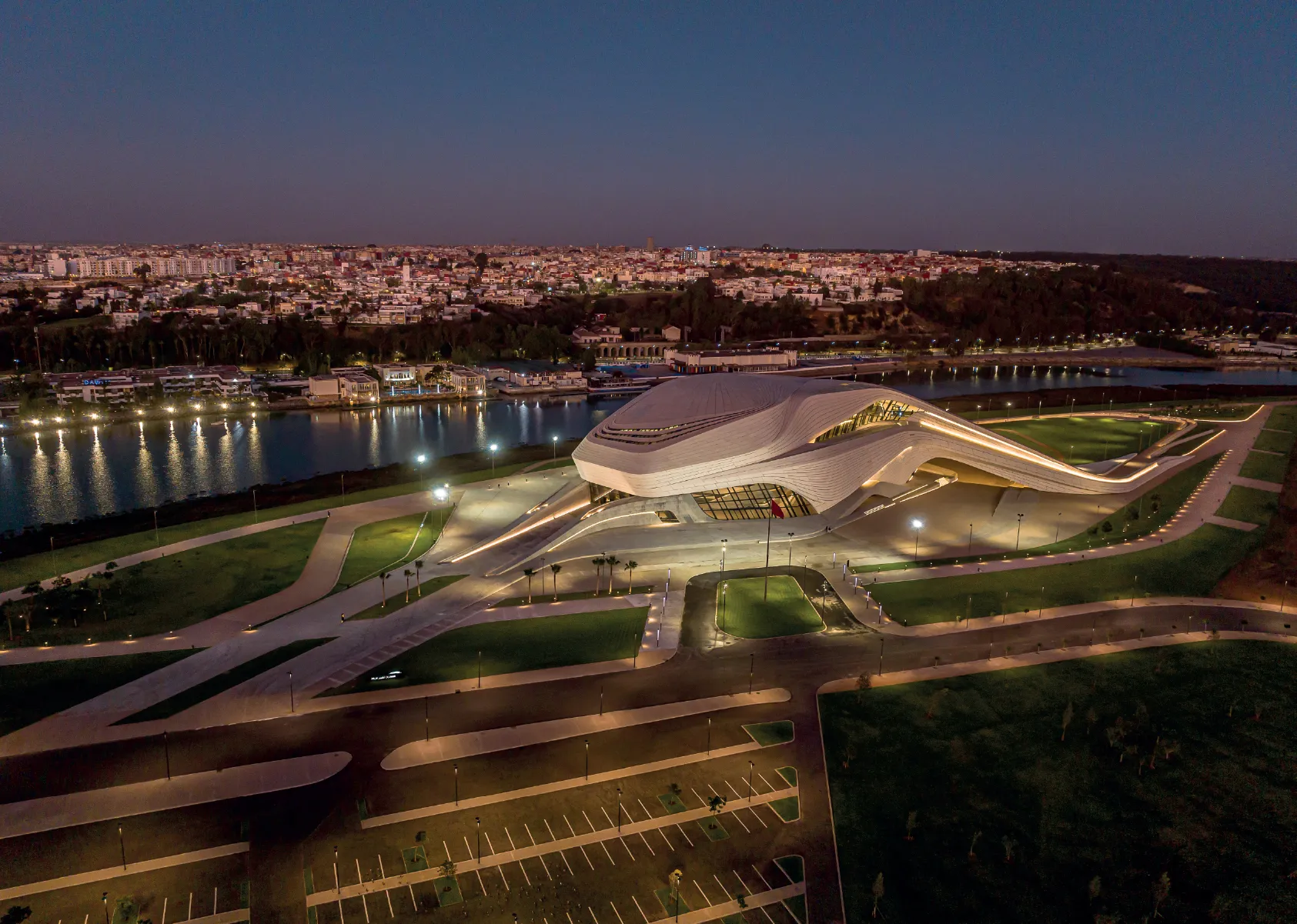


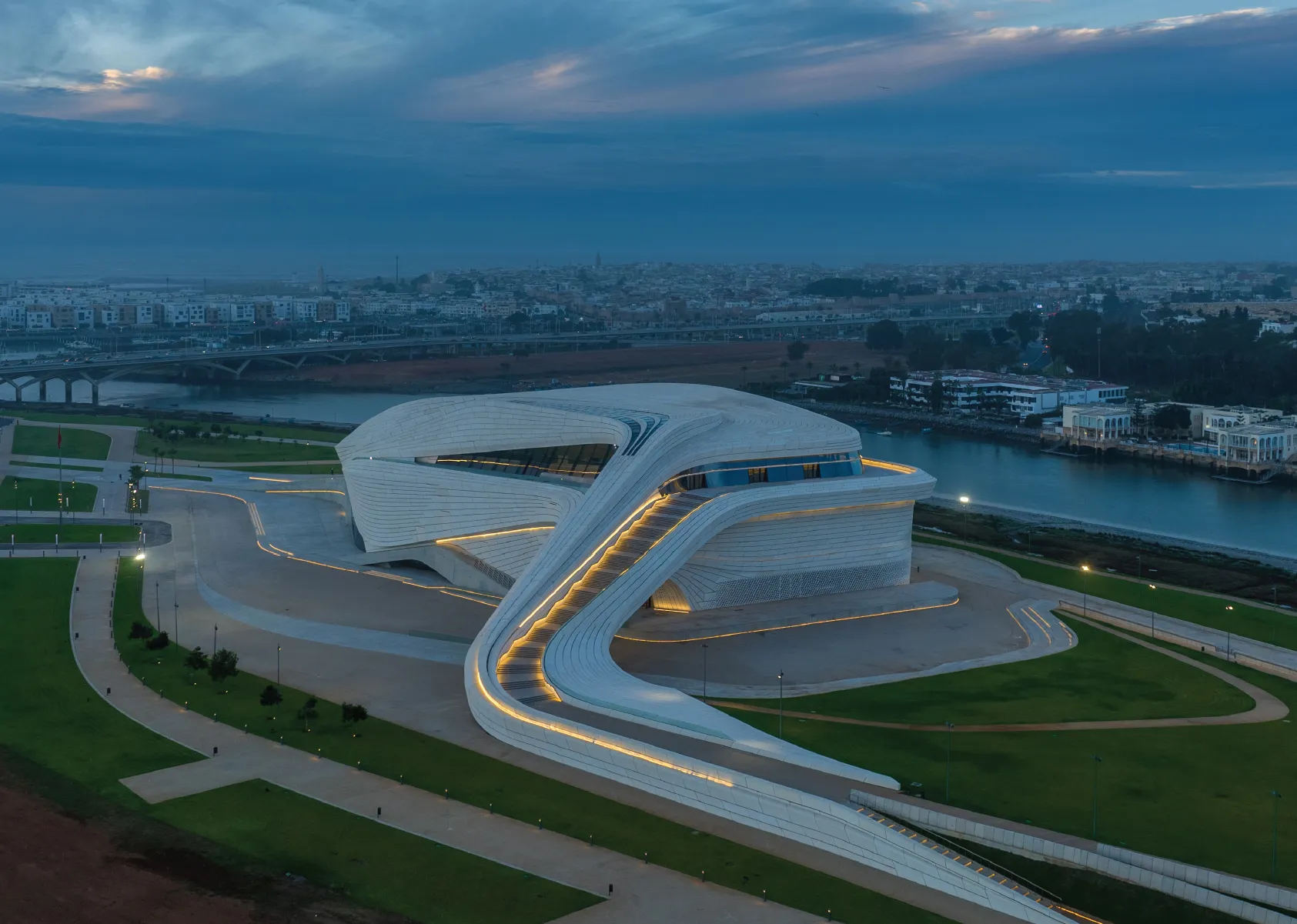
Morocco now boasts a new national theatre building, designed by ZHA, formerly Zaha Hadid Architects, becoming the first African country to complete a ZHA project. The venue, Théatre Royal de Rabat, sits on the Bouregreg River flowing between the cities of Rabat and Salé, but it has the ability, according to Zaha Hadid’s own description in 2010, to “transport the audience to an imaginary space and time.”
Under one giant, arcing interplanetary exterior, three venues are gathered, including a rock-like, cavernous 1,821-seat Auditorium, resembling the set of a sci-fi parliament. Cascading seats offer multi-level viewing, and the faceted walls borrow traditional Islamic muqarnas technique but are not just a visual trick. As Dezeen notes, they “double as an acoustic treatment, developed by ZHA with acousticians at Arup.”
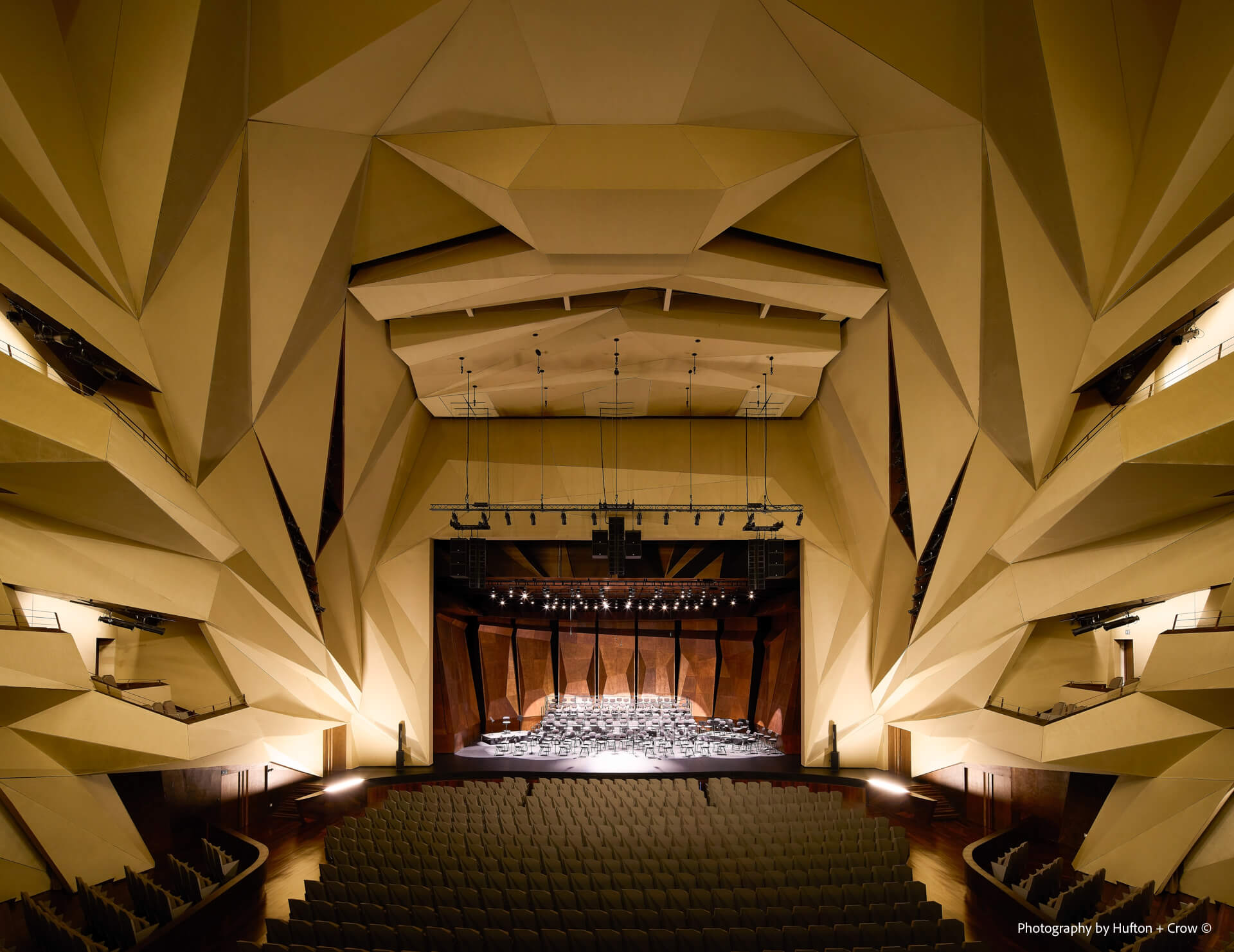
“It is uplifting to go into a great space, a heavenly space,” Hadid said of the design proposal, suggesting that, as a performance venue, the building would provide almost a “secular” place of worship.
The second venue in the building is the flexible Studio Theatre, an almost tidal, transformer of a space where the seating (for up to 250) can retract and a proscenium arch can come and go, to host different stage designs and types of performance, including workshops, experimental pieces, and rehearsals.
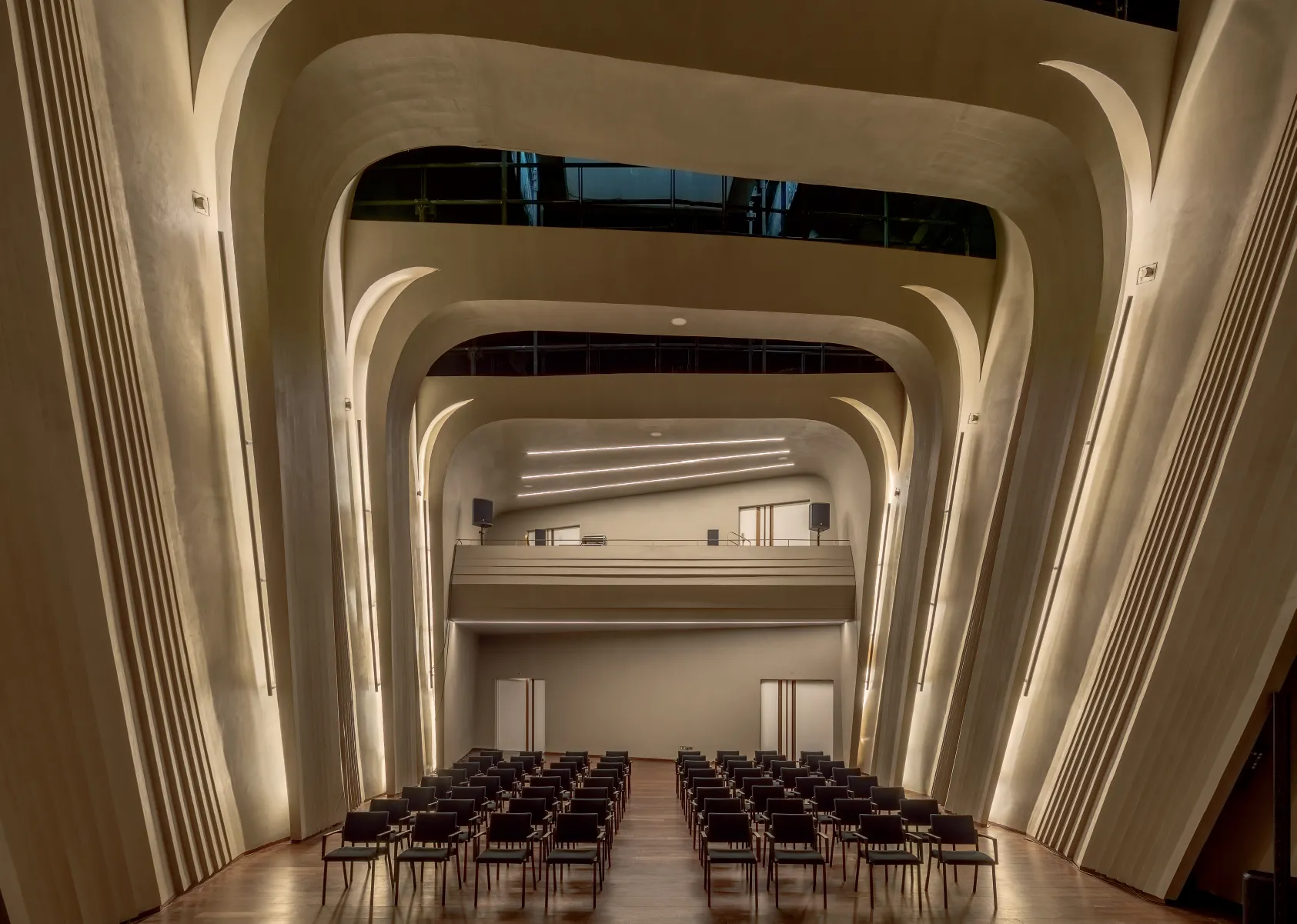
These two cave-like and tidal spaces are connected by what the theatre calls the “canyon,” a triple-height atrium climbed by sinuous, impossible-looking staircases and landings, topped by a river-gazing restaurant. The studio says the foyer is “Designed as a space for transition and reflection,” and that it “encourages curiosity and dialogue to unfold before and after each performance.”
Meanwhile, outside, an Amphitheatre with a 7,000-spectator capacity can welcome gigs, festivals, and outdoor events, with night-sky views along the Bouregreg valley. And when it comes to treading lightly on its environment, Théâtre Royal de Rabat heats itself and breathes through a network of air-source heat pumps, ground-source cooling, and radiant heating, as well as natural ventilation. Appropriately for such a fluid building, it deploys a circular rainwater and reuse system for bathroom facilities and landscape maintenance.
Finally, a boutique shop sells performance-and-culture-inspired books, objects, and souvenirs, so that visitors can take a little part of their trip to this performance and venue space with them, as they re-enter Earth’s atmosphere.
The creation of the Théâtre Royal de Rabat comes ahead of the FIFA Men’s World Cup 2030, and forms part of a vision by King Mohammed VI to promote the arts, gatherings, and diversity, and position the city as a shining light of the country’s cultural and events scene. It’s a strategy that appears to be working: earlier this year, the Moroccan capital was named among Lonely Planet’s 50 best places and experiences for 2027.