

The First World War is in its second year, and three brothers from coastal New South Wales – Samuel, James and young Eric Wilson – are eager to get to Europe before it’s all over … adventure awaits!
Basic training, troop ship to Egypt, Med crossing to Marseille, tortuous overlander and the Wilson brothers finally reach the battlefields of northern France. There is excited talk of coming action.
Then reality hits hard. Within weeks, two brothers are dead, and the third is critically wounded in a day of bloody mayhem. The brothers fall victim to an ill-advised attack on a German stronghold outside Lille. The date, July 1916, and the village of Fromelles become etched in Australian folklore.
Their parents, George and Isabella, are told of their boys’ fate several weeks later in a series of painful communications, as captured in a local newspaper, The Port Macquarie News: “The disastrous news of their trouble came in a quick succession of shocks as word was received on the Friday night that Private J. A. E. Wilson had been wounded; on Monday morning it was announced Private E. R. Wilson was missing; and on the evening of the same day the old people’s cup of sorrow was filled when a wire came saying that Private S. R. Wilson had been killed.”
The missing son, their youngest Eric, who had signed up at 17 with his father’s permission, was later confirmed to be dead.
The local report of the tragic event paints the family as taking the news with brave stoicism, as befits the patriotic tone of the era. Decades later, the family’s true reaction to the loss in Fromelles is more telling: “The grief was too much for the Wilson boys’ mother and she died, the family believes, of a broken heart before she knew her youngest son would return home.”
History repeating
Unspeakable scenarios like this entered popular consciousness after the epic WWII film Saving Private Ryan came out in 1998, drumming home the risk of siblings fighting side by side or in active combat zones even in different theatres.
But it really brings home the tragedy when you read local news clippings and try to visualise a uniformed official standing before alarmed parents with a typed letter in outstretched hand. Not once, but three separate times in one day!
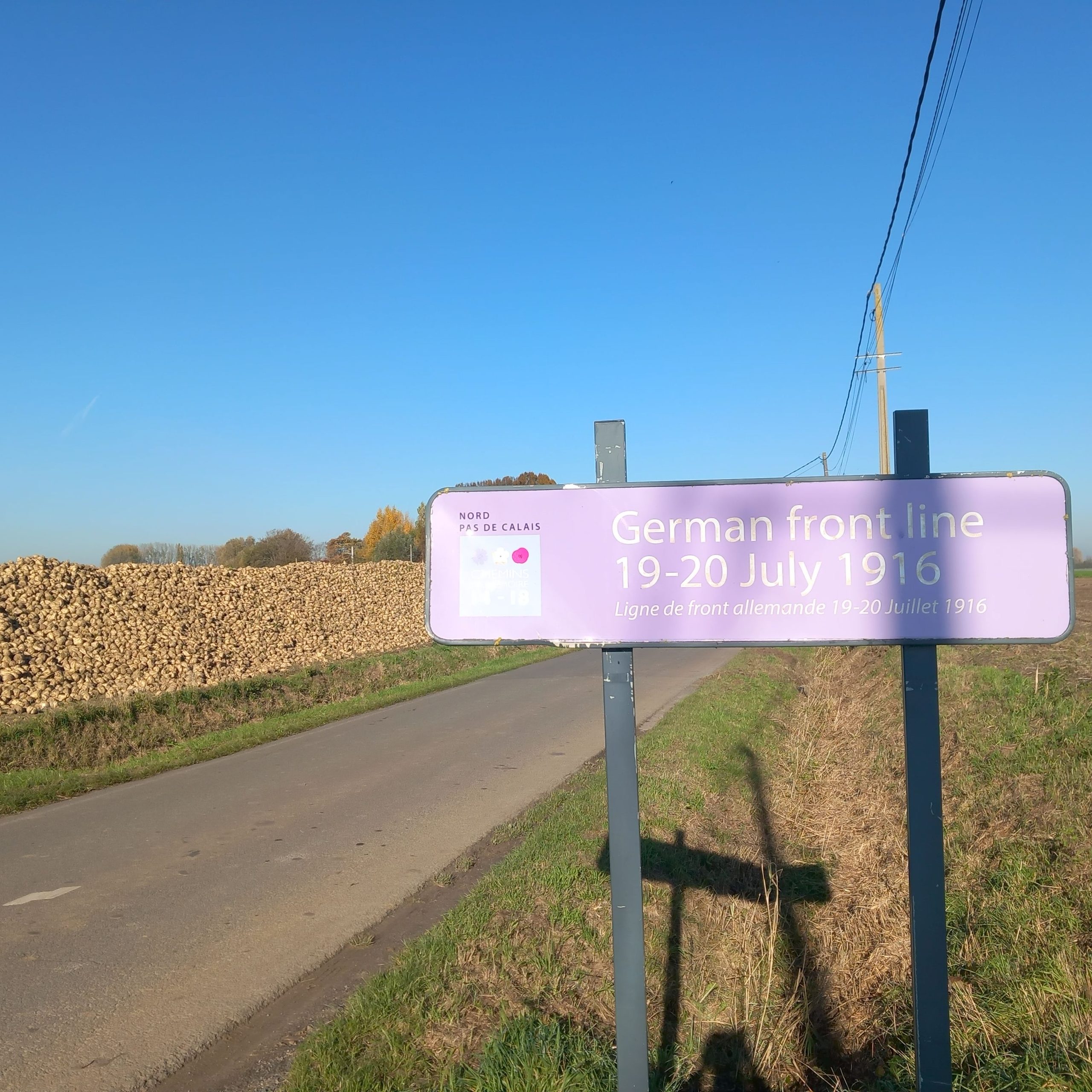
According to the Fromelles Association of Australia, a volunteer group to honour the soldiers who fought and died near the village: “The Battle of Fromelles (19-20 July 1916) was Australia’s first action on the Western Front in WWI. Intended as a diversion from the Somme offensive, it resulted in the worst 24 hours in Australian military history. Over 5,500 Australian casualties occurred in less than a day, with no strategic gains. The battle remains a symbol of tragic loss and enduring remembrance.”
The Association documents the personal stories of the soldiers to educate future generations on the battle’s enduring legacy. It actively supports families tracing their connections to those who served while assisting ongoing efforts to identify unknown fallen heroes.
The battle unfolds
Older Wilson brothers Samuel and James entered the 3rd Battalion together before being transferred to the newly formed 53rd Battalion – a reorganisation made necessary after large losses in Gallipoli fighting the Turkish. Youngest brother Eric reached Cairo shortly after and was also assigned to the 53rd to bring it to strength, reuniting all three brothers in the same unit.
By July 1916, the Western Front was locked in a stalemate. Losses mounted with each fresh action associated with the Battle of the Somme. Desperate to crack enemy lines and force a much-needed breakthrough, Allied commanders searched for any opportunity to weaken German defences.
Their focus shifted north of the Somme. A diversionary attack aimed at preventing enemy reinforcements from moving south. That operation, staged just outside Fromelles, would go down as a tragic day in Australian military history – ably documented in the Battle Guide film, ‘24 hours in hell: Australia’s darkest day’.
The assault was flawed from the start. Allied commanders ordered troops across wide expanses of open ground in daylight against intact German strongpoints. Artillery bombardments had failed to destroy concrete bunkers, and thick barbed wire littered the passage.
Stories of extraordinary courage emerged from the carnage. In the days that followed, Australian soldiers ventured back into No Man’s Land to carry wounded mates on their backs to safety.
Hearing cries of ‘Don’t forget me, cobber ’, troops risked their own lives time and again to retrieve fallen comrades. This selfless defiance cemented the ‘cobber’ legend – an enduring symbol of Australian mateship, loyalty and quiet heroism under fire – which ultimately inspired the creation of a permanent memorial on the battlefield.
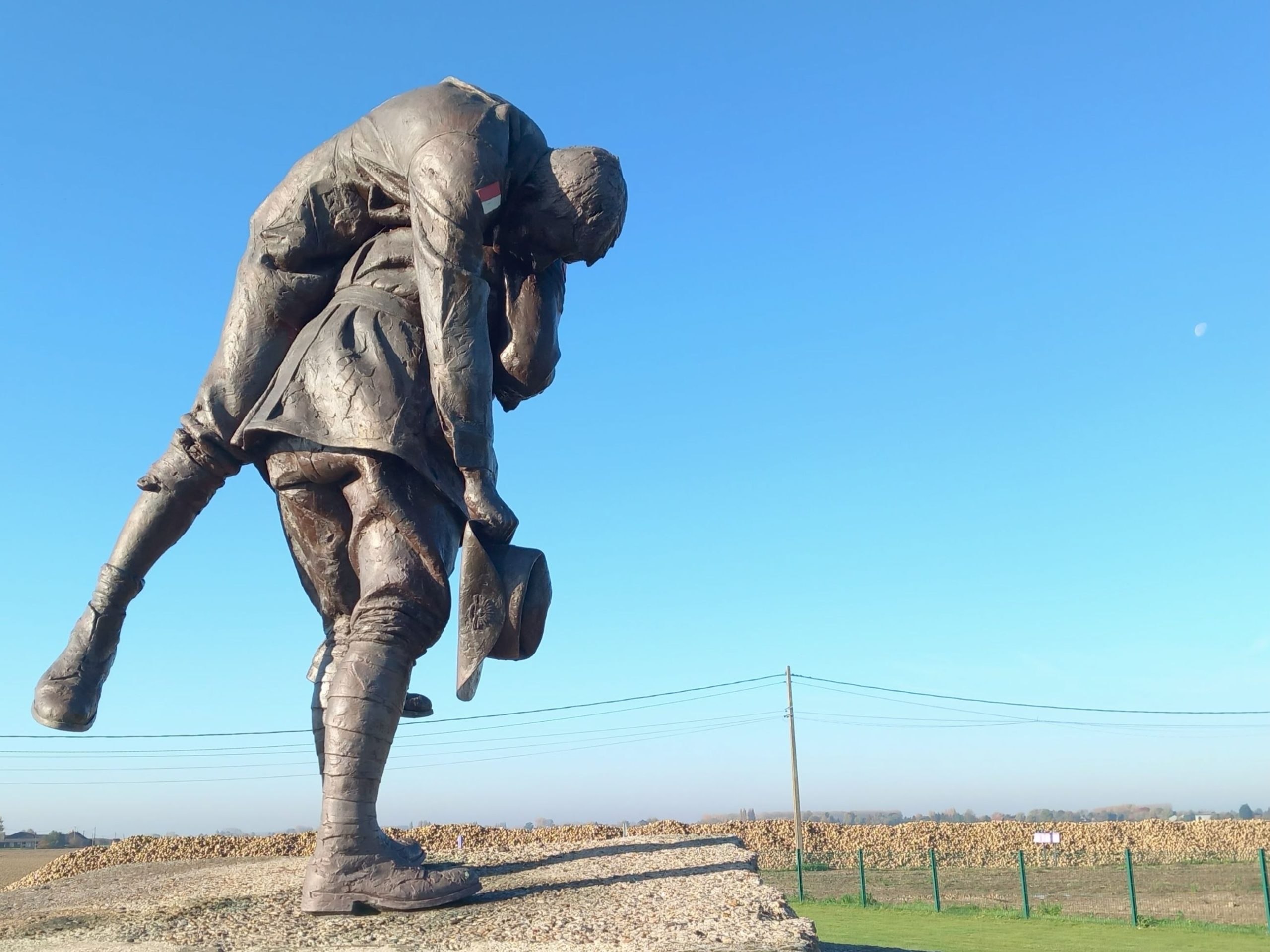
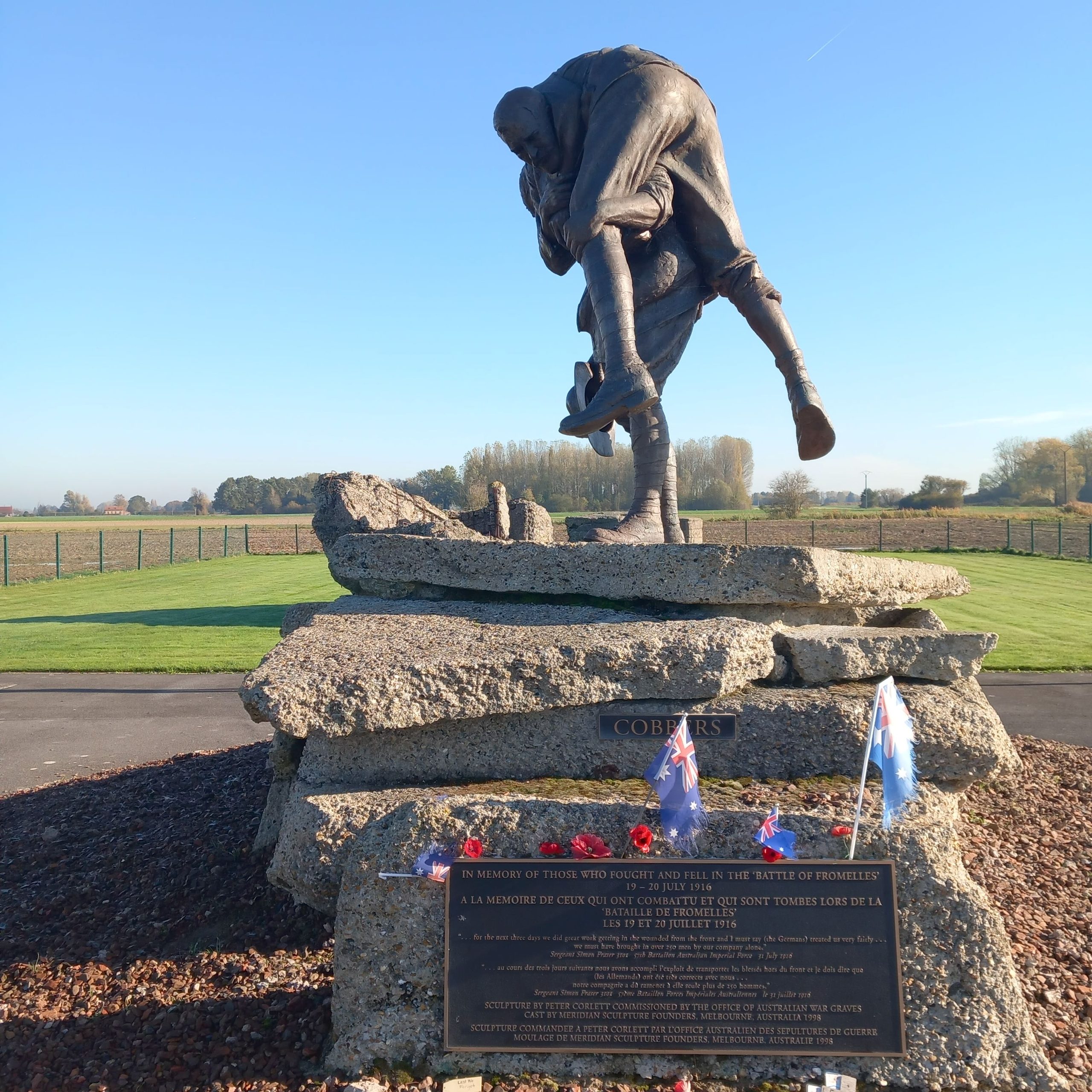
Set within the Australian Memorial Park, Peter Corlett’s iconic bronze sculpture, Cobbers, captures Sergeant Simon Fraser carrying a wounded soldier across his shoulders. The artwork pays tribute to compassion and self-sacrifice amid destruction, though sculptor Corlett famously had to modify his original design to remove a rifle after historical reviewers noted that rescuers going into No Man’s Land under informal truces would risk being shot if they carried their weapon!
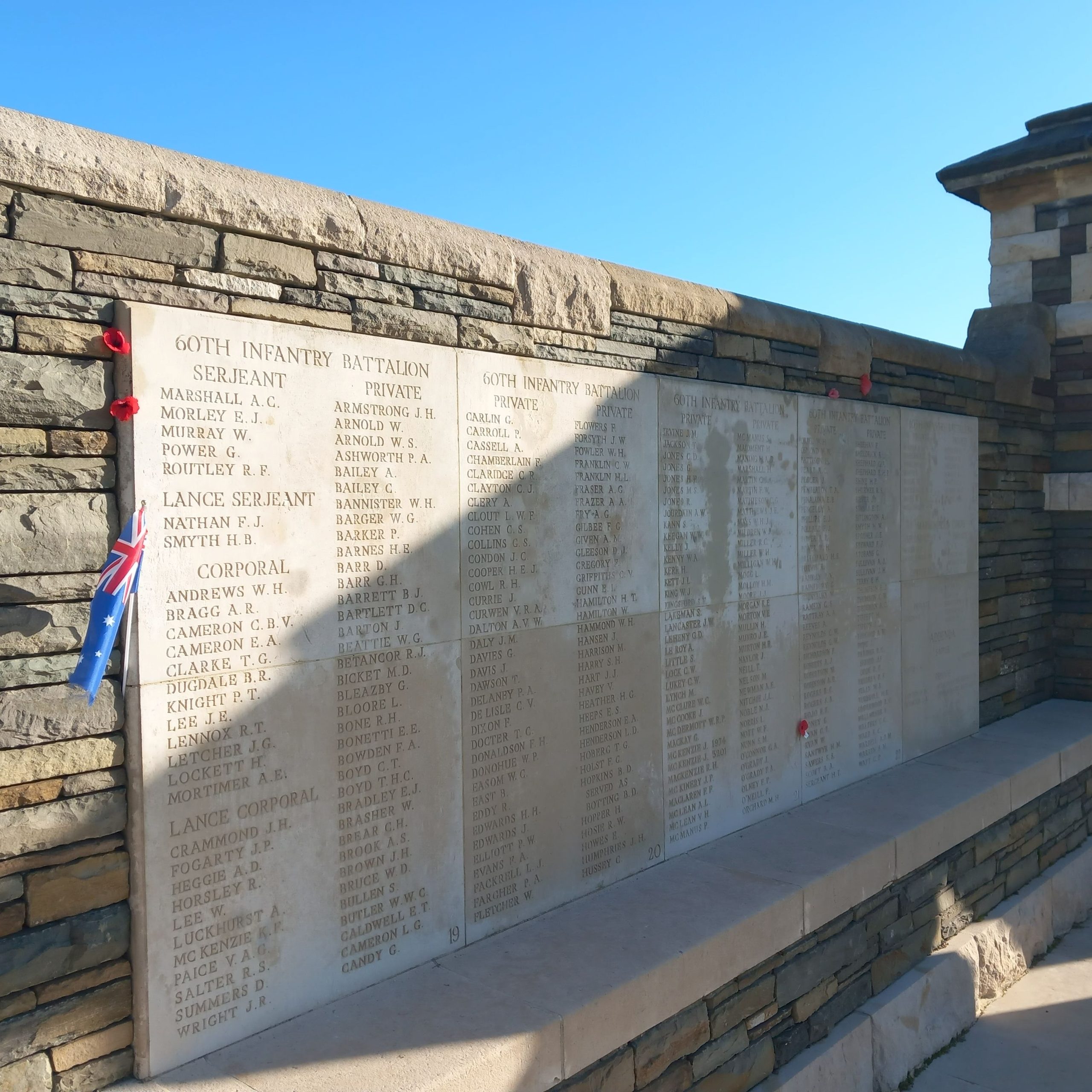
Today, the memorial park sits quietly, almost eerily, within the working French countryside, where surrounding agricultural fields can be found piled high with sugar beets in Autumn. Just down the lane, beside active horse stables, lies the VC Corner Australian Cemetery, a unique collective burial ground for over 400 unidentified Australian ‘Diggers’ who fell on those very fields.
The science of remembering
In Fromelles itself, the compact but well-curated Museum of the Battle of Fromelles details the brutal engagement while shedding light on one of the most remarkable forensic recoveries in modern military history.
Following the discovery of mass graves at Pheasant Wood in 2008, archaeological teams unearthed the remains of 250 British and Australian soldiers. Through painstaking historical documentation, forensic anthropology and ongoing international DNA testing matching living relatives, scientists continue to return names to these once-lost soldiers.
Through lifelike installations, video/audio guides and multilingual panels, the museum shows how vital it is to preserve every photograph, letter and record so these men are not forgotten. Thanks to these efforts, some 181 soldiers have been identified (2026), according to the Association, and duly laid to rest under headstones bearing their own names at the adjacent Fromelles (Pheasant Wood) Military Cemetery.
Reflecting on these events lays bare the sheer agony inflicted by both World Wars, where entire communities – and single households – were shattered by the loss of multiple sons and daughters.
Today, modern military regulations are more conscious of co-family deployments. Rules like the US ‘Sole Survivor Policy’ are explicit in protecting serving family members in front-line combat zones. The Australian Defence Force’s own policies provide ‘Compassionate Postings and Retentions’ for service members facing severe, unexpected family crises. Little solace for devastated families during history’s wars.
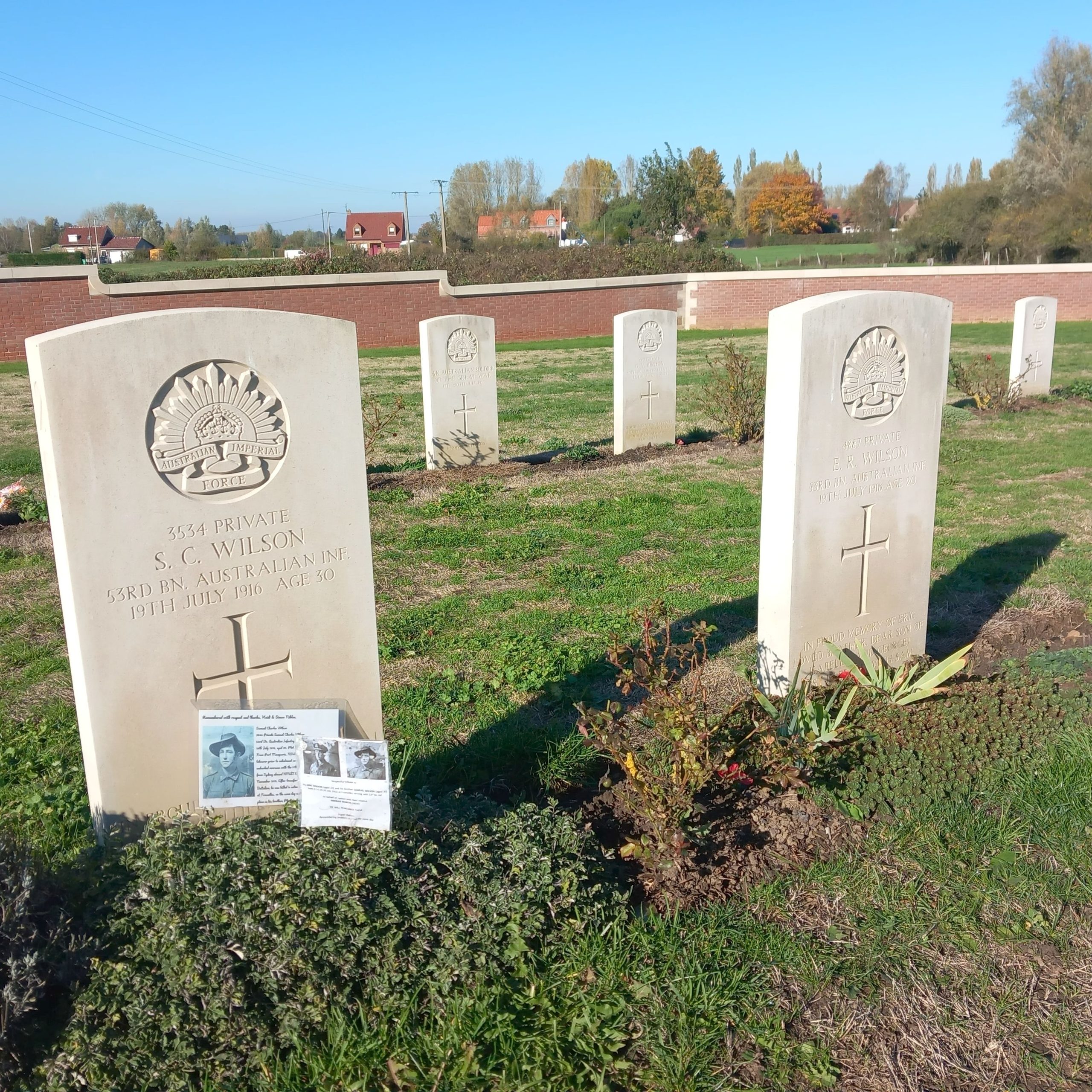
Yet, amid the overwhelming tragedy of Fromelles, some comfort can be taken for the Wilson family. After decades lost to the earth, Samuel and Eric were finally identified and reburied together. In the soil of northern France, the brothers lay side by side with their fallen Aussie comrades, a band of brothers in every sense of the word.
Getting there
By public transport, regular trains run from Paris/Brussels to Lille. From there or nearby Armentières, take an Uber/taxi directly to the Museum of the Battle of Fromelles or VC Corner Cemetery. Ilévia buses also run regularly from Saint-Philibert metro station in Lille to Fromelles village. Renting an e-bike takes you through flat Weppes countryside, following designated war memorial trails directly to the battle sites, Pheasant Wood and VC Corner Cemetery (15- 20 km). Consult Lille Tourism for information.