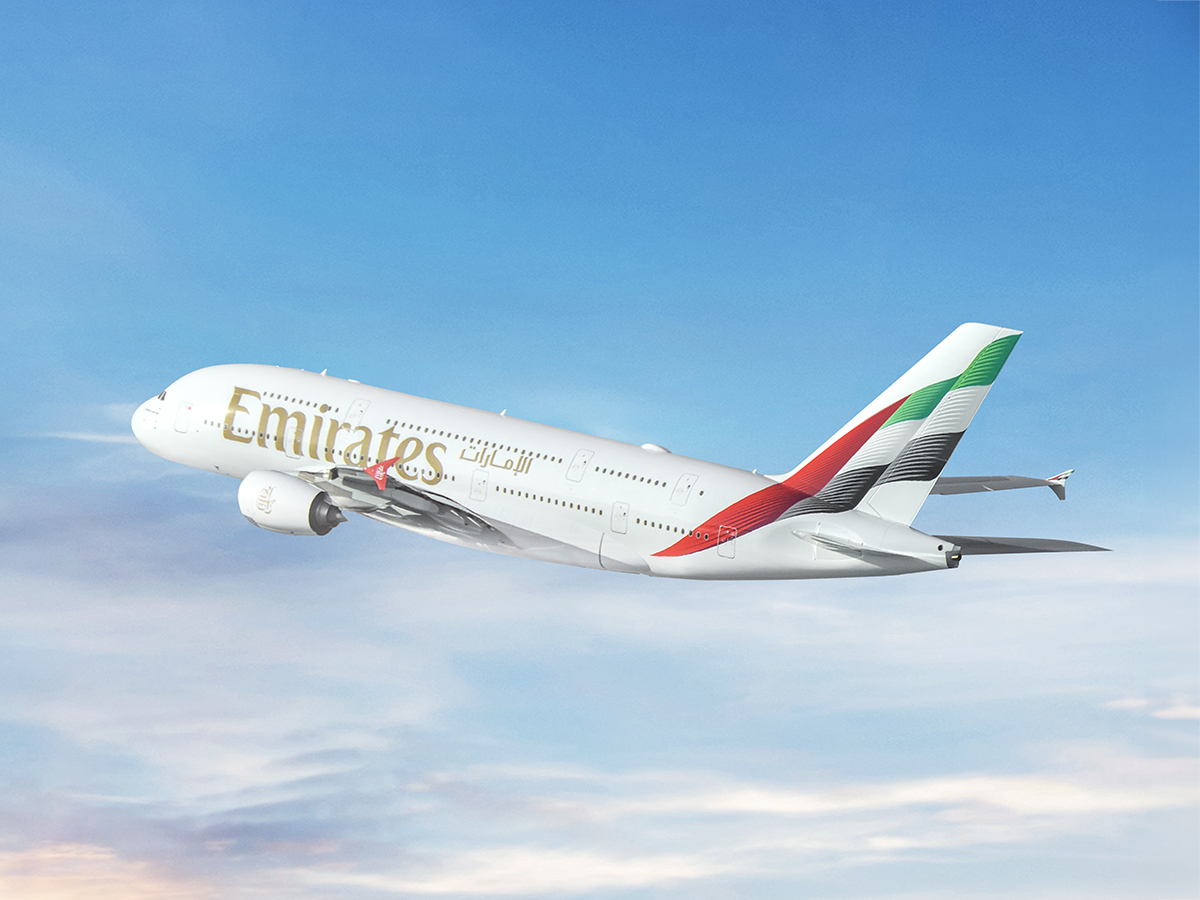


Emirates has been named the world’s best airline in the inaugural World’s Best Airlines 2027 list, compiled by TIME magazine and the data company Statista. The Dubai-based carrier also placed first in the Best Value and Business Travel categories.
As Euronews reported, no European airline featured in the overall top 10. In fact, Europe’s carriers do not appear in the ranking until places 14 through 17, with Turkish, Finnair, LOT Polish, and British Airways, respectively. The UK’s Virgin Atlantic did manage to take the best long-haul offering, but Emirates came second, and the Middle East beat the competition again in the family-friendly category, where Qatar took the number one spot.
The list combines two types of evidence. Statista surveyed passengers on every continent, asking them to rate up to five airlines they had flown with over the previous three years. Scores covered cabin comfort, service quality, entertainment and connectivity, food and drink, value for money and suitability for families. These were then merged with operational performance data, with TIME citing flight data analysis from OAG. Separate lists cover the most reliable airlines, business travel, and long-haul flying.
Niels Terfehr, deputy CEO of Statista R, said Emirates’ results “stand out for their consistency,” adding that leading both the overall and business categories reflected strong performance in passenger experience and operational reliability.
TIME linked the airline’s podium position to its premium cabins, a growing Premium Economy offer, and the appeal of Dubai as a destination, as well as partnerships with tourism bodies in the Indian Ocean, Europe, Southeast Asia, and the UAE.
That premium offer is only going to improve, as remarked by Sir Tim Clark, the airline’s president, who said: “Customers notice when an airline gets the fundamentals right”, adding that the company is “already working towards an even stronger 2027 and beyond.”
Indeed, Emirates is midway through a US$7 billion cabin retrofit programme, with 108 aircraft completed so far. It expects Premium Economy to serve close to 100 destinations by December 2026. Starlink Wi-Fi is available free in all cabins on 74 aircraft, its in-flight entertainment system carries more than 6,500 channels, and it operates 42 lounges worldwide.
A tough operating climate
The ranking arrives as the industry faces financial pressure. In June 2026, the International Air Transport Association (IATA) cut its annual profit forecast to $23 billion on revenues of $1.17 trillion, a net margin of 2%. That’s roughly half the figure projected before the war in Iran. IATA expects revenues to rise by about 9.5% in 2026, but costs to grow by 13.1%, with fuel accounting for 31.4% of operating expenses.
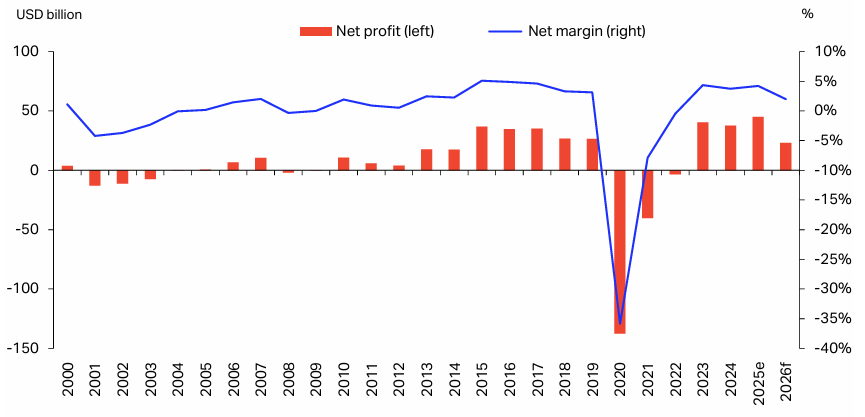
Seçkin Özkul, a supply chain academic at the University of South Florida, told TIME: “[Airlines] are running on real thin margins.” Carriers are responding in different ways. Ancillary income from extras such as seat selection, baggage and meals reached close to $160 billion in 2025, almost 16% of revenue, up from about nine percent in 2016. Low-cost operators keep base fares low and charge for add-ons; still, in what may be a surprise for some flyers, Ryanair, Europe’s largest airline, tops the reliability sublist. Larger airlines, meanwhile, are investing in premium seating, and a 2026 McKinsey report found that on busy transatlantic routes, a business-class cabin can generate nearly as much revenue as economy, while taking up far less space.