


Passengers travelling with Qatar Airways from Doha can now use facial recognition instead of a boarding pass throughout much of their airport journey, following the launch of a new biometric system at Hamad International Airport.
The new Fast Pass service allows eligible passengers to move through check-in, self-service bag drop, security, airport lounges and boarding gates using only facial recognition, significantly reducing the need to present physical travel documents at multiple checkpoints.
Developed through a partnership between Qatar Airways, SITA and Hamad International Airport, the system connects around 700 biometric touchpoints across the airport. According to the airport, it is one of the largest biometric passenger deployments of its kind in both the Middle East and globally.
How Fast Pass works
Passengers can enrol in Fast Pass through the Qatar Airways mobile app after checking in or at self-service kiosks located near Row 3 at Hamad International Airport.
Registration requires a valid passport and a selfie taken against a plain background. The system then creates a secure digital identity by linking the passenger’s facial biometrics with their passport, boarding pass and journey details.
Introducing Fast Pass.
— Hamad Int'l Airport (@HIAQatar) July 6, 2026
Your face is now your boarding pass. ✈️
New from HIA and @qatarairways: facial recognition at bag drop, security, and boarding gates. No more digging for documents, just walk through.
How to get started:
📱 Register on the Qatar Airways app before you… pic.twitter.com/bxLeyqkMi4
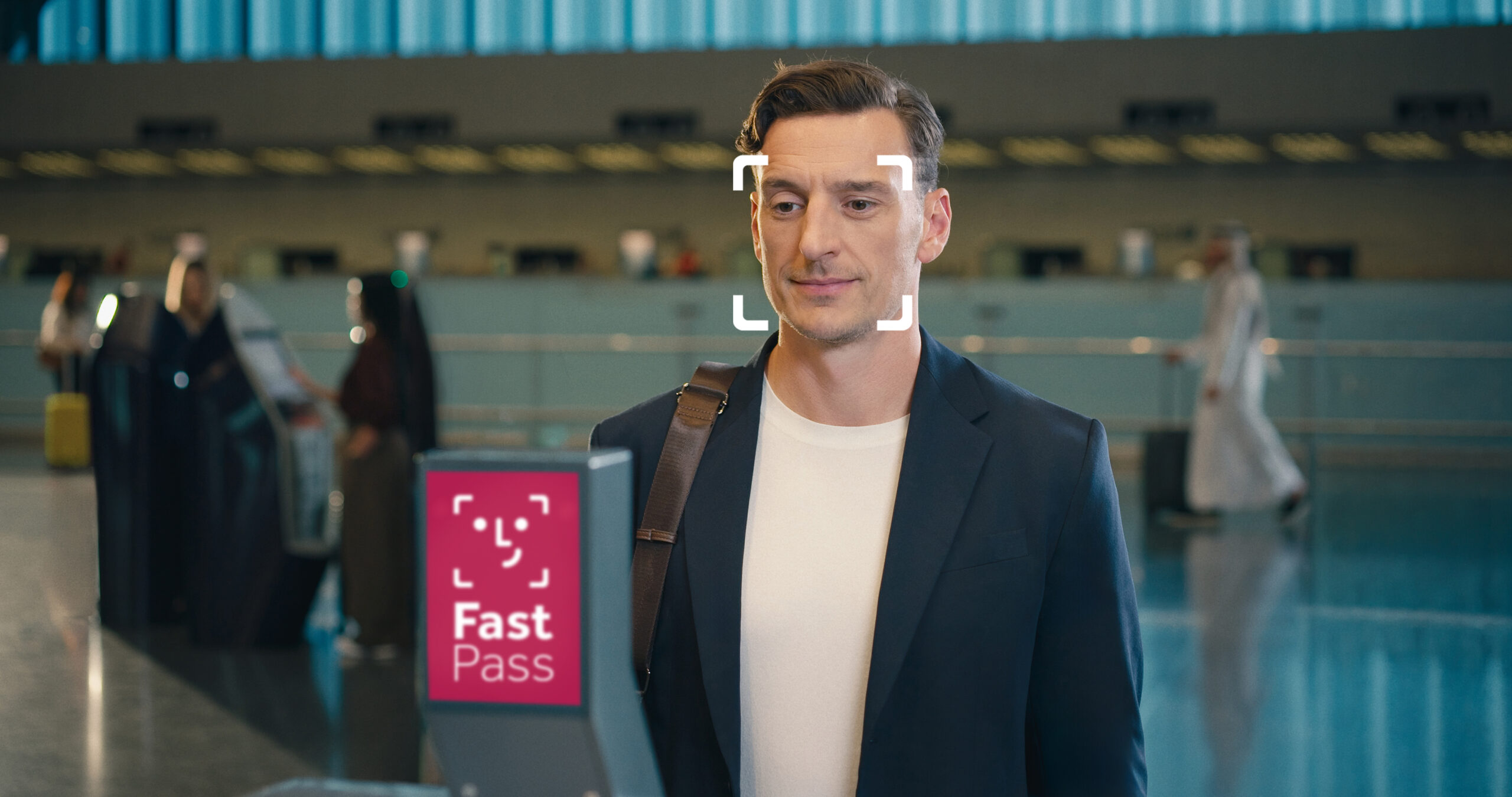
Once enrolled, travellers simply look at biometric cameras positioned at self-service bag drops, security checkpoints and boarding gates instead of presenting a paper or digital boarding pass. The process is similar to using facial recognition to unlock a smartphone.
Passengers only need to complete the enrolment process once. For future eligible journeys departing from Doha, the stored biometric profile can be reused.
Data privacy and security
Qatar Airways says passengers remain in control of their biometric information.
Travellers who register through airport kiosks have their personal and biometric data stored only for the duration of the trip, after which it is automatically deleted 24 hours after departure.
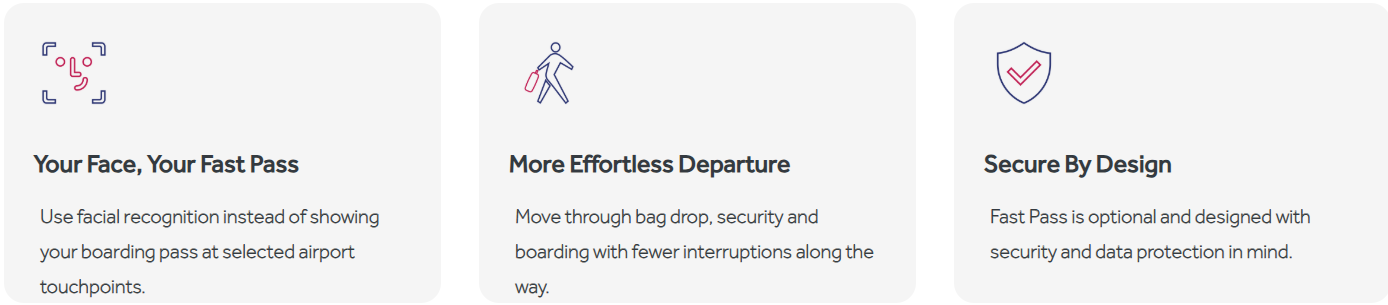
Those who enrol through the airline’s mobile app retain their biometric profile securely on their own device. Journey-specific information is shared with the airport only when Fast Pass is activated for a particular flight, and users can delete their stored data at any time through the app.
Despite the new technology, passengers are still required to carry their passports in case biometric verification fails or additional immigration checks are necessary.
Who can use it?
For now, Fast Pass is available only on eligible Qatar Airways flights departing from Doha. The airline says passengers will be notified during check-in if their flight qualifies for the service.
Participants must be at least 18 years old, hold a valid passport and begin their journey at Hamad International Airport.
Participation is voluntary, with traditional document checks remaining available for travellers who prefer not to use biometric verification.
The airport has indicated that it hopes to extend the system to other airlines operating from Doha in the future.
A growing trend in air travel
Qatar Airways is not the first airline to adopt facial recognition technology, but its latest rollout reflects a broader industry move towards biometric travel.
Emirates already offers facial recognition services at Dubai International Airport, while Japan’s Haneda Airport and Narita International Airport use similar “Face Express” systems.
In the United States, the Transportation Security Administration has expanded its TSA PreCheck Touchless ID programme to dozens of airports, allowing eligible passengers to pass through dedicated security lanes using facial comparison technology instead of physical identification.
Growing passenger acceptance appears to be encouraging wider adoption. According to the 2025 IATA Global Passenger Survey, 50% of travellers have already used biometrics at some stage of their airport journey, with 85% of those reporting high levels of satisfaction. The survey also found that 74% of passengers would be willing to share their biometric data if it reduced the need to present passports or boarding passes during check-in, security, border control and boarding.
As airports continue investing in digital identity technologies, facial recognition is increasingly becoming part of the standard passenger experience rather than a future concept.