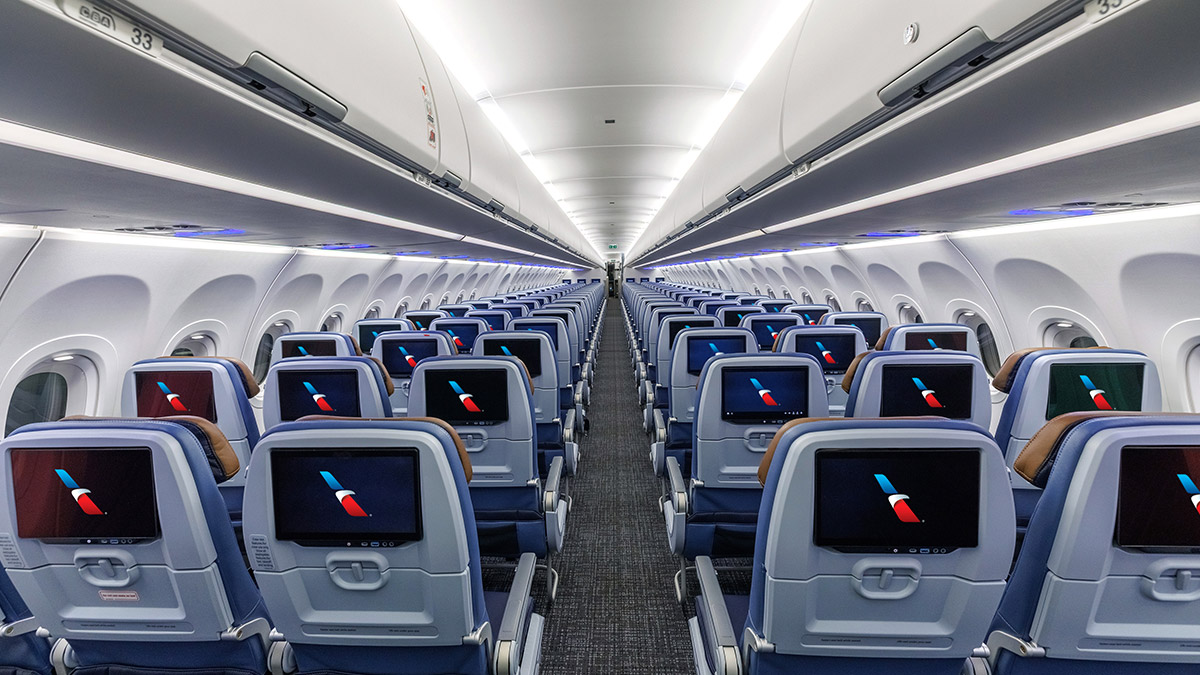



American Airlines is bringing seatback entertainment screens back to its US flights, reversing a strategy that saw the carrier remove built-in displays from much of its domestic fleet over the past decade.
The airline announced a major overhaul of its narrowbody fleet on Tuesday, with plans to install next-generation screens at every seat while substantially increasing the proportion of premium seating available on its aircraft.
New Airbus and Boeing aircraft delivered from 2028 will come equipped with seatback displays, while existing aircraft will be retrofitted. American expects the installation programme to be completed across its narrowbody fleet by the early 2030s.
“We’re making one of the most significant investments in the onboard experience in our history,” said Heather Garboden, American Airlines’ Chief Customer Officer. “From next-generation seatback entertainment at every seat to substantially more premium seating options, these enhancements will give our customers more ways to relax, stay connected and enjoy their journey.”
Reversing course on seatback entertainment
The decision represents a significant change in strategy for American. During the previous decade, the carrier phased out seatback screens from many of its Boeing 737 and Airbus A320-family aircraft, instead encouraging passengers to stream entertainment to their own phones, tablets and laptops.
At the time, airlines could save weight, maintenance costs and installation expenses by relying on passengers’ increasingly ubiquitous personal devices. But the approach has not proved universally popular, with travellers complaining about battery consumption, inconvenient viewing angles and dependence on connectivity.
American’s strategy also increasingly contrasted with rivals such as Delta Air Lines and United Airlines, which have continued investing in seatback entertainment as part of efforts to offer a more premium passenger experience. JetBlue has also retained seatback televisions across its fleet.
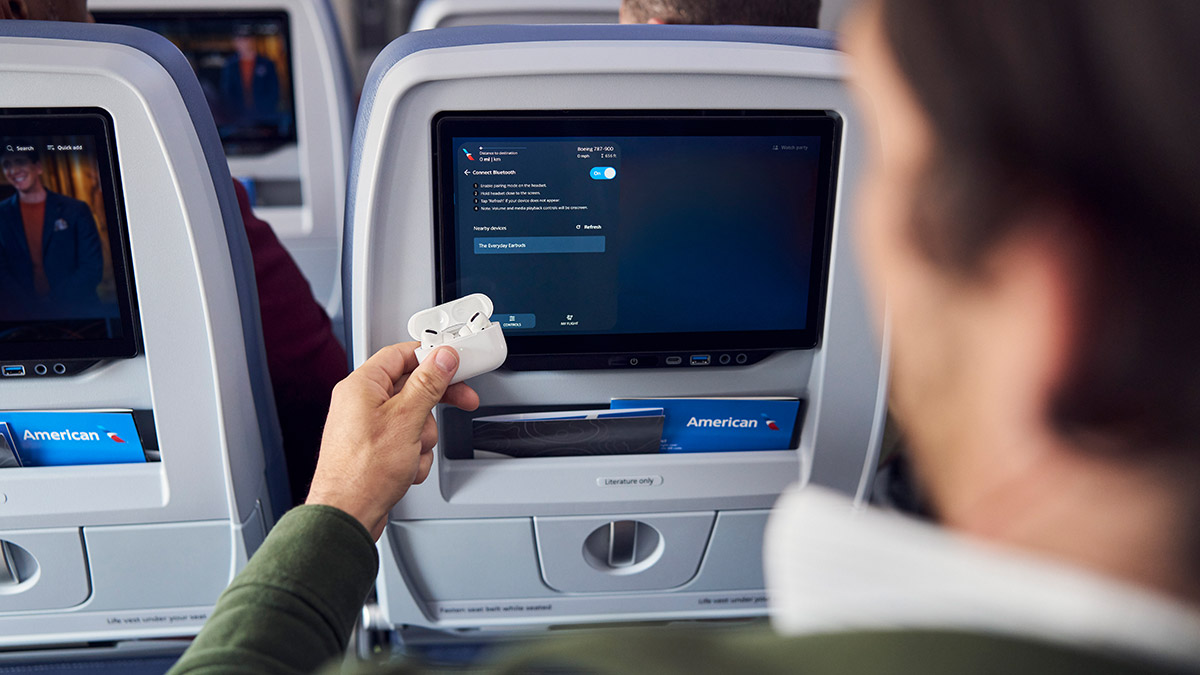
Technology has evolved in the meantime, making modern entertainment systems lighter and more capable. American’s new platform will offer 4K displays, Bluetooth connectivity for wireless headphones, USB-C fast charging and personalised recommendations for films and television programmes.
The screens will also feature interactive flight maps with destination information and real-time flight insights. American says the displays will be among the largest offered on narrowbody aircraft in North America.
The rollout will complement more than 140 long-haul aircraft in American’s fleet that already feature seatback screens.
Premium seats to rise to around 40%
Entertainment is only one part of the airline’s cabin overhaul. American is also significantly increasing the number of First Class and Main Cabin Extra seats available across its narrowbody fleet.
Premium seating currently accounts for approximately 25% of seats on American’s narrowbody departures. The carrier intends to increase that proportion to around 40% in the coming years, reflecting the wider airline industry’s growing focus on higher-margin premium travel.
American is already retrofitting its Airbus A319 and A320 aircraft with an additional row of First Class seats. Its future Boeing 737 MAX 10 aircraft are expected to feature 24 First Class seats, while the Airbus A321neo fleet will also be reconfigured with additional First Class capacity.
Main Cabin Extra, American’s extra-legroom economy product, will also be expanded across most of the narrowbody fleet. Refreshed cabins will include redesigned seats, additional storage and upgraded lighting.
The investments come as American seeks to strengthen its onboard proposition and compete more directly for passengers willing to pay for upgraded experiences.
Connectivity is another part of that strategy. Starting in 2027, the airline plans to install high-speed Starlink Wi-Fi on its narrowbody aircraft. Combined with the new entertainment screens, American is betting that improved connectivity and a more consistent cabin experience can become important differentiators for passengers.
The overhaul forms part of a wider investment programme covering both the airport and onboard experience. The airline is expanding and upgrading its Flagship and Admirals Club lounges, introducing new premium food and beverage offerings and investing in digital services covering everything from booking to baggage tracking.
For passengers, however, one of the most visible changes will be a familiar one: after years of asking travellers to bring their own screens, American Airlines has decided there is still a place for the television in the seat in front.