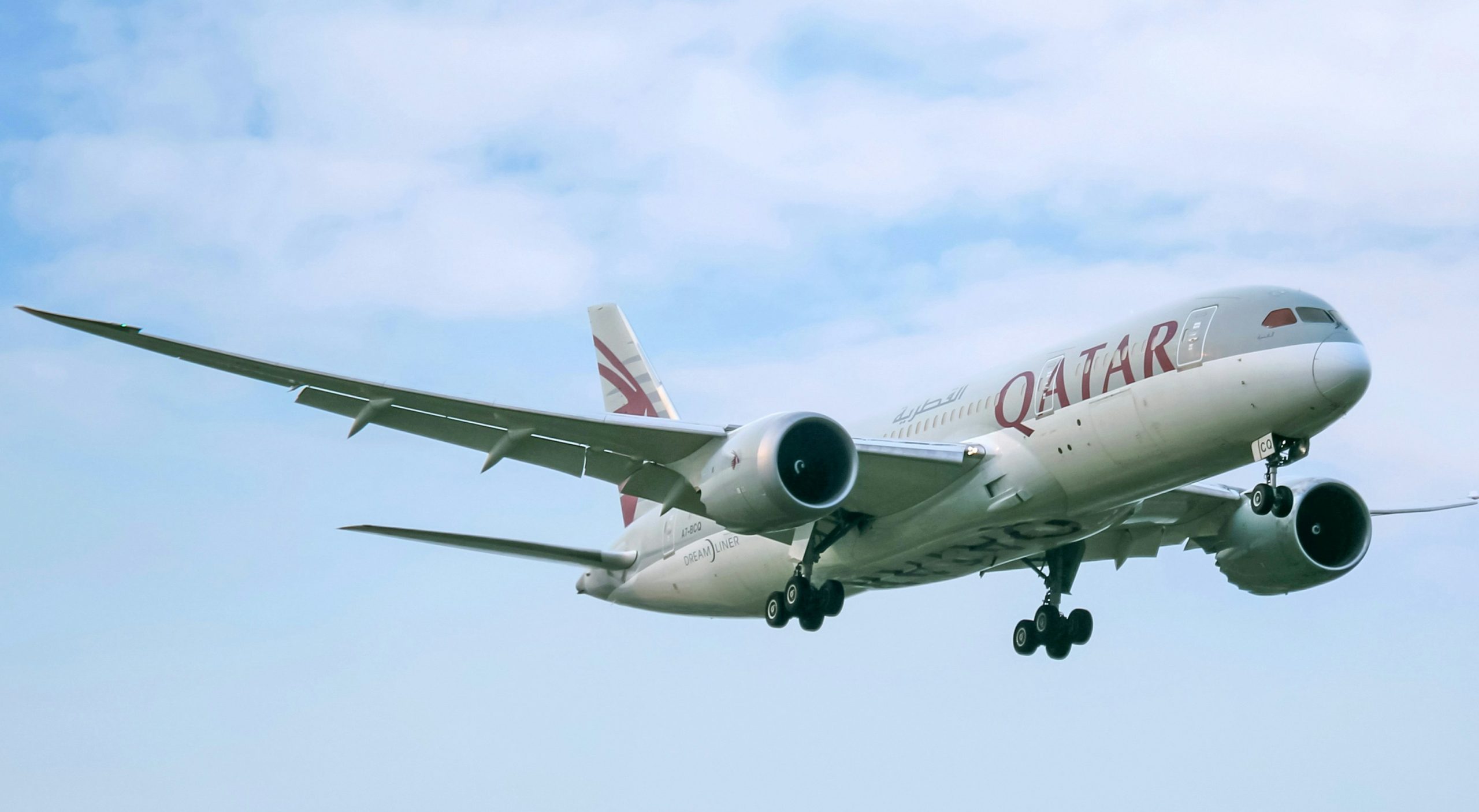


The Arab aviation sector is forecasting a net loss of over four billion dollars in 2026, amid a regional security crisis and huge fuel cost increases that have hit carriers’ bottom lines, as the global industry faces its lowest profits in over a decade.
At the Arab Air Carriers’ Organization (AACO) annual general meeting in Doha, the association representing 39 Middle East and North African airlines predicted a net loss of $4.3 billion (€3.82 billion) in 2026 and a 5.2% decline in air cargo traffic. Although the body expects the sector to remain profitable overall for the year, “ongoing operational disruptions” and “exposure to conflict-affected markets” are pressuring margins.
Held under the patronage of the Prime Minister and Minister of Foreign Affairs of the State of Qatar, and hosted by Qatar Airways in Doha, day two of AACO’s 59th AGM discussed the aviation industry’s outlook, shared challenges and strategic priorities, highlighting the importance of regional cooperation in shaping the future of air transport.
— Qatar Airways (@qatarairways) November 3, 2026
The surge in global fuel prices that has occurred since the US-Israel war on Iran and subsequent blockade of the Strait of Hormuz is a big factor. The industry as a whole is expected to make less money than it has done for 12 years, with fuel accounting for 31.4% of operating costs, compared to 25.4% in 2025. But for AACO airlines, the figure is much higher, 37.3% (up from 27.9%) – a 9-point rise in the Middle East versus the overall sector’s 6 points.
With four million jobs and the sector’s $290 billion (€258 billion) contribution to the regional economy at stake, Hamad Al-Khater, CEO of host Qatar Airways Group Chief CEO, said the solution lies in partnership working: “As our industry faces a very difficult period, with geopolitical developments continuing to disrupt global connectivity, regional cooperation has become our greatest strength,” he said.
One policy area in particular where Middle East airlines believe pulling together will ease the financial pressure on them is lobbying against the European Union’s Emissions Trading System (ETS). International flights arriving in Europe from destinations within 5,000 km will be required to pay for their CO2 emissions starting in 2029, under new rules put forward by the European Commission earlier this year. The proposal has intensified complaints from the global aviation industry about taking responsibility for their planet-warming activity.
During his address at the Arab Air Carriers Organization’s 59th Annual General Meeting, Qatar Airways Group Chief Executive Officer and AGM Chairman, Hamad Al-Khater, emphasised the importance of strengthening collaboration among Arab airlines and aviation partners to address current and future challenges and drive the region’s aviation growth.
— Qatar Airways (@qatarairways) November 2, 2026
Abdul Wahab Teffaha, AACO’s Secretary General, speaking to Euronews Travel, pointed to the Arab region’s existing obligations under the Carbon Offsetting and Reduction Scheme for International Aviation (CORSIA), and said already-strained Arab carriers could end up paying twice unless the two systems recognise each other and align.
In rhetoric that signals heightening tension over the issue, Teffaha said the expansion of ETS was a matter of “sovereignty” and that the EU’s attempt to broaden the system’s scope was “extra-territoriality, trespassing on the sovereignty of others.” He added: “And that applies for all the countries within the 5,000 kilometres, which are basically, we start from Turkey, through Iraq, down till Dubai, up until Sudan, Egypt, up to Morocco.”
More diplomatically, Sheikh Jassim Fahad Al-Thani, VP of Aeropolitical and Corporate Affairs at Qatar Airways, told the outlet Europe is “a key market” and highlighted the connectivity win-win of the airline’s increased European schedules to major international hubs such as London and Frankfurt that “give travellers more flexibility and better connections through Doha to our global network.”