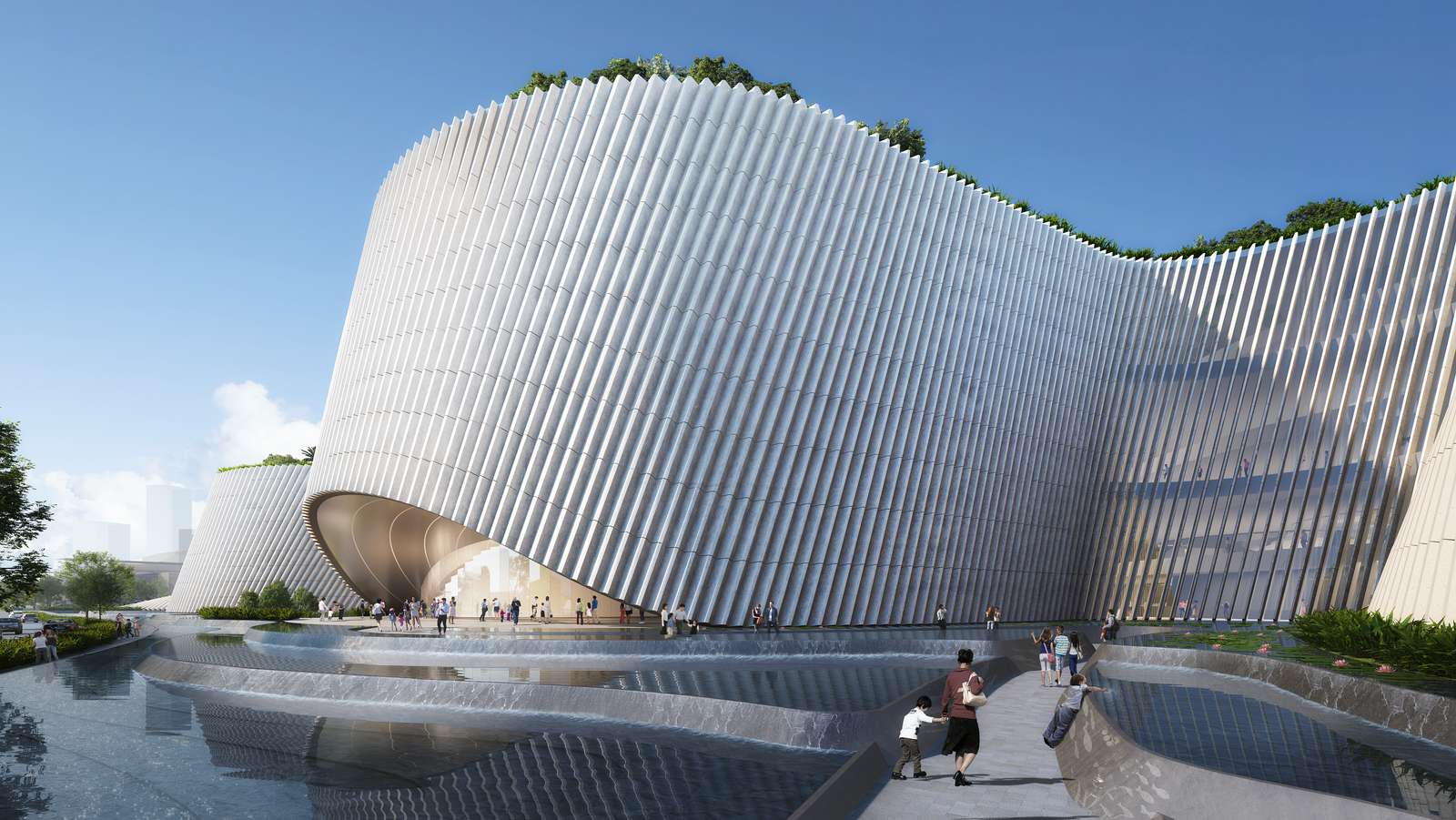



A new landmark dedicated to the story of life on Earth is set to open in Shenzhen later this month, as the Shenzhen Natural History Museum welcomes its first visitors on 28 July, following a month-long trial operation that began on 30 June. Combining science, architecture and sustainability, the new institution will become South China’s largest comprehensive natural history museum and one of the most ambitious cultural projects in the Guangdong-Hong Kong-Macao Greater Bay Area.
Located in Shenzhen’s Pingshan District, the museum covers 105,300 square metres and has been designed as more than a visitor attraction. Alongside its permanent exhibitions, the facility includes science education centres, research spaces and landscaped parkland, reflecting Shenzhen’s ambition to strengthen its cultural and scientific infrastructure while complementing its reputation as one of China’s leading centres for technology and innovation.
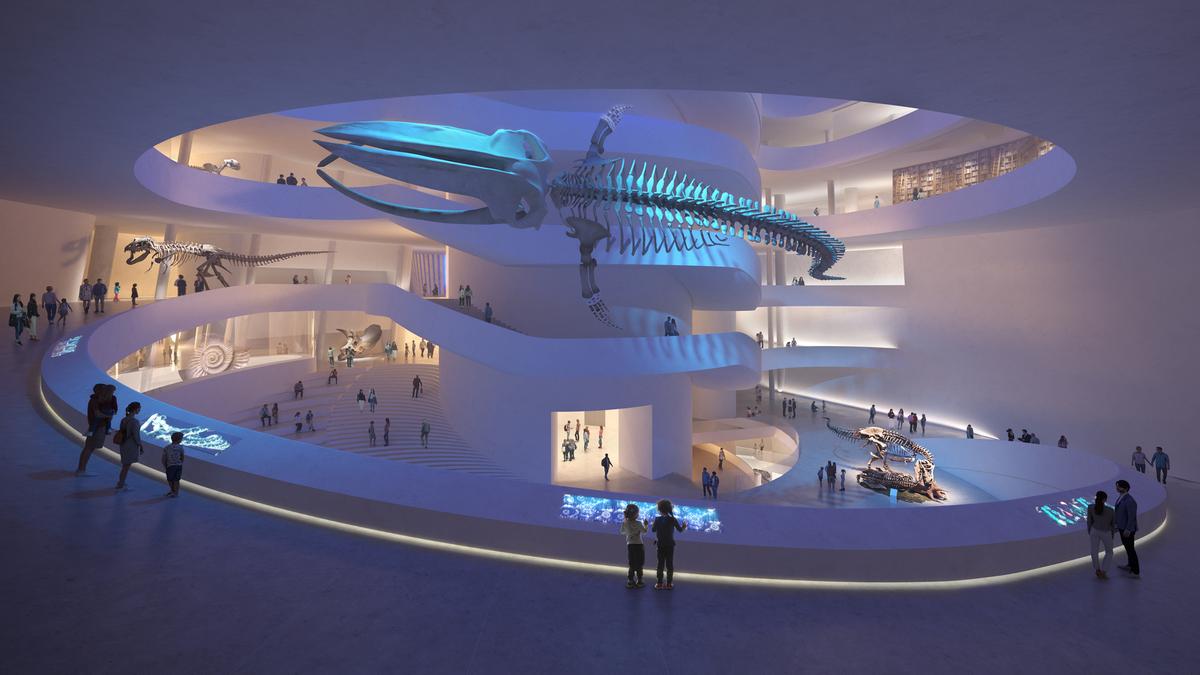
The museum’s eight permanent exhibition halls guide visitors through 4.6 billion years of Earth’s history. Dedicated to the Universe, Earth, Evolution, Dinosaurs, Humans, Biology, Ecology and Homeland, the galleries follow a chronological journey from the birth of the cosmos and the formation of the planet through the evolution of life, the age of dinosaurs and the emergence of humans.
The experience concludes closer to home, highlighting Shenzhen’s own subtropical ecosystems and the biodiversity of the Greater Bay Area. Exhibits explore the city’s mangrove forests, wetlands, mountains, rivers and coastline, illustrating how local landscapes fit into the broader story of life on Earth.
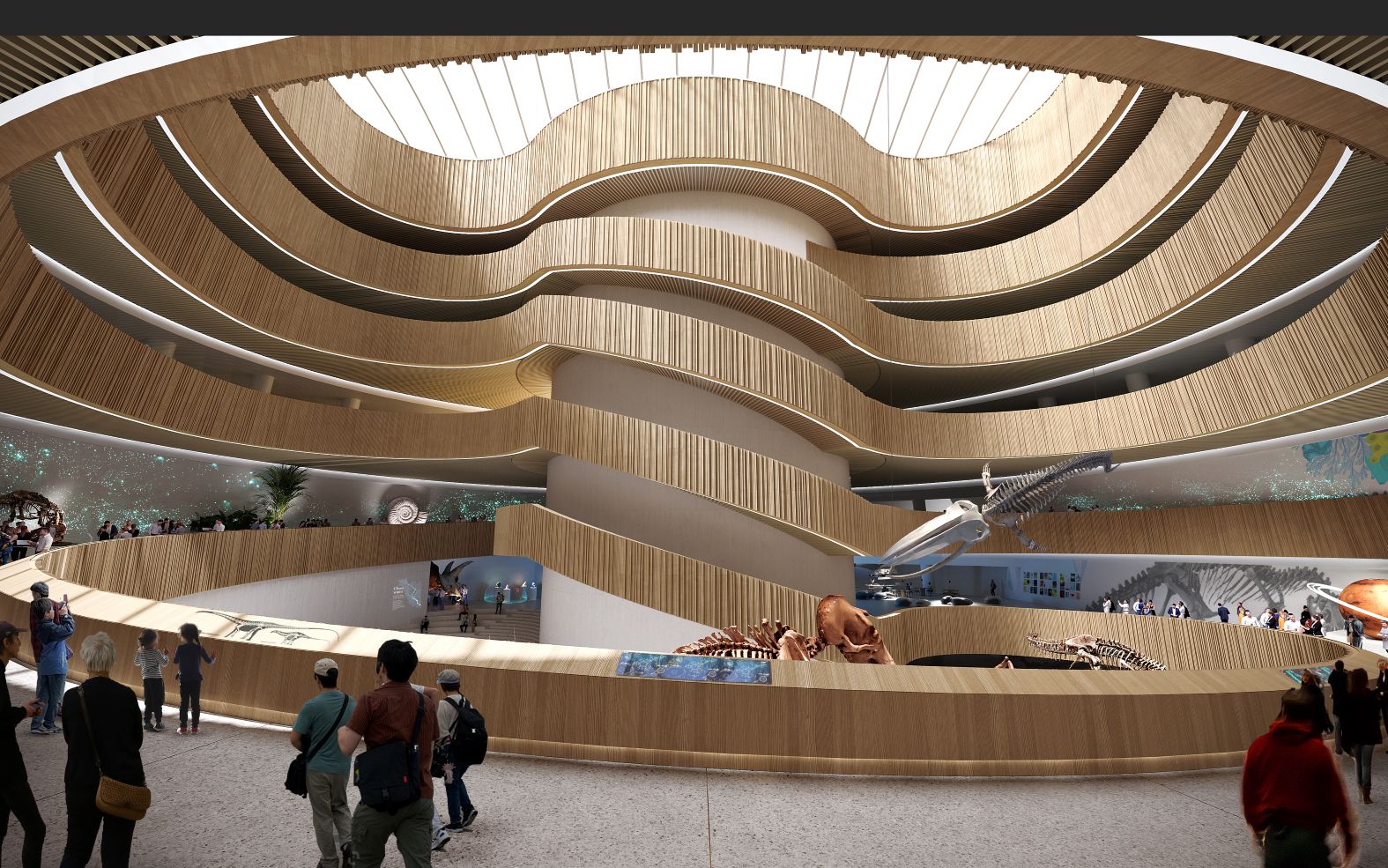
Alongside fossil collections and scientific displays, the museum combines traditional exhibitions with immersive environments, digital projections and interactive installations designed to make natural history accessible to visitors of all ages.
Among its highlights are more than 200 rare wildlife specimens donated by the late American philanthropist Kenneth E. Behring. The collection, which includes African elephants, polar bears and other rare species, has been familiar to many Shenzhen residents since it was first donated to the city in 2009 and displayed at the Shenzhen Museum in Futian District. It has now found a new permanent home in the Natural History Museum.
Architecture inspired by nature
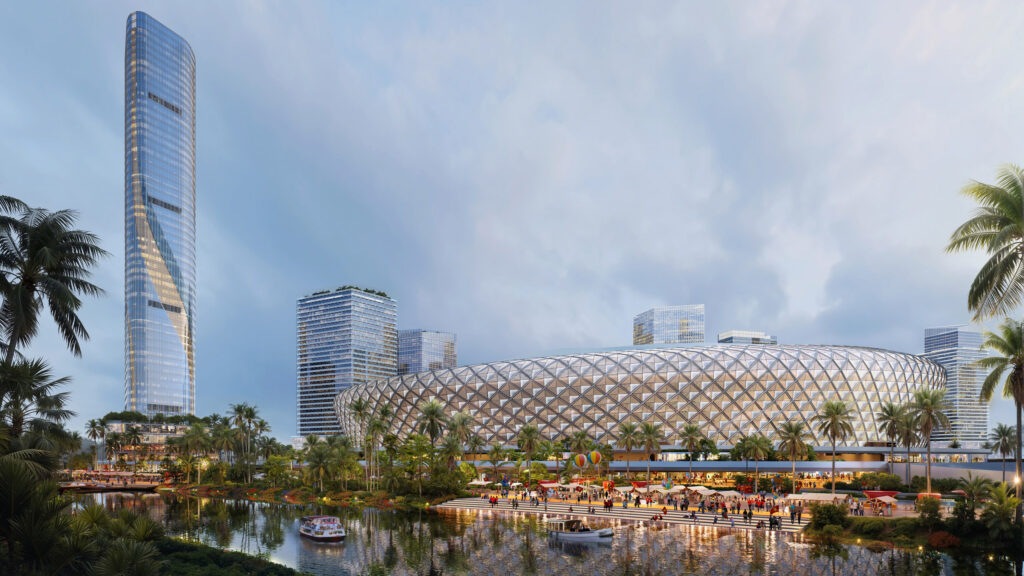
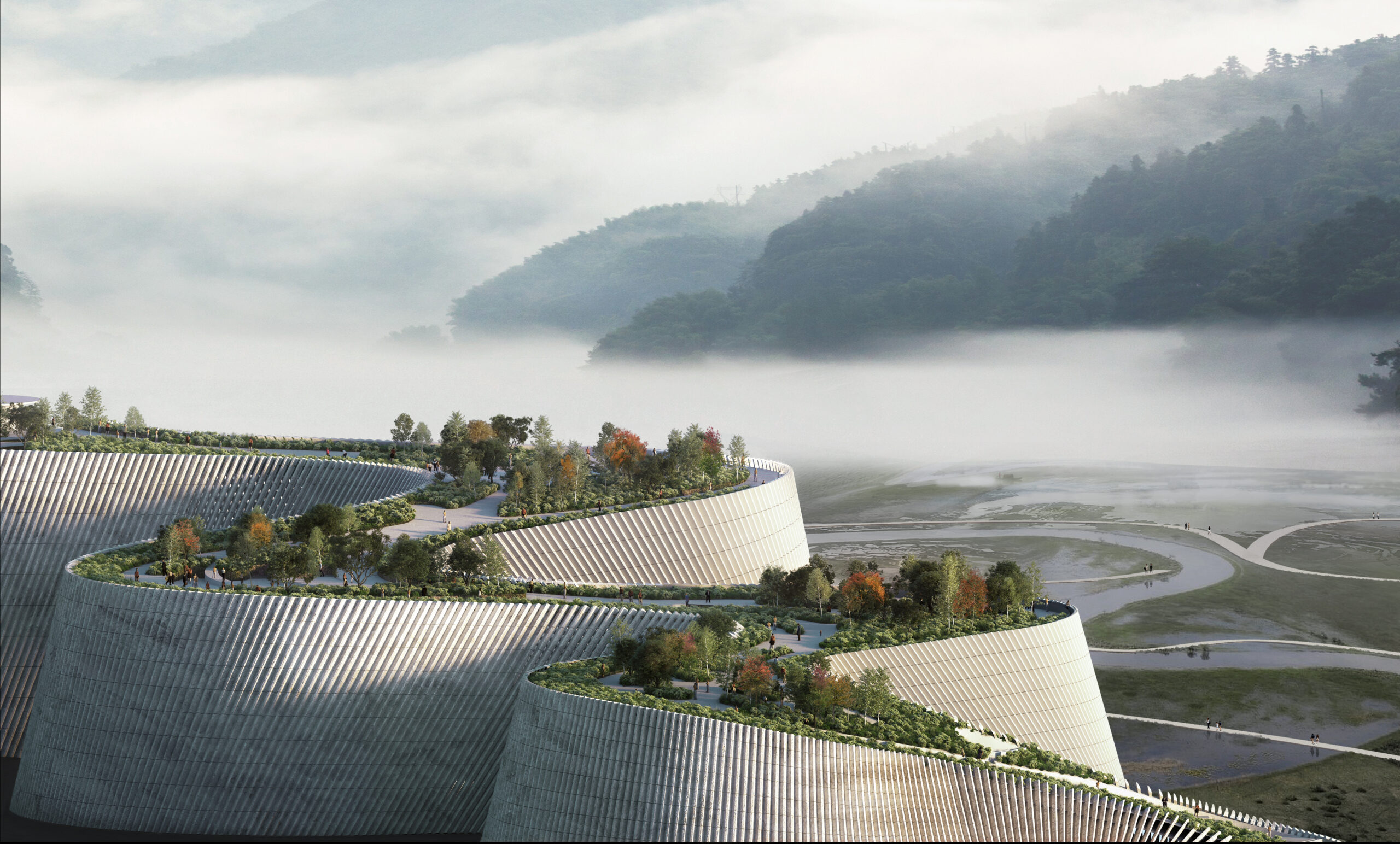
Designed by 3XN, B+H and Zhubo Design, the museum has been conceived as an extension of its natural surroundings. Its exterior draws inspiration from the nearby Pingshan River, with flowing forms that evoke a rocky cliff emerging from the water’s edge.
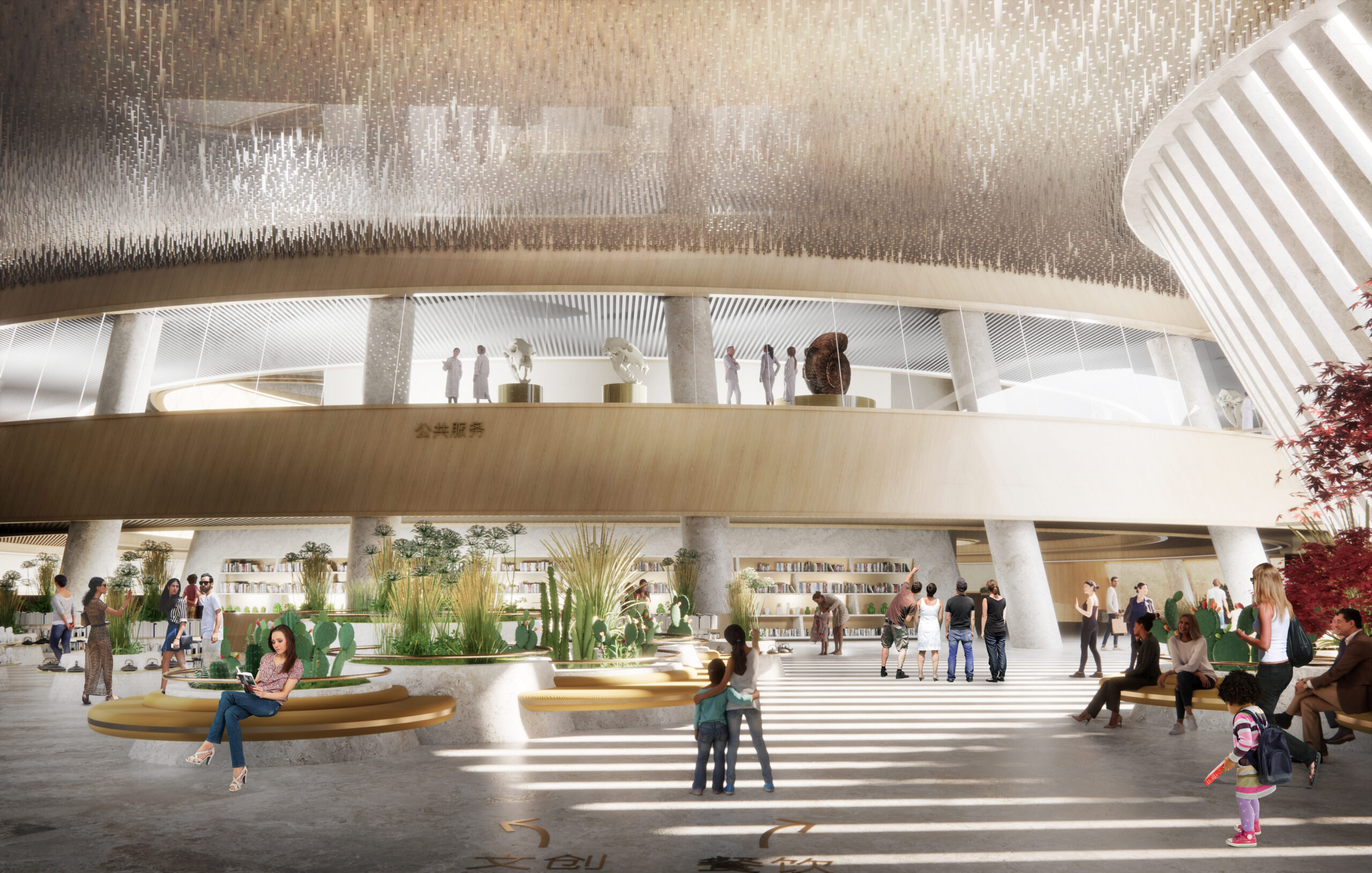
The building is composed of eight interconnected cone-shaped volumes, each housing one of the exhibition halls. At its centre, a naturally lit atrium welcomes visitors with a gently spiralling accessible ramp leading to the galleries, while an outdoor plaza connects the museum to the surrounding parkland, Yanzi Hill and the Pingshan River.
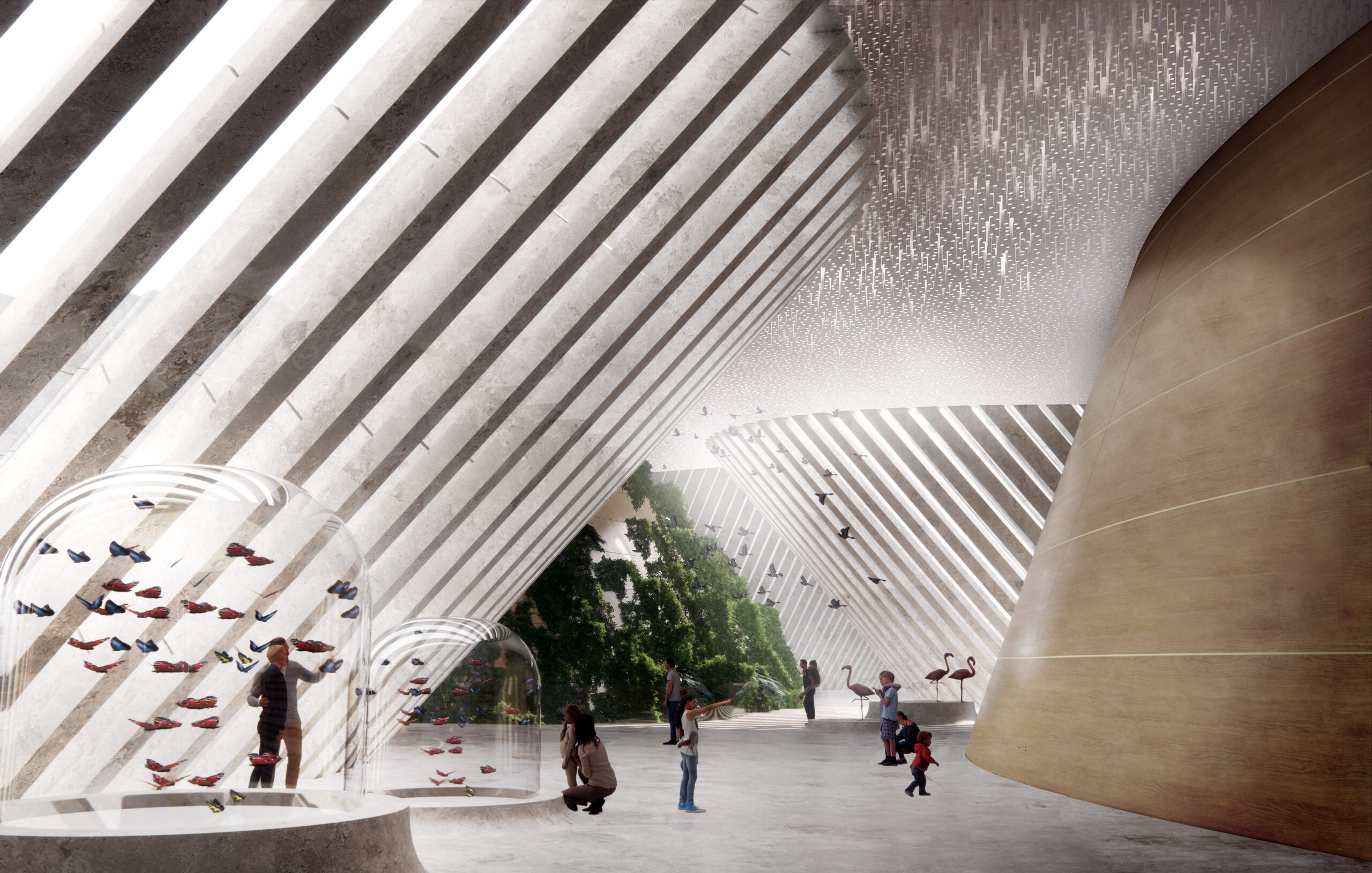
The façade is clad in locally sourced clay inspired by traditional Chinese terracotta tiles dating back to the Zhou Dynasty, creating a contemporary interpretation of historic building techniques.
“With its connection to the existing natural reserves, the Natural History Museum will not just become a destination in its own right but will be part of a much larger and more powerful cultural nucleus that draws together the city, community and nature,” said Kim Herforth Nielsen, founder and creative director of 3XN.
Built with sustainability in mind
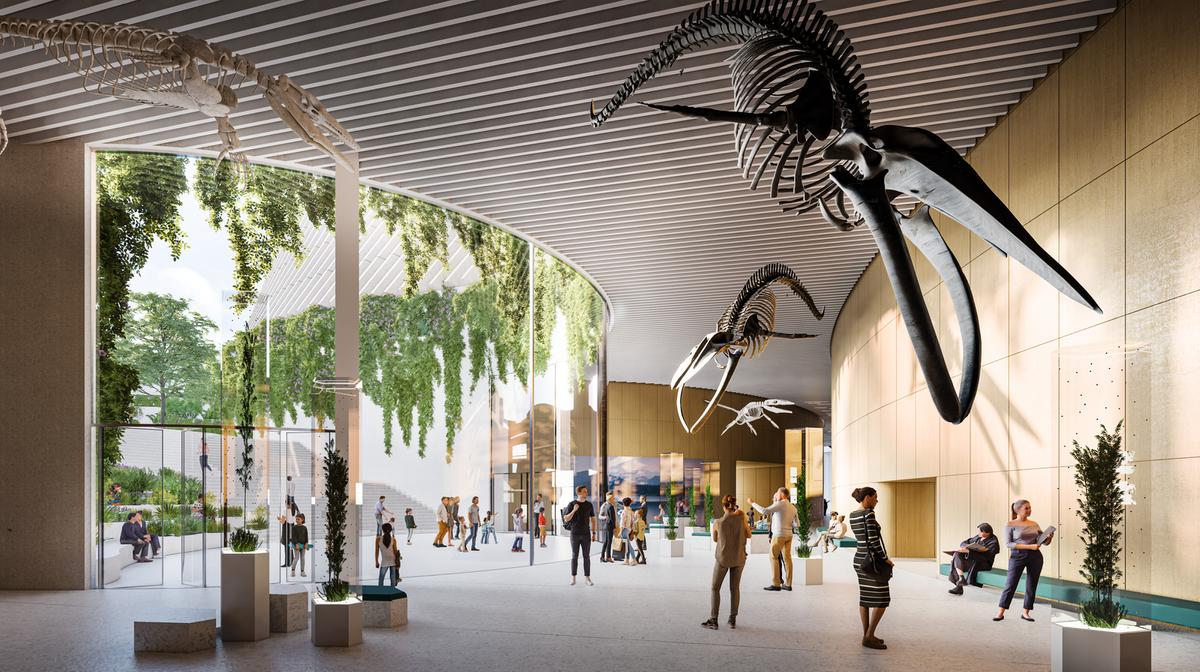
Environmental sustainability has been integrated throughout the project. The museum incorporates locally sourced and upcycled materials, landscaped flood-prevention zones, a rainwater harvesting system and a botanical rooftop park designed to support biodiversity while blending the building into the surrounding landscape.
Its lakeside setting also enables an integrated water management system that captures, stores and reuses rainwater for cooling, irrigation and other operational needs.
The Shenzhen Natural History Museum is one of 10 major cultural institutions currently under development across the city, alongside projects including the Shenzhen Opera House and the Shenzhen Science and Technology Museum. Together, they reflect Shenzhen’s transformation from a city known primarily for technology and manufacturing into an increasingly important destination for architecture, culture and science.
Admission to the museum will be free of charge. Visitors can reach the site via Metro Line 16 to Shaba Station or the Shenzhen SkyShuttle to Natural History Museum West Station.