

A new ranking of the world’s twenty most-visited museums has been published, and China dominates it overwhelmingly. Just over a decade ago, only a handful of Asian museums made the list. Part of the shift comes from a broader definition of what counts as a museum, which now takes in historic palaces and heritage sites.
Compiled by the Themed Entertainment Association (TEA), together with research partner Entertainment + Culture Advisors (ECA) and the Park Database (TPDB), the ranking is based on visitor numbers recorded in 2025.
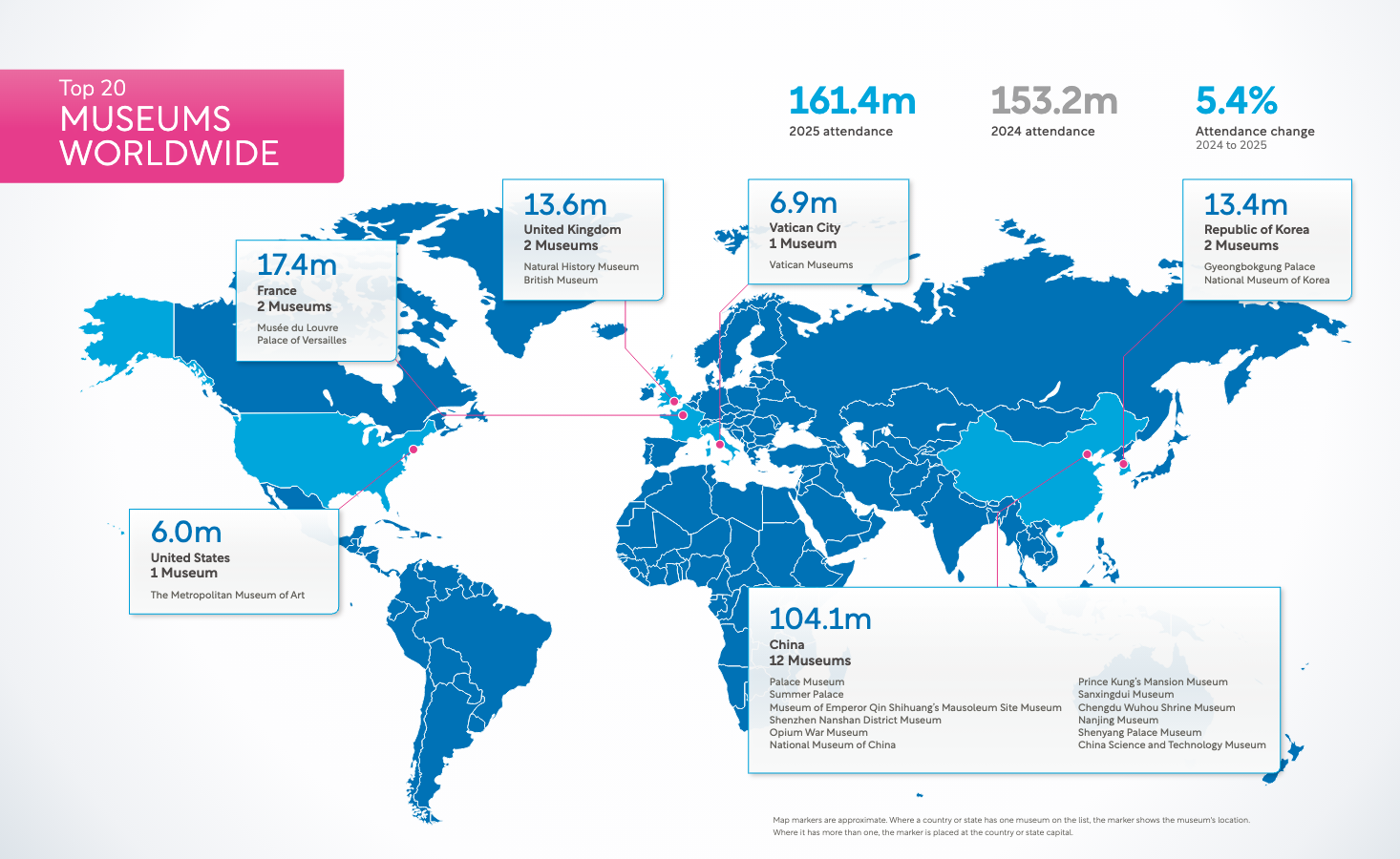
China dominated the list, with 12 entries, five of which are in its capital, Beijing. It also claims all three spots on the winners’ podium.
The remaining eight spots are shared between France, the United Kingdom and South Korea, with two entries each, while the United States and Vatican City have one each.
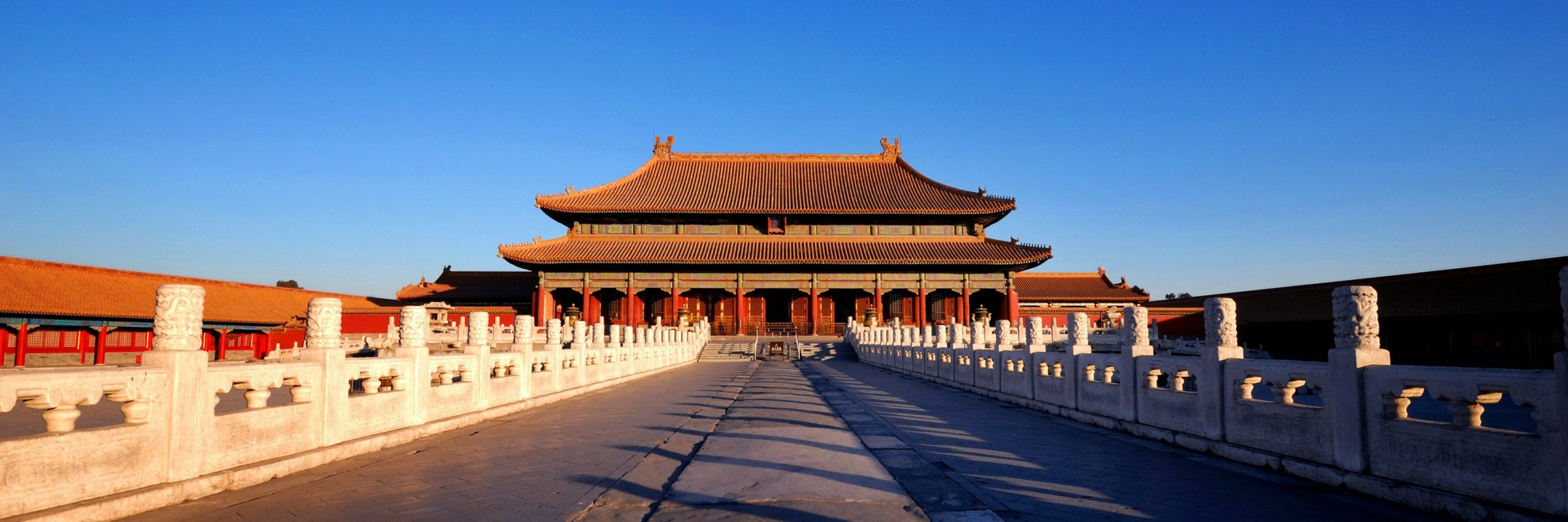
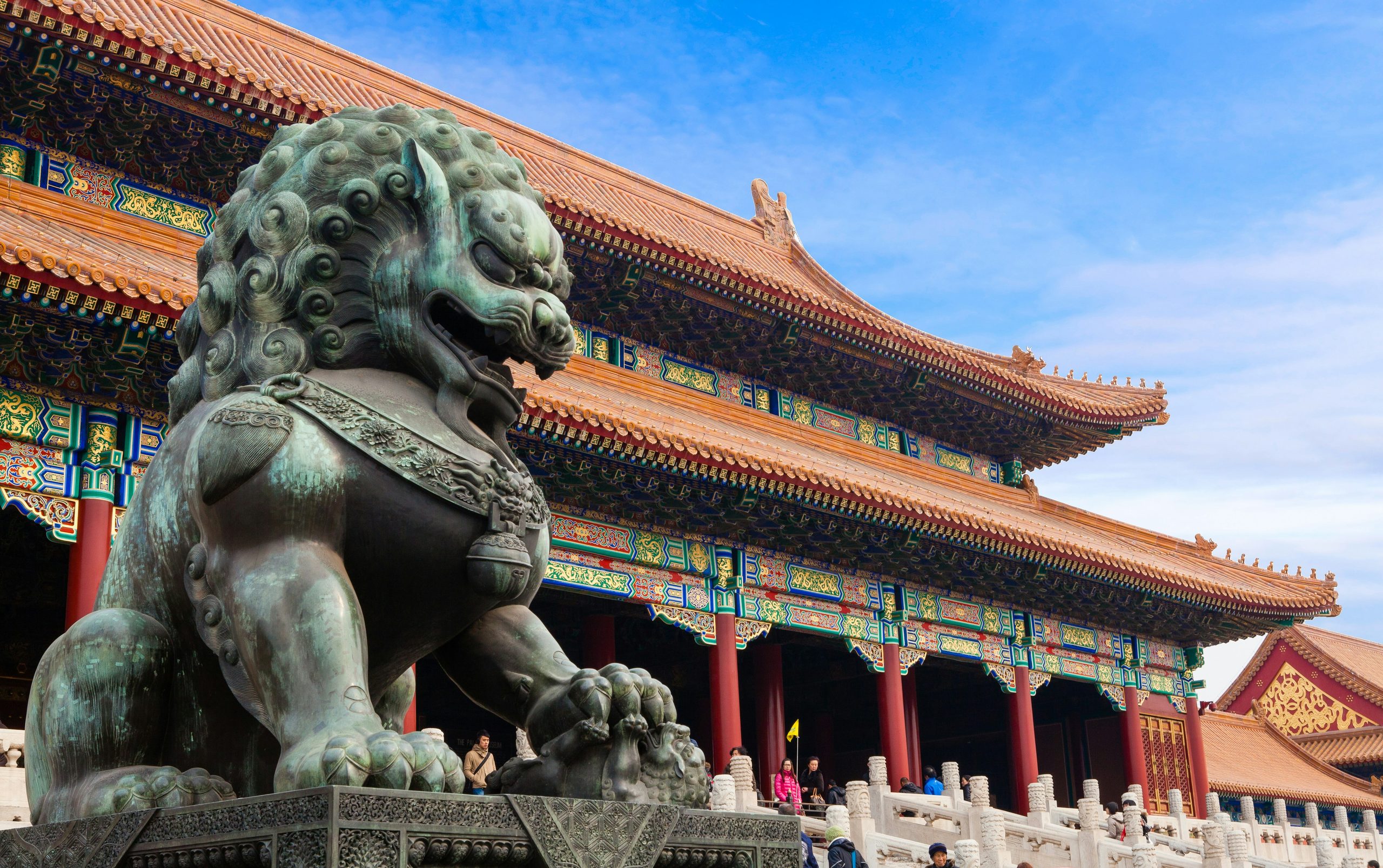
The number one spot goes to Beijing’s Palace Museum, better known as the Forbidden City. Once upon a time the residence of Chinese emperors, it now houses a vast collection of imperial treasures, paintings, ceramics, and jade artefacts. It welcomed 19 million people last year.
Second place goes to the Summer Palace, also in Beijing, another remnant of the country’s imperial past. Renowned for its gardens, temples and lakes, it attracted 17,381,000 visitors in 2025.
Beijing’s National Museum of China, tracing the country’s history and civilisation, comes tenth with 6,900,000 visitors, while Prince Kung’s Mansion Museum, a beautifully preserved Qing dynasty residence, ranks fourteen. Beijing’s fifth entry, which also closes the top 20, is the China Science and Technology Museum.
Elsewhere in China, the Emperor Qin Shihuang’s Mausoleum Site Museum in Xi’an, home to the famous Terracotta Army, takes third place on the winners’ podium with 10.97 million visitors.
Shenzhen’s Nanshan District Museum, dedicated to local history and cultural heritage, ranks sixth, while another defining chapter of Chinese history is explored at the Opium War Museum in Dongguan (9). The museum retraces the nineteenth-century conflicts between imperial China and Western powers, which marked the beginning of what China has long called its “century of humiliation”.
The Sanxingdui Museum in Guanghan, famous for its extraordinary bronze masks and sculptures, ranks fifteenth, just ahead of Chengdu’s Wuhou Shrine Museum, dedicated to the Three Kingdoms period.
Nanjing Museum, with its massive collection of Chinese art and archaeology, and the Shenyang Palace Museum, a former imperial residence, occupy eighteenth and nineteenth places respectively.
Europe is represented by only five institutions on the list, with Paris and London unsurprisingly leading the way.
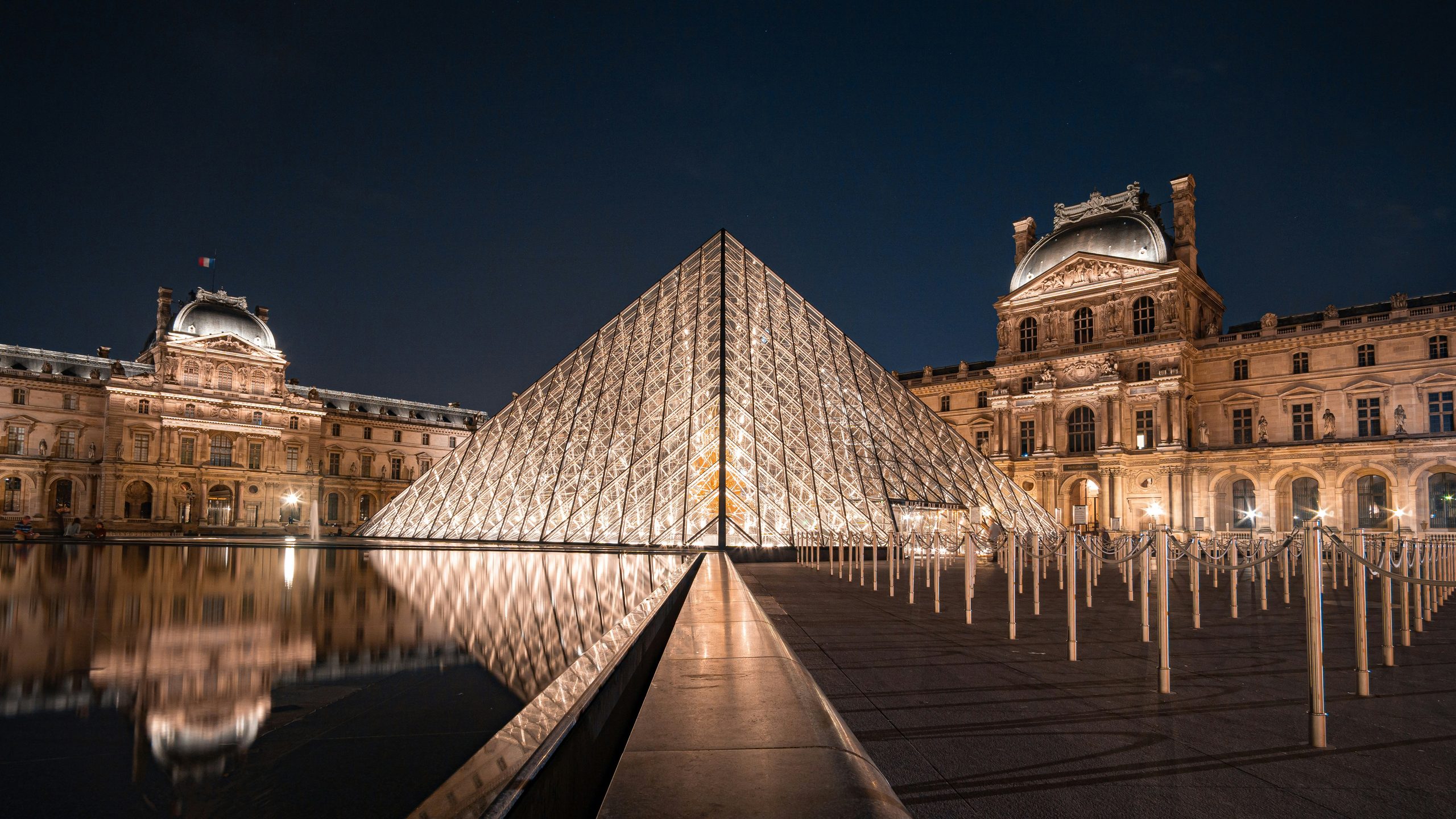
Le Louvre in Paris, home to Leonardo da Vinci’s Mona Lisa, the Venus de Milo, and countless other masterpieces, comes fourth with just over 9 million visitors in 2025. It remains the most visited museum outside of China.
France’s second entry is the Palace of Versailles (5), famous for its Hall of Mirrors and gardens, with 8.4 million visitors.
London, where many of the major museums offer free admission to their permanent collections, has two entries. The Natural History Museum (7), celebrated for its dinosaur fossils and natural history collections and the British Museum (13), home to the Rosetta Stone and Egyptian antiquities.
The Vatican Museums (8), whose collection includes Michelangelo’s celebrated frescoes in the Sistine Chapel, completes Europe’s representation.
South Korea also has two institutions in the ranking, both in Seoul: Gyeongbokgung Palace (11), the former royal residence of the Joseon dynasty and the National Museum of Korea (12), showcasing Korean art and archaeology.
Across the Atlantic, New York’s Metropolitan Museum of Art, or the Met, comes seventeenth. Famous for its collections spanning thousands of years and civilisations, it is the only American institution to make the top-20.
Just over a decade ago, London, Paris, and Washington, DC, dominated the list.
In the European top-20, many of the top places are former royal residences, including Versailles, Istanbul’s Topkapı Palace, Vienna’s Schönbrunn Palace and Kraków’s Wawel Royal Castle, alongside archaeological sites such as Pompeii.