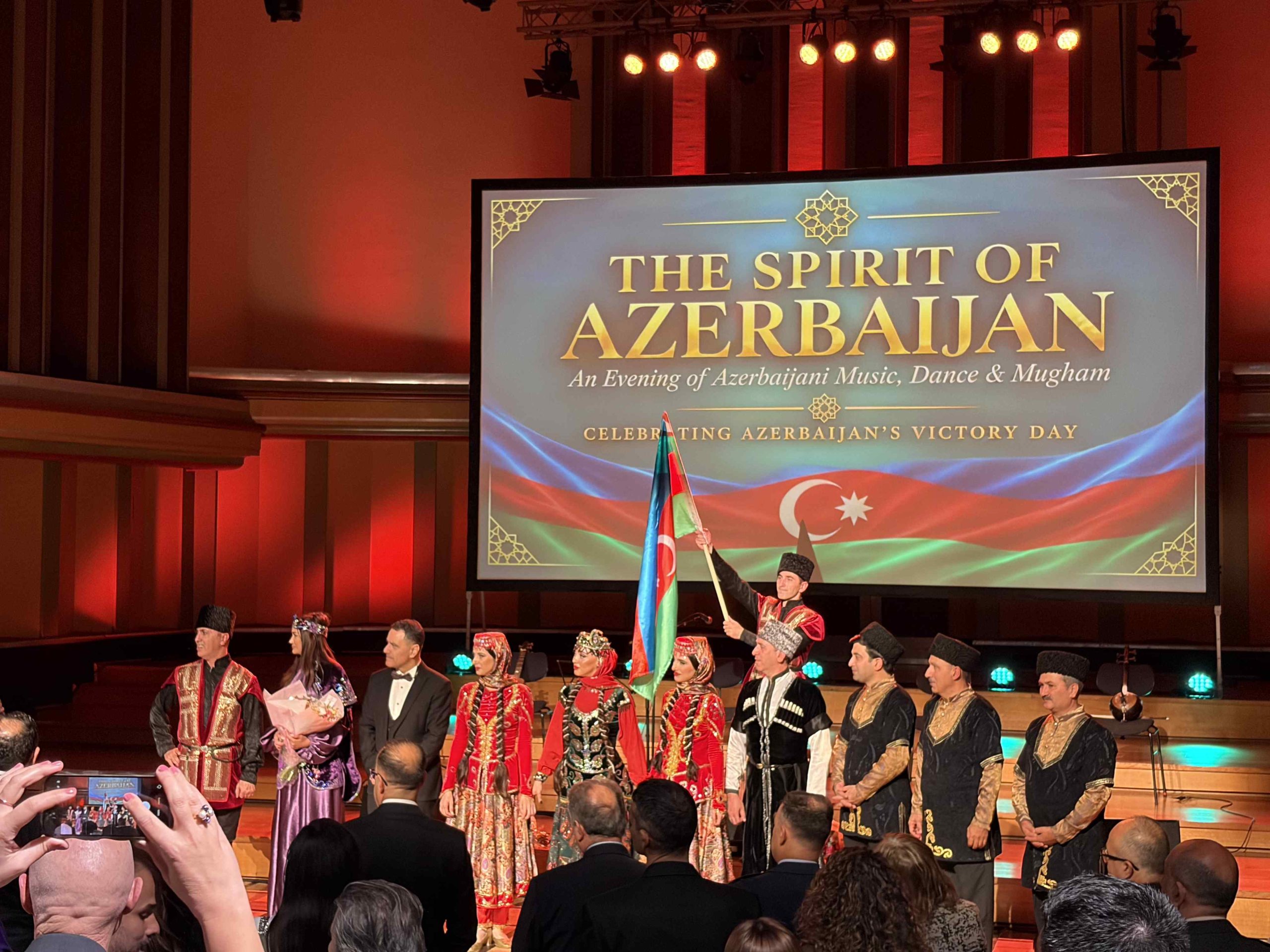



Azerbaijani music and dance took centre stage at Flagey in Brussels on 4 November, with a performance by the Azerbaijan State Song and Dance Ensemble named after Fikret Amirov. Entitled ‘The Spirit of Azerbaijan’, the evening showcased the country’s musical traditions, including mugham.
Organised jointly by Azerbaijan’s Embassy in Belgium and its Missions to the European Union and NATO, the concert marked the sixth anniversary of Victory Day.
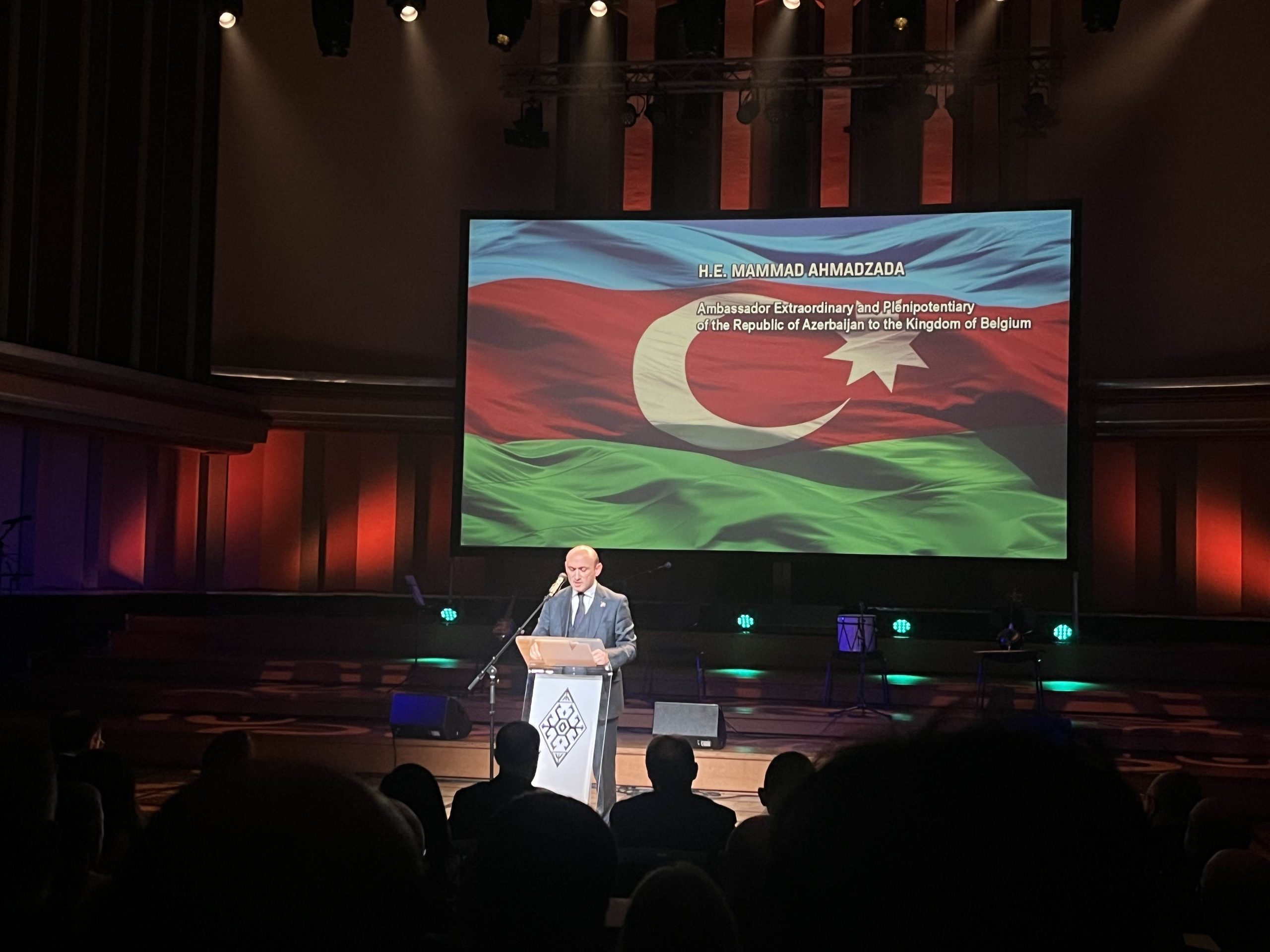
The evening opened with Bayati-Shiraz, one of the seven main mughams, recalling its performance in Shusha in 2021 when the Kharibulbul Music Festival returned to the city after almost three decades. For Mammad Ahmadzada, Azerbaijan’s Ambassador to the Kingdom of Belgium, the choice carried particular significance: the piece “is much more than a musical composition. It’s the voice of a nation’s pain, the expression of its longing, the reflection of its victory and, ultimately, its hope for peace.”
© Travel Tomorrow
“Today, this music carries the message of peace. It symbolises our hope for lasting stability, reconciliation, and a future in which these lands, once marked by suffering and conflict, will become places of prosperity, development and renewed life,” he added.
Songs and dances from Karabakh
Founded in 1938 by Uzeyir Hajibeyov, widely regarded as the father of Azerbaijani classical music, the ensemble bears the name of Fikret Amirov, known for his symphonic interpretations of mugham. For its Brussels performance, it prepared a programme focused on the musical and dance traditions of Karabakh and the region Azerbaijan calls Eastern Zangezur.
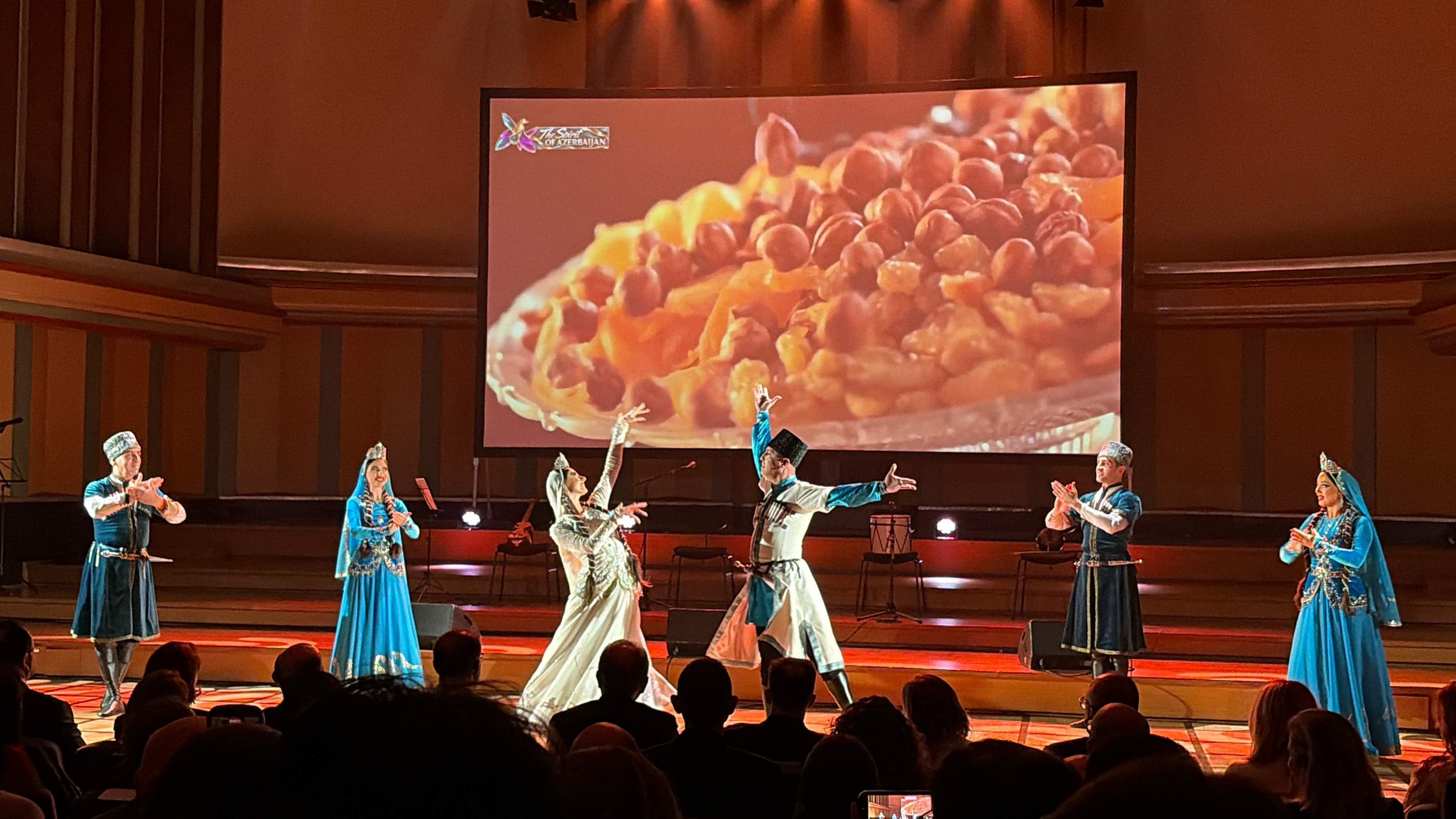
Songs, instrumental pieces and mugham performances alternated with energetic folk dances. Dressed in colourful costumes, the dancers performed intricate choreography with precision, while the singers impressed the audience with their expressive vocals.
Behind the performers, a screen displayed landscapes from across Azerbaijan alongside footage of reconstruction work in its cities and villages. The evening concluded with a buffet of traditional Azerbaijani specialities.
What is mugham?
Mugham is a traditional form of Azerbaijani music that combines established musical structures with extensive improvisation. A male or female singer, known as a khanende, performs with instruments such as the tar, a long-necked lute, the kamancha, a spiked fiddle, and the daf, a large frame drum.
Passed down largely from master to student, mugham leaves considerable room for individual interpretation, meaning no two performances are quite the same. Its seven main modes are Rast, Shur, Segah, Shushtar, Chargah, Bayati-Shiraz and Humayun, each associated with different moods and emotions. Traditionally, it was performed at weddings and private gatherings of music lovers.
Shusha has long been an important centre of mugham. The city hosted the first Kharibulbul Music Festival in 1989, named after the flower that has become one of its symbols.
UNESCO inscribed Azerbaijani mugham on its Representative List of the Intangible Cultural Heritage of Humanity in 2008. Azerbaijani music also features on the Golden Record carried aboard NASA’s Voyager spacecraft, launched in 1977, taking a part of the country’s musical heritage into space.