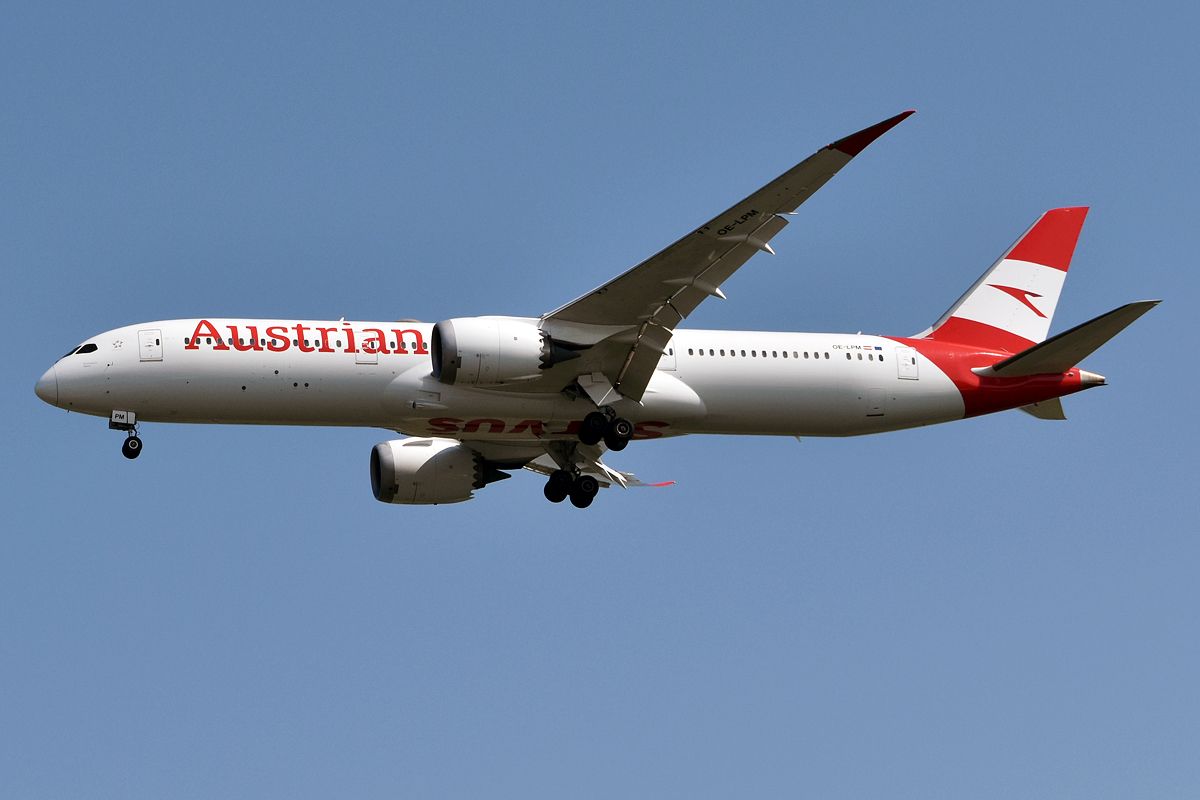



Austrian Airlines and Bulgarian government officials have provided updates after a flight from Israel to Austria diverted to Bulgaria for an emergency landing on the evening of Sunday 18 October 2026, due to a bomb threat.
Carrying 51 passengers and six crew, flight OS82, departed Tel Aviv’s Ben Gurion airport at 6:46 pm local time, heading to Vienna, but received the bomb threat just before overflying the Romanian border at around 11,500 metres altitude. The alert was “called in by an Austrian national who was not on board” according to news outlet Haaretz.
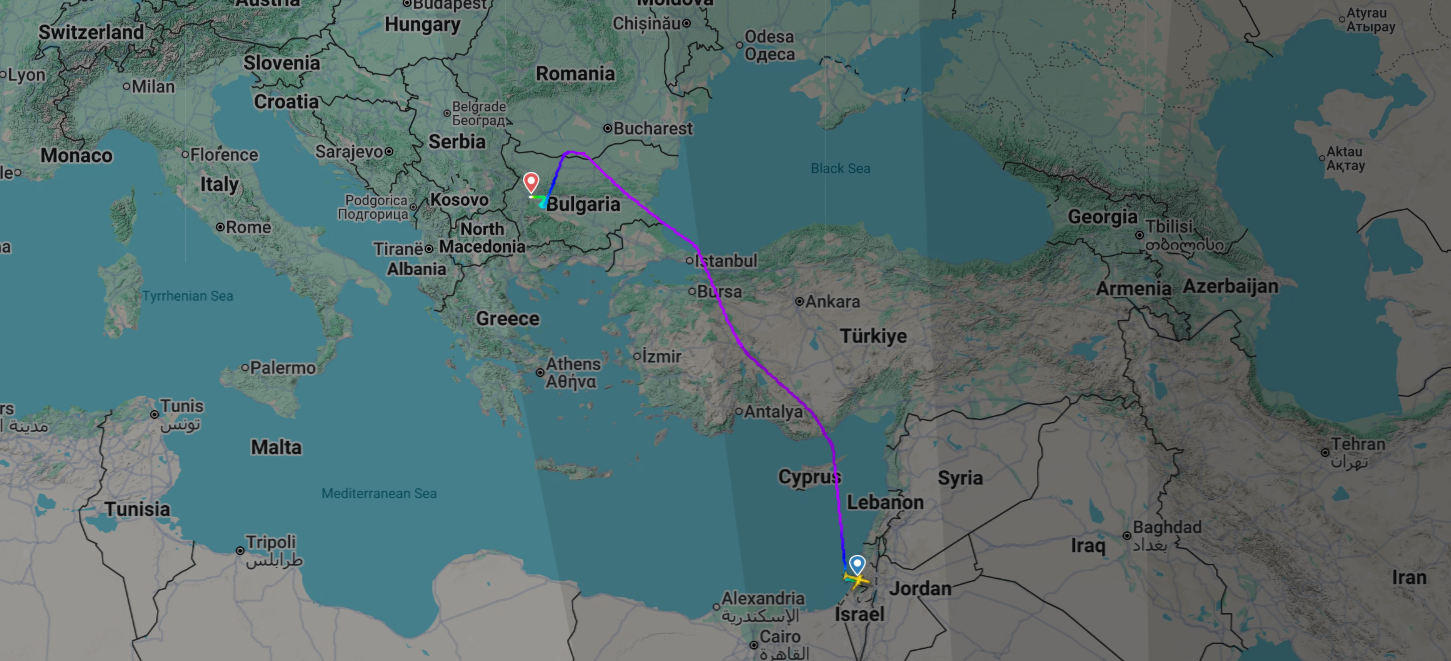
According to aviation tracker sites FlightAware and ADS-B Exchange, it transmitted the general emergency “squawk code” 7700 and turned south towards the Bulgarian capital. Bulgaria’s Ministry of Defence told press that, in coordination with NATO’s Combined Air Operations Centre at Torrejón in Spain, a MiG-29 fighter jet was scrambled to accompany the Airbus A320-200 to Sofia.
It safely made an emergency landing at Vasil Levski airport at 9:43 pm and was evacuated with no reported injuries. Passengers were searched, and plans were made to book them onto alternative flights, according to the airline. However, following further inspections to the aircraft and crew that had received the bomb threat, the flag carrier confirmed that “no danger was identified,” enabling the plane to continue its onwards route to the Austrian capital, “later that night.”
The incident comes less than three weeks after passengers on board an Israel-bound flydubai jet underwent a terrifying ordeal when the co-pilot attacked the captain with an axe and attempted to bring the plane down. As the aircraft plummeted nearly 5,000 metres in around 30 seconds, the captain was able to open the cockpit door and allow a team of passengers and crew to enter and overcome the assailant, before a back-up crew took over flying the aircraft and landed it safely in Saudi Arabia, where the Omani co-pilot was arrested.
An Austrian Airlines flight from Tel Aviv to Vienna diverted to Sofia, Bulgaria, on Sunday following a bomb threat involving a suspicious object on board. Flight #OS82, operated by an Airbus A320 (OE-LZE), declared a general emergency (squawk 7700) while cruising at 38,000 feet over Bulgaria. Flight data: https://t.co/z0fVYFeh4I #Aviation #FlightEmergency #AirNavRadar
— AirNav Radar (@AirNavRadar) October 19, 2026
Two credible, active threats to commercial aviation in and out of Israel in less than a month, on top of anonymous, hoax bomb threats against Delta Air Lines flights to Israel reported by Turkish news agency Anadolu and Austrian Wings, represent a disturbing shift of the Middle East’s regional conflict into the skies. That’s on top of the ongoing risks to airports in the Gulf since the start of the US-Israel war on Iran, with recent weeks witnessing 19 dead and hundreds injured in Houthi attacks on Saudi Arabian airports.
As the Wall Street Journal puts it: “Commercial air travel has been dragged into the front lines of escalating conflicts across the globe, with airports, planes and airspace becoming the deliberate target of missile and drone attacks on a scale not seen before.”
The situation led the US stated department to update its travel advice for citizens in 12 Middle Eastern nations on 18 October, with security alerts issued for Bahrain, Iran, Iraq, Israel/Jerusalem, Jordan, Kuwait, Lebanon, Oman, Qatar, Saudi Arabia, the UAE, and Yemen. At the time of writing, the United Kingdom Foreign and Commonwealth Office (FCDO) has not updated its travel guidance for Israel but already warned “against all travel to parts of Israel.”