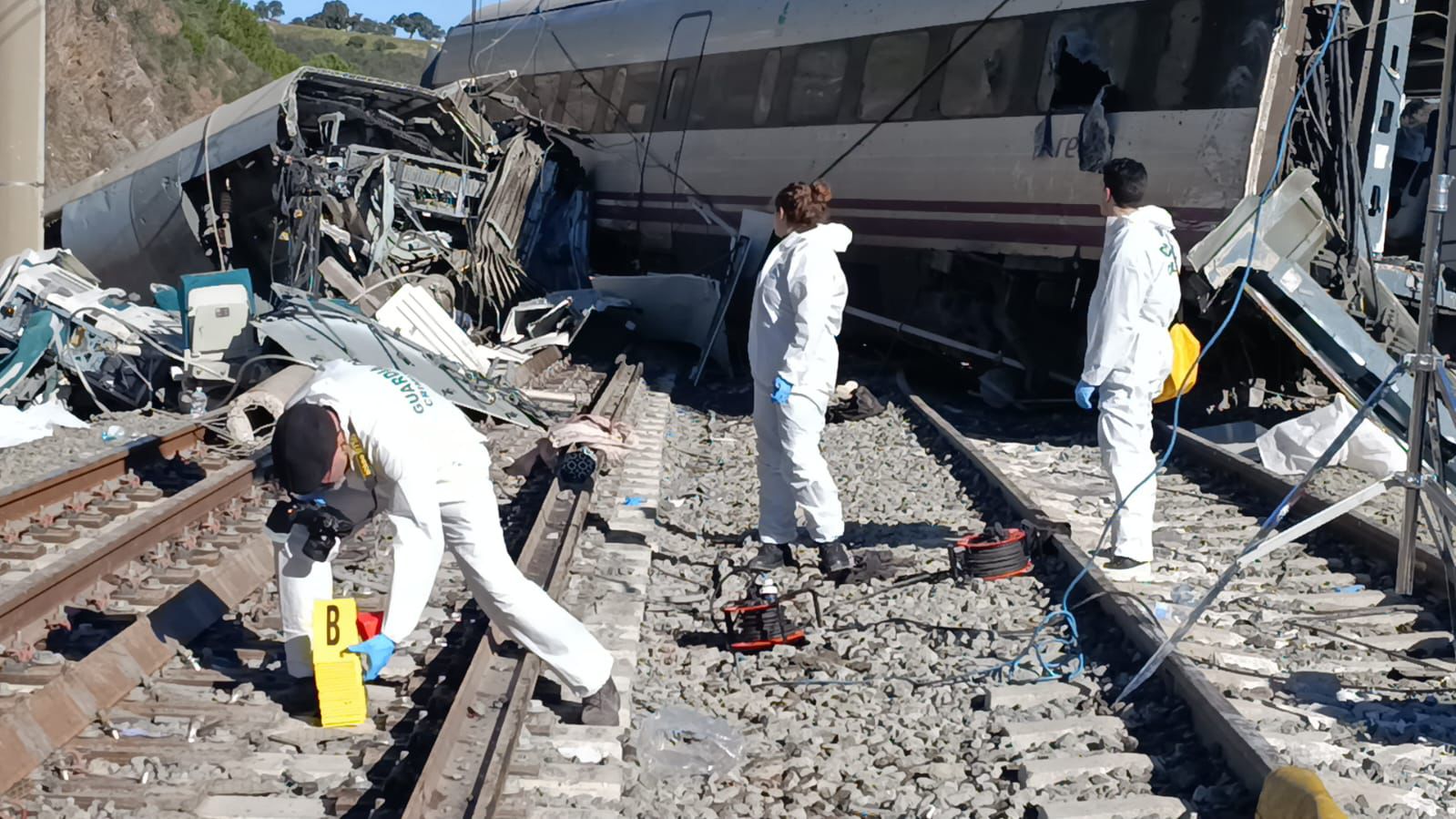


A high-speed train crash in Spain on 18 January 2026 has killed at least 41 people and left 159 people injured, with some staying in critical condition. The deadly collision between two trains occurred near Adamuz, in Andalusia at 7:39 pm, following a derailment that is yet to be explained.
The rear coaches of an Iryo train from Madrid to Málaga derailed, shortly before being hit by a Renfe Alvia train moving at 200 km/h on its way to Huelva. Passengers on the Iryo train described a “jolt” like an “earthquake” as the derailment occurred, with lights going out, and windows smashing as carriages landed on their side, on the opposing track.
➡️ At least 39 people were killed and 152 were injured after two high-speed trains collided near Adamuz in Spain’s Cordoba province
— Anadolu English (@anadoluagency) January 19, 2026
▪️ Prime Minister Pedro Sanchez canceled his agenda as an investigation was launched; rail traffic across parts of Andalusia was suspended, and… pic.twitter.com/IXMkwauUcH
The derailed coaches then forced the oncoming Renfe train into the rail embankment. The driver of the Renfe train is among the dead. At least 41 others, mostly from the first two carriages of the Renfe train were killed, from a total of 484 people who were travelling on the trains at the time. At the time of writing, some victims appear to be missing, according to loved ones’ pleas for information on social media sites and at local hospitals. Around 30 of the injured are reported to be in serious condition, with five “very serious.” At least five of those hospitalised were children.
A shell-shocked survivor just described pure pandemonium after a bullet train went full Mad Max, derailed at high speed, and slammed head-on into another train. Southern Spain is reeling—this is the deadliest rail catastrophe to hit the country since 2013. https://t.co/INOkfGnprk pic.twitter.com/SN8NmGLNT7
— Laszlo Varga (@LaszloRealtor) January 19, 2026
The scene of the crash was attended by emergency services, army units, and the Spanish Red Cross, who worked on rescues and treatment all through what Prime Minister Pedro Sánchez called “a night of deep pain.” He has declared three days of national mourning.
Other European and Spanish politicians, officials, and royals have expressed concern, condolences, and bewilderment at the crash, which occurred on a straight section of line that had been renovated less than a year ago, according to Transport Minister Óscar Puente, who said it was “terribly strange” that the three-year-old Freccia 1000 Iryo train had derailed. It was reported to have been inspected only four days prior to the tragedy.
Tragedy in southern Spain🇪🇸: a high-speed train derailed, crossed tracks, and hit another train head-on.
— Sumit (@SumitHansd) January 19, 2026
More than 21 reportedly killed, and at least 100 injured, with 25 suffering critical injuries#Spain | #trainaccident pic.twitter.com/UHas6y2Luk
However, it has since emerged via Reuters that Spanish train drivers’ union SEMAF had written to the state-owned rail infrastructure body ADIF in August 2025, warning about train breakdowns and damage due to potholes and imbalances in overhead power lines on the section of line where the crash happened. An independent enquiry has been launched and is not expected to report formal findings for at least a month, but investigators have already discovered a broken joint on the rails.
Rail services between Madrid, Córdoba, Seville, Málaga, and Huelva have all been suspended until at least Friday, 23 January 2026. Renfe is coordinating alternative transport options and additional trains are running on the Madrid, Extremadura, Sevilla line.
The crash is being described as the worst in Spain in the 12 years since a high-speed derailment in Galicia, which killed 80 people. But, relative to its size, which is over 4,000km long and is second only to the Chinese high-speed network, Spain has a good safety record for rail transport.
In Europe, most rail fatalities are caused by people on the track, according to European Commission Eurostat data, which shows Portugal had the highest number of deaths per 1000km of track in 2024, followed by Hungary, Slovakia, Lithuania, and Poland. Nonetheless, one in five of the total incidents in Spain that year (18) were caused by derailments, amounting to five times the EU average.