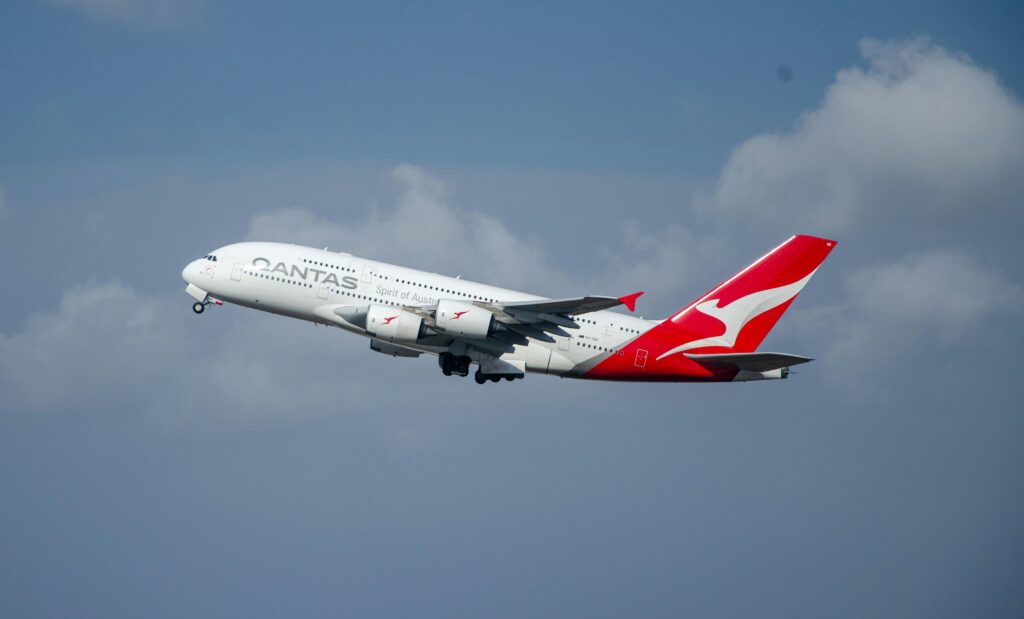
In its Singapore National Aviation Safety Plan for 2025-2027, the Civil Aviation Authority of Singapore has added flight turbulence to the list of state-level operational safety risks. The decision comes after two incidents involving Singapore-registered aircraft caused one death and multiple injuries in 2024.
Previously, Singapore’s National Aviation Safety Plan already listed a multitude of key safety risks: loss of control in-flight, mid-air collision, runway excursion, runway incursion, controlled flight into terrain, system/component failure, and abnormal runway contact. Together, they were responsible for ten incidents over the 2022-2024 period.
However, over the course of 2024, Singapore-registered aircraft were also hit by two accidents caused by flight turbulence. On 21 May 2024, a Boeing 777 flying from London to Singapore experienced severe turbulence in Myanmar, resulting in the death of one 73-year-old passenger and multiple injuries. Months later, on 6 September 2024, a Boeing 787-9 was hit by turbulence in Hong Kong during descent, leaving one passenger and one cabin crew seriously injured.

Increasing risk of turbulence
Since those incidents, Singapore-based airlines have been implementing a series of measures to minimise the impact of events caused by turbulence, according to the Civil Aviation Authority of Singapore.
“These include incorporating turbulence-related scenarios as part of evidence-based training for flight crew. This ensures that they are well-prepared to manage turbulence encounters. The use of modern weather radars and turbulence awareness applications also enables flight crews to avoid areas of potentially hazardous turbulence”, the National Aviation Safety Plan writes.
Images have emerged from inside SQ321 after hitting severe turbulence while enroute to Singapore, killing one passenger. https://t.co/sPhFfVr1Tb pic.twitter.com/IngvtijtAD
— Breaking Aviation News & Videos (@aviationbrk) May 21, 2024
The CAAS has also been working with international civil aviation authorities to promote the use of enhanced turbulence forecasting and onboard turbulence detection systems, while sharing real-time turbulence data. Nonetheless, the CAAS still considers flight turbulence as a developing safety risk area where more work can be done.
“Singapore has today one of the strongest aviation safety regimes in the world. Notwithstanding this, the recent spate of serious aviation safety incidents around the world is a timely reminder that we must stay vigilant and not take safety for granted. The National Aviation Safety Plan is a call to action for the Singapore aviation sector to work together to ensure aviation safety as we position ourselves for growth”, said Mr Han Kok Juan, Director-General of CAAS.
While the inclusion of flight turbulence in the National Aviation Safety Plan by the Civil Aviation Authority of Singapore is notable, the timing is not random. According to climate researchers, flyers are likely to experience more air turbulence in future decades due to the effects of climate change, and the type of turbulence set to increase is unpredictable. Governments around the world have already been working together to map some of the world’s most turbulence-prone flight routes, making it easier for both passengers and flight crew to be prepared for such an event.