

A new year, a new life? Not quite, but why not reinvent your living space? Interior design trends for 2026 lean firmly towards comfort and cosiness, with a strong sense of home and plenty of personality. Think texture, colour, and warmth, accumulated over time like Princess Catherine’s stacked rings, each with its own story and History.
Out go the minimalist, all-white walls paired with monochrome furniture. In come rich, earthy colours, alongside wallpapers, patterned prints, and even tapestries. In urban interiors, colour and vegetation play a key role.
Once dismissed as relics of draughty manors, tapestry fabrics are being repurposed to upholster sofas and chairs. When mixed with modern influences, such as African or Moroccan patterns, they feel refreshed.
Unsurprisingly, in an age increasingly shaped by sustainability, texture is important and can be found everywhere. Tactile elements add a sense of cosy chic, whether through flooring, soft furnishings, or plush carpets. Carved wood is making a comeback, too, much to the regret of anyone who once gave away a Breton table passed down through the generations.
Printed cushions and sofa covers in geometric and autumnal designs are elevated further by animal prints, with leopard print being the clear favourite. A single cushion placed correctly can instantly conjure up images of lush, warm jungles and provide a sense of escapism.
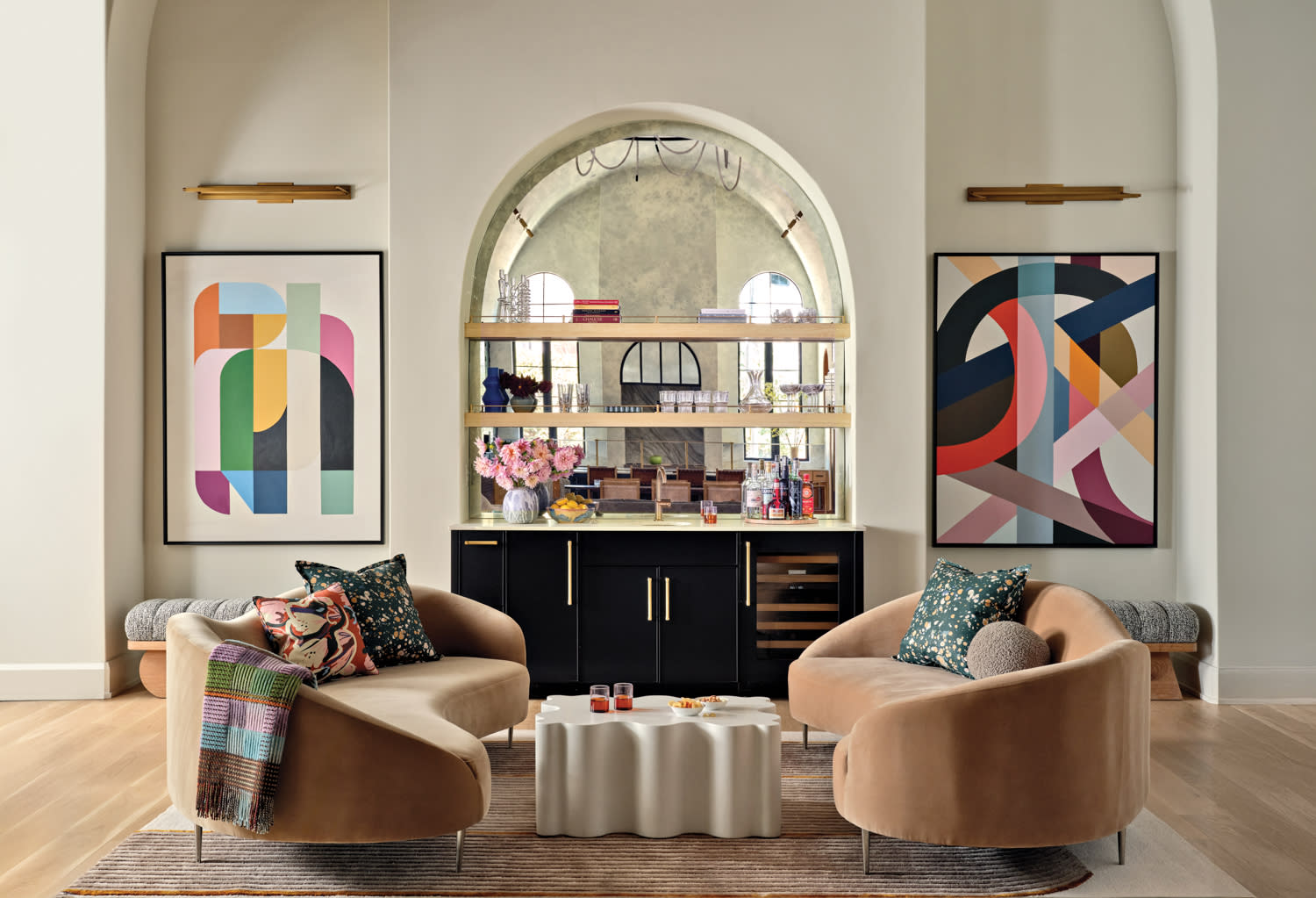
Natural textures, such as velvet, linen, and aged leather, anchor interiors, while colour washing in deep greens, browns, plums, and moody blues adds depth and warmth. The cocooning trend continues, with painted ceilings becoming a popular choice, while curved furniture adds softness and echoes the organic lines of plants and floral motifs.
Living spaces in 2026 are not about perfection. They are spaces that feel “lived-in,” places where one can relax without feeling stifled. In a world marked by uncertainty, there is comfort in interiors that feel embracing rather than cold or impersonal. While AI and the many machines that dominate our lives may reshape large parts of our existence, they will never replace the scent of a room or the sensation of wrapping up in a woollen or faux-fur throw on a floral, tapestry-covered sofa.
Small objects with history are firmly back in fashion. Antiques and brocante finds can now take centre stage. Even fringes are returning. Once dismissed as dust and moth magnets in our grandparents’ living rooms, they are back in force.
“The key difference is fluidity,” says interior stylist Claire Montfort. “These elements are no longer fixed or nostalgic; they are mixed freely across eras, patterns, and materials.”
While the look itself is not new, Soho Home has been championing it for years; it has now become more accessible, with high-street brands increasingly offering more affordable versions.
“Eclectica” seems to be the buzzword for 2026. These mismatched, brocante-inspired interiors embrace chairs and tables from different eras, each with its own character, yet carefully balanced. This shift reflects a more social approach to living, mirrored by the popularity of larger, deeper sofas.
Walls are becoming galleries filled with paintings of varying styles, colours, and moods, all tied together by a shared palette. Painted ceilings are joined by painted floors. Patchwork sits atop linen, which is layered over padded tartan. Old fabrics upholster modern shapes. Tapestries and North African textures bring equal measures of richness and roughness.
In short, living rooms in 2026 are about layering lives rather than staging spaces, but where aesthetics and elegance still reign supreme.