


As the famous Michelin stars celebrate their 100th anniversary in 2026, we dive into the history of the little red guide. From tyre consumer to sign of culinary excellence: discover all there is to know about the Guide Michelin and its starry trophies.
The history of the Guide Michelin starts in 1900. André and Edouard Michelin, brothers and founders of the MICHELIN tyre factory in Clermont-Ferrand, are looking to expand their business. In a time with rocky roads, no internet connection, and very few facilities catered specifically for chauffeurs, they decided to create something unheard of.
“This book will be published at the turn of the century, and it will last just as long,” André Michelin wrote in the first guide.
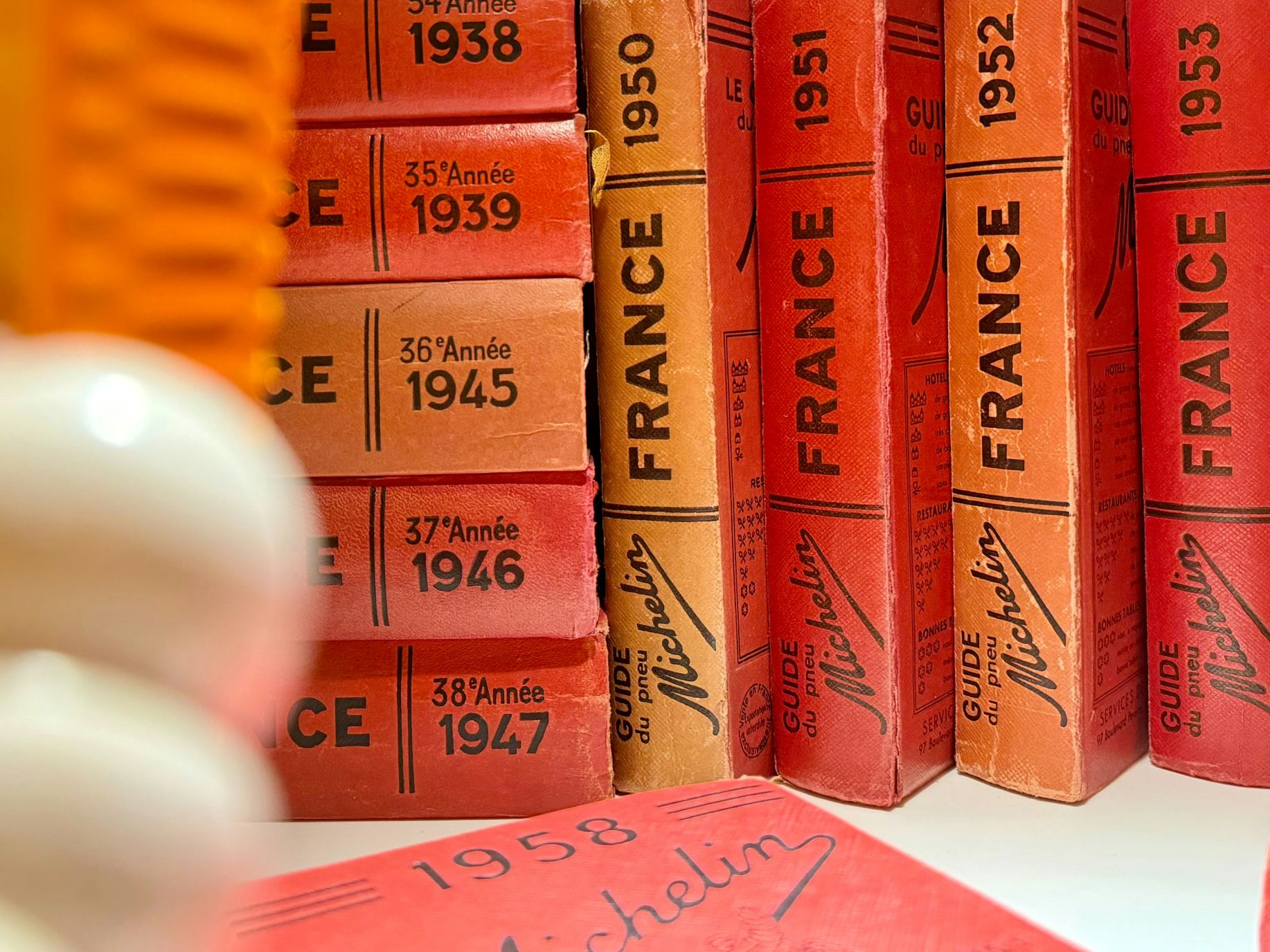
The so-called Guide Michelin was initially printed in 35,000 copies and was gifted to Michelin customers buying a set of tyres. Inside, chauffeurs were able to find a collection of maps as well as a list of restaurants, mechanics, hotels, doctors, and any other information that André and Edouard Michelin found to be handy while on the road.
At first glance, their goal was simple: “To provide all information that may be useful to a driver travelling in France, regarding refuelling their vehicle, having it repaired, finding accommodation and food, and sending mail, telegrams or making telephone calls.”
However, the brothers’ actual purpose was mainly financially driven. If chauffeurs started to drive more frequently and over longer distances, they would use their tyres more quickly, thus improving the company’s sales turnover.
Starting from 1920, the Guide Michelin turned a page. Michelin started selling the guide for 7 francs, allegedly because André Michelin had seen a mechanic using the previously free book as a wedge. By then, the guide had become sufficiently well-known for chauffeurs to want to buy a copy.
The first stars
Finally, the first Michelin star made its appearance in 1926. At the start, the star simply indicates “good tables”, without much explanation. Five years later, a second and third star were added to the book, as well as some extra information concerning the different categories. One star indicated a “very good restaurant”, two stars “excellent cooking, worth a detour”, and three stars meant “exceptional cuisine, worth a special journey”. Since then, those categories have largely remained identical.
However, chauffeurs have to wait another two years, until 1933, for the introduction of special Michelin inspectors. Those anonymous Michelin employees toured France in order to find the best restaurants and hotels, ranking them following a list of criteria, from budget-proof quality to exquisite treats.
Since the start of the Michelin guide and the Michelin stars, much has changed, but the three-star system has remained. In 2026, the collection covers 28 titles in more than 25 countries, and several other restaurant categories have been added over the years. For example, the so-called Bib Gourmand indicate “high-quality food at great value”, while the Green stars have been introduced specifically to recognise sustainable gastronomy.