Providing the growing global population with access to safe drinking water is one of the great challenges of our time. Scientists have now put forward fog as a possible reliable source of drinking water, following research in one of the driest places in the world.
According to data shared by the United Nations, over two billion people worldwide don’t have access to safe drinking water today, while roughly half of the world’s population is experiencing severe water scarcity for at least part of the year. Moreover, due to climate change and population growth, these numbers are thought to be increasing in the future. With only 0.5% of water on Earth being usable and available freshwater and supplies decreasing yearly, many researchers are looking for alternative ways to meet demand.
From droplets of fog to annual water supply
A new study published by Frontiers in Environmental Science suggests that fog harvesting might be one of the possible solutions. A team of scientists tested the technique in Chile’s Atacama Desert, which sees less than 1 mm of annual rainfall and is thereby one of the driest places on Earth. Where fog harvesting isn’t new, it was previously mainly used in small-scale rural areas, whereas the researchers now focus on a more urban environment.
The city of Alto Hospicio, located within the desert, has nonetheless been growing exponentially and has been experiencing troubles to meet its own water demand, with most of the water having to be transported by truckload from elsewhere.
“This research represents a notable shift in the perception of fog water use—from a rural, rather small-scale solution to a practical water resource for cities. Our findings demonstrate that fog can serve as a complementary urban water supply in drylands where climate change exacerbates water shortages”, said Dr Virginia Carter Gamberini, assistant professor at Universidad Mayor and first co-author of the Frontiers in Environmental Science study.
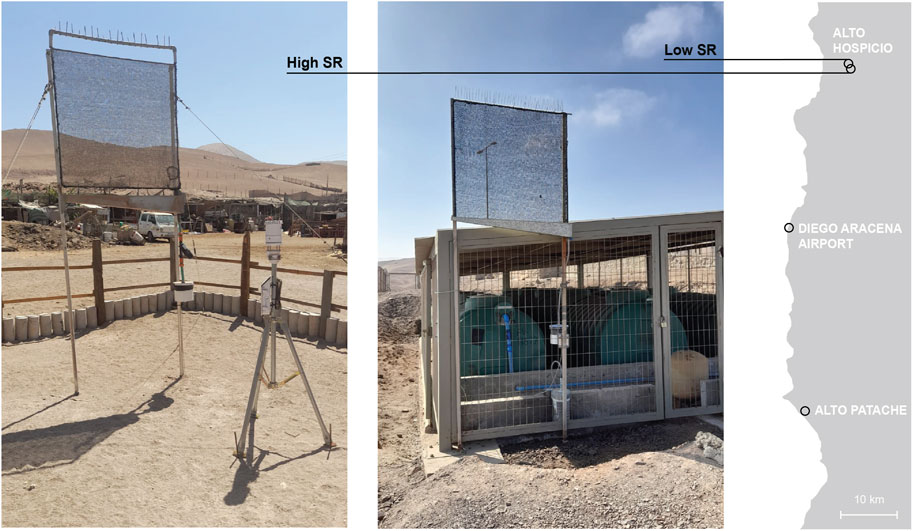
In order to harvest fog, a mesh sheet is suspended between two posts, serving as an interception surface to catch moisture. The droplets on the mesh are then collected by a gutter leading to water storage tanks, marking it a passive system requiring no external energy.
Thanks to that system, the scientists discovered that a 100 square kilometre area of higher lying altitudes outside Alto Hospicio could produce between 0.2 and 5 litres of fog water per square meter on a daily basis. According to their calculations, 17,000 square meters of mesh could produce enough water to meet the weekly water demand (300,000 litres) for urban slums, while 110 square meters could meet the annual demand for the irrigation of the city’s green spaces (100,000 litres).

“By showcasing its potential in Alto Hospicio, one of Chile’s most stigmatised yet rapidly urbanising cities, this study lays the groundwork for broader adoption in other water-scarce urban areas”, stated Nathalie Verbrugghe, a researcher at Université libre de Bruxelles and first co-author of the article.
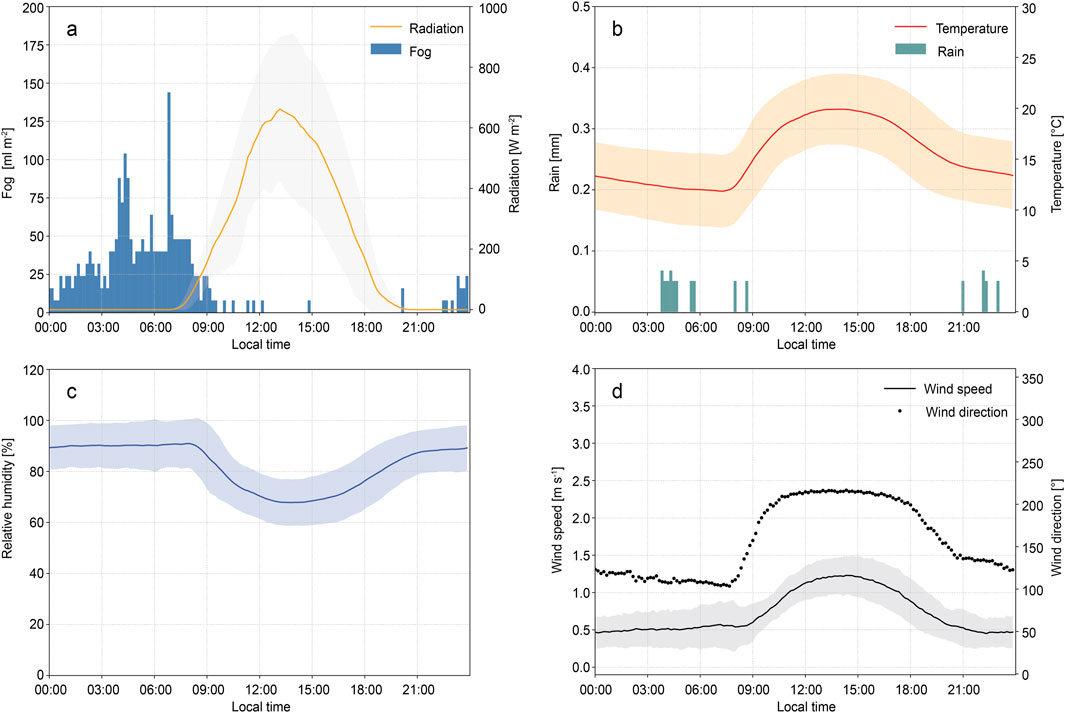
While the researchers stated that fog harvesting should not be seen as the sole solution to water scarcity, it could become part of a broader urban water management strategy when the conditions are right. Prerequisites include fog density, suitable wind patterns, and well-oriented elevated landforms. Last but not least, as fog patterns usually differ from one season to the other, this should be taken into account, and large water storage systems should be built in order to meet demand year-round.