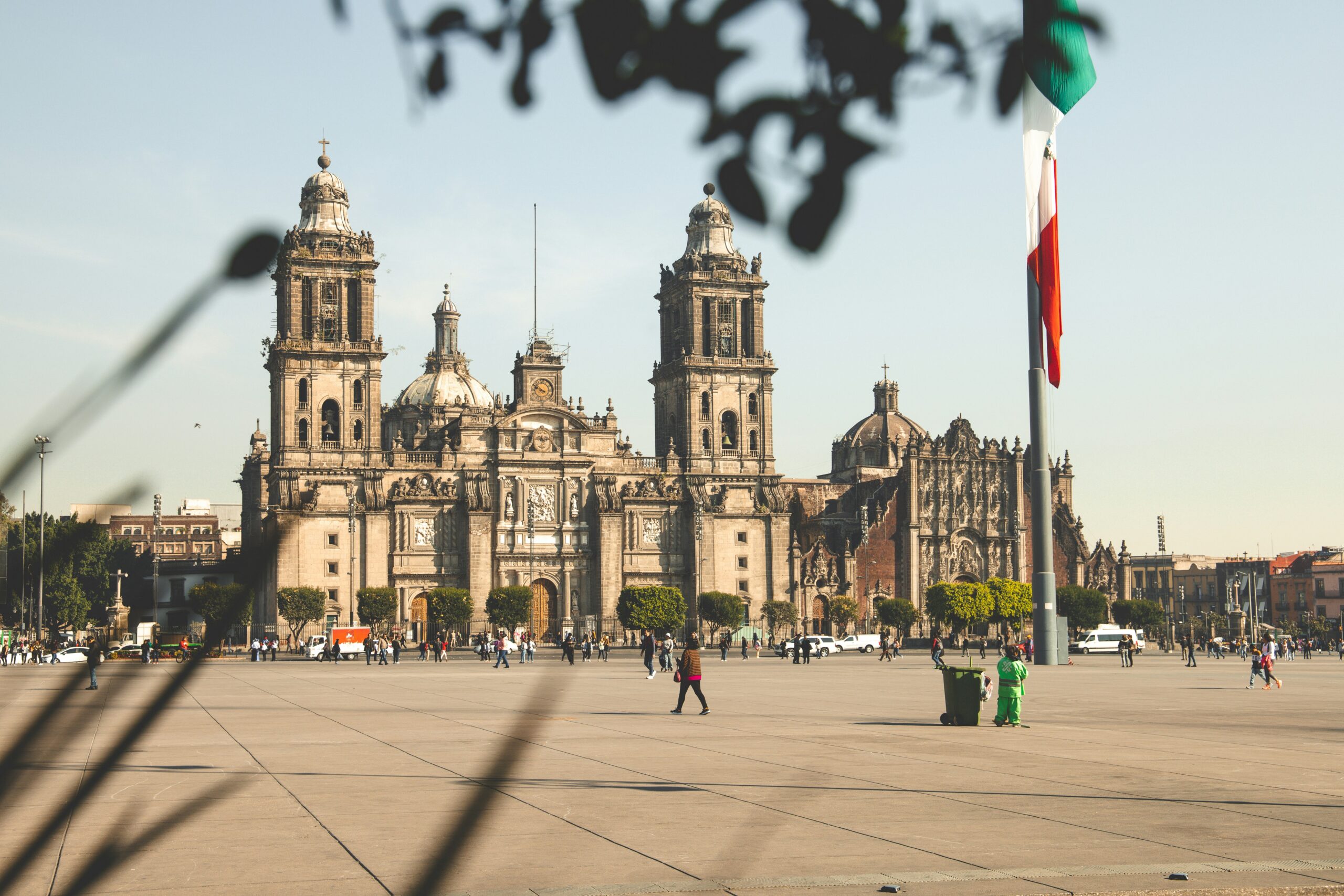



Mexico City is sinking so fast that the phenomenon that can be seen from space, scientists have revealed, using NASA satellite imagery to track the rate at which the North American megalopolis is subsiding.
It has been known for around 100 years that the Mexican capital is dropping into a basin surrounded by mountains. The city sits on an ancient lakebed of permeable rock and sand, and as water has been pumped out of this aquifer to supply millions of city residents with something to drink, the land has been sinking. Massive urban development has only added more weight to the problem. Over the years, roads, buildings, and water lines have all shown the strain. The Angel of Independence, a statue that has stood on the Paseo de la Reforma since 1910, commemorating the country’s independence, has required 14 steps to be added to its base as the surrounding ground falls away.
The ground beneath Mexico City is slowly sinking, and now, the NISAR satellite can track it from space.
— NASA Earth (@NASAEarth) April 29, 2026
New data shows parts of the city (in blue) that sank more than half an inch (more than 2 cm) per month from Oct. 2025 to Jan. 2026. pic.twitter.com/5uDM1B9Mwx
Now, powerful technology in the form of NISAR, a Synthetic Aperture Radar satellite, is also illustrating just how bad the subsidence is, to the centimetre. Launched on July 30, 2025, from the Satish Dhawan Space Centre on India’s southeastern coast, the initiative is a collaboration between NASA and the Indian Space Research Organisation (ISRO).
The satellite is the first to carry two SAR instruments at different wavelengths. It is monitoring Earth’s land and ice twice every 12 days, collecting data using a giant drum-shaped reflector, 12 metres wide — the largest radar antenna reflector NASA has ever sent into space. These measurements of changes to the Earth’s surface include real-time tracking of ground subsidence, glacial retreat, shifting tectonic plates, and wildfire spread.
@distant.elephant Mexico City is sinking
♬ original sound – distant elephant
The analysis of the Mexico City issue is initially based on NISAR data from between October 2025 and January 2026, during the dry season. Parts of the region have been found to be subsiding by more than 2 cm per month—an astonishing 24 cm at least every year, the size of a standard business envelope or a tablet device.
“Mexico City is a well-known hot spot when it comes to subsidence, and images like this are just the beginning for NISAR,” said David Bekaert, of the Flemish Institute for Technological Research in Belgium and the NISAR science team, in a statement that noted: “We’re going to see an influx of new discoveries from all over the world given the unique sensing capabilities of NISAR and its consistent global coverage.”
Those discoveries are expected to assist humans in tracking disasters, monitoring ecosystems and crops, studying ice sheets, and understanding how Earth’s surface moves and changes. This, in turn, could protect lives, support the management of natural resources, and offer a deeper understanding of our changing planet than ever before.