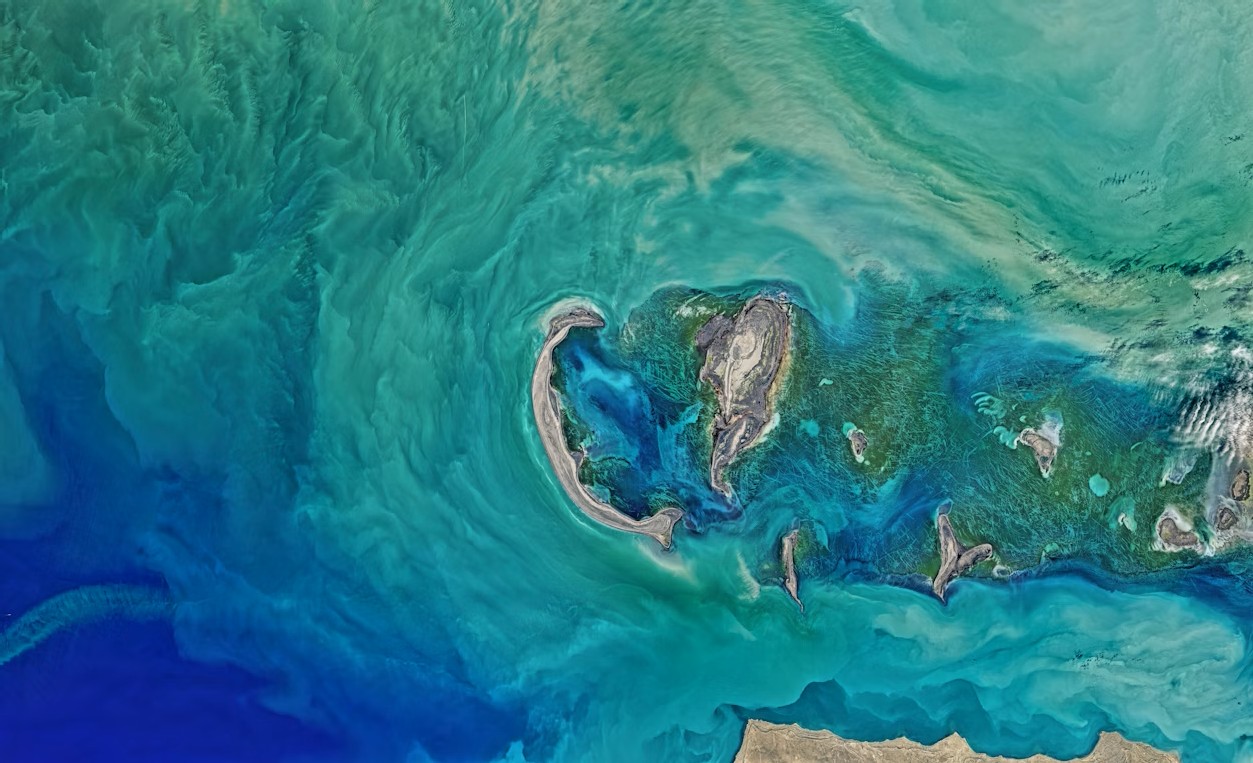



The Caspian Sea is retreating — a phenomenon that scientists say is a climate change red flag, affecting biodiversity with threats to beloved birds such as flamingos and pelicans and endangered species such as seals.
Bordered by Russia, Kazakhstan, Turkmenistan, Iran, and Azerbaijan, the “sea” is in fact an inland body of water — the largest on the planet — a brackish lake fed by 130 rivers, with the Volga the main source. A remnant of the ancient Paratethys Sea (alongside the Aral Sea, the Black Sea and the Sea of Azov), it now has no outlets, so the amount of incoming water from rivers and rain, and the rate of evaporation are the factors that affect its levels. Those water levels have been declining since the mid-1990s, satellite imagery shows.
The Caspian Sea is disappearing.
— Save The Caspian Sea (@savethecaspian) December 17, 2024
Climate Change. Oil spills. Pollution. Greed.
We can save it – but only if we act now.
Watch. Share. Spread the word.
Stand with us and #SaveTheCaspianSea #ActNow #EnvironmentalJustice #ProtectOurPlanet #SaveTheCaspianSea #ProtectCaspianSea… pic.twitter.com/aNFYI5HL6X
But now, scientists have found that global warming is worsening the situation, and even casual observers can see that the former shoreline along Azerbaijan’s Absheron Peninsula is shrinking to expose the seabed. The sea suffered a two-metre drop in water level between 1996 and 2023 and experts predict a loss of between five and 18 metres by 2100.
“Climate change is accelerating evaporation and disrupting the water balance of the Caspian Sea,” says Dr. Elnur Safarov, of the IDEA Public Union and coordinator of the Caspian Integrated Scientific Network (CASPISNET).
It’s important because the declining water levels are impacting wildlife and humanity along the basin’s delta, wetlands, and reed beds. “Fish in the Caspian Sea, which include sturgeon and other endemic species, are losing their natural habitats,” says zoologist Dr Nijat Hasanov, adding that “Nesting, breeding and resting habitats for millions of birds, including pelicans, flamingos and ducks” are also in jeopardy.
Other creatures who feed on the fish such as the endangered Caspian seal are now at greater risk, and human fishers face food insecurity too. Azerbaijani fishing communities now “have to go deeper into the sea to catch the same amount of fish they used to catch nearby the shore,” explains Farhad Mukhtarov, water governance specialist with the International Institute of Social Studies.
The “delicate hydrological balance” that needs to be achieved to address these serious concerns requires cooperation among “all five Caspian littoral states,” according to Mahir Aliyev, Coordinator of the Secretariat of the Tehran Convention. Marine safeguards and sustainable development principles have already been adopted by the five Caspian coastal nations, but Aliyev is calling again for “coordinated regional action” that he deems “essential to manage the environmental consequences across the basin.”