


During the 1970s, the late physicist and Nobel laureate Richard Feynman developed a mathematical solution for a common decision-making problem. Fifty years later, a team of scientists deciphered his handwritten notes, telling us exactly when to stop looking for the best holiday restaurant.
It was during a meal with his friend Ralph Leighton at a Thai restaurant in California that Richard Feynman encountered a common problem. As Leighton was hesitating between ordering his favourite ginger chicken meal or trying a new dish, Feynman decided to jump on the occasion and turn the problem into a mathematical problem.
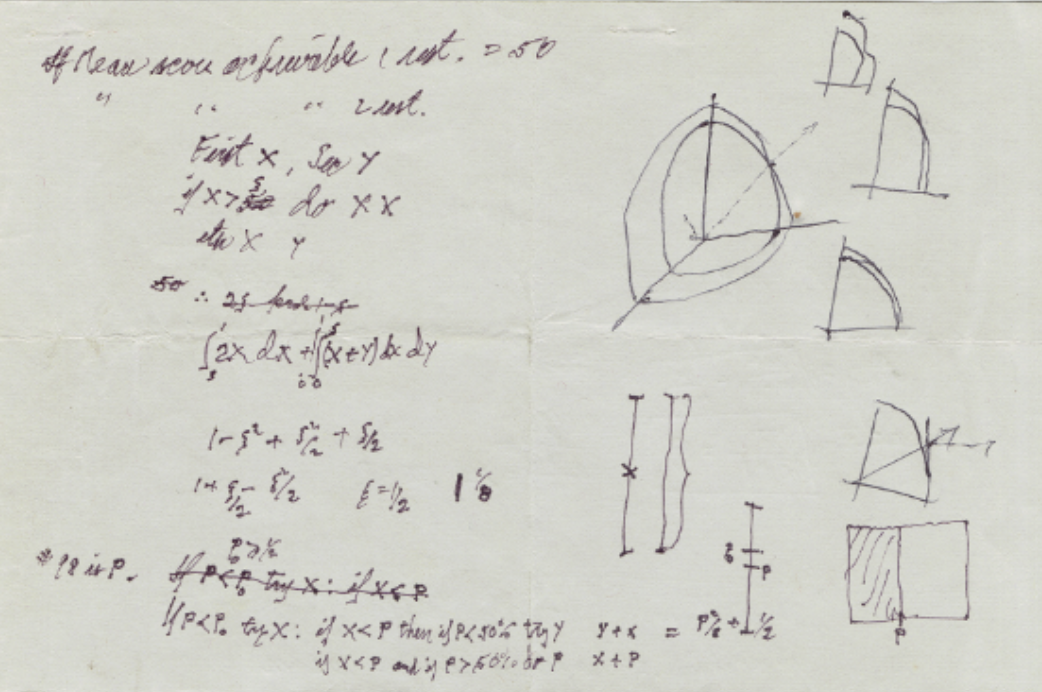
Sadly, however, his handwritten notes remained a mystery for decades, until a team of scientists got interested in the matter and decided to find out Feynman’s solution. On 1 June 2026, the researchers from Oxford, Princeton, and the City University of New York published their findings in Proceedings of the National Academy of Sciences.
“The notes remained inscrutable for decades, until we managed to decipher them and reconstruct Feynman’s original problem and solution,” the team explains.
After deciphering the formula, the scientists decide to apply the reasoning to another problem than that originally intended by Feynman. Instead of focusing on whether or not one should choose a favourite dish or try something new, the researchers tried to define when travellers should stop looking for the best – or a better – restaurant.
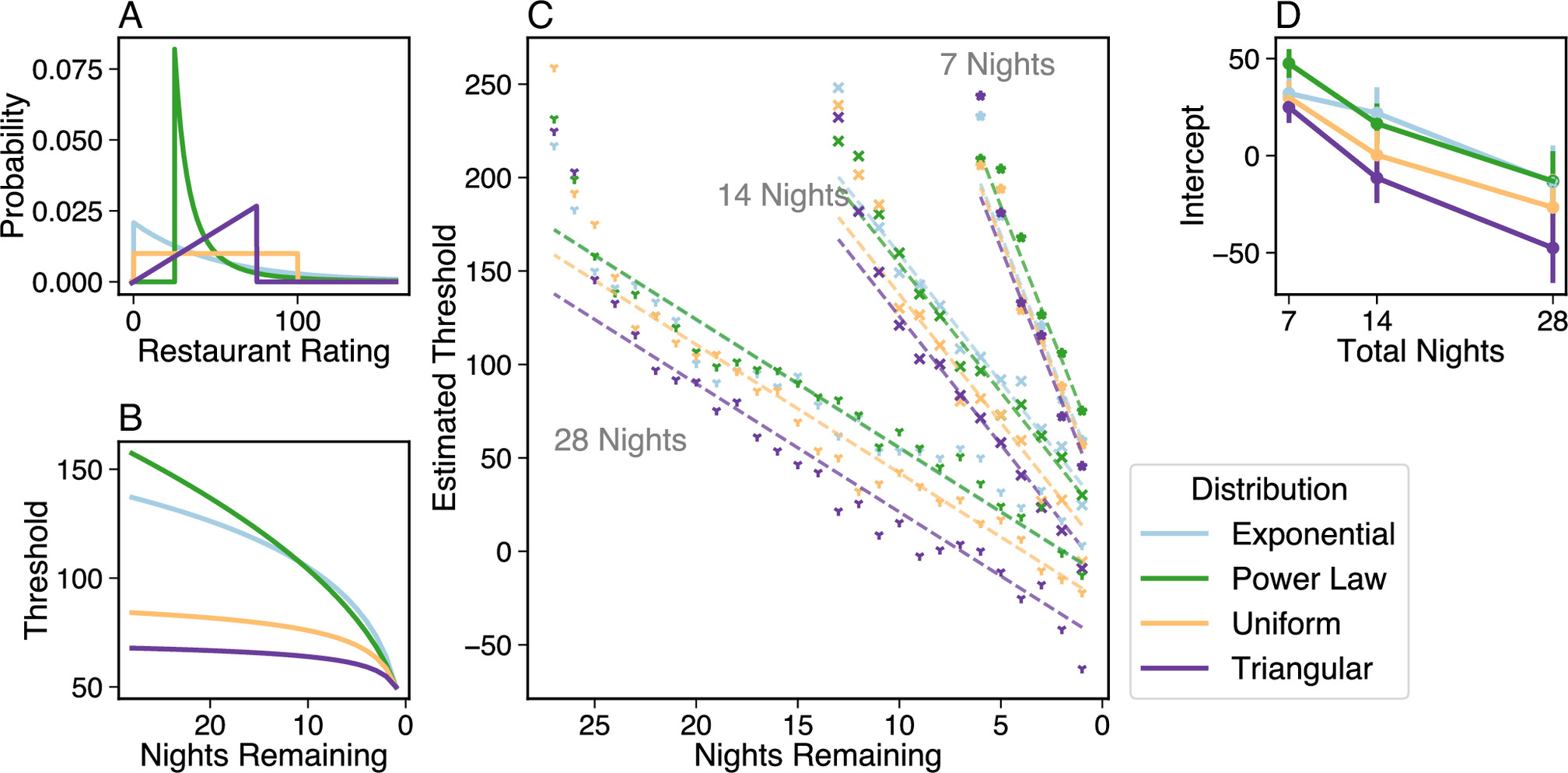
When applying Feynman’s solution, holidaymakers should try a different restaurant each night but only until they manage to find a spot exceeding a particular threshold, depending on the desired quality. Although the threshold is not fixed, it decreases as one’s days left in a certain destination decrease.
“The thresholds are being guided by the best thing you might be able to find if you kept looking.? If you have a long time to look, finding something amazing has a lot of value because you can go back many times”, professor Tom Griffiths of Princeton University, co-author of the study, told The Guardian.
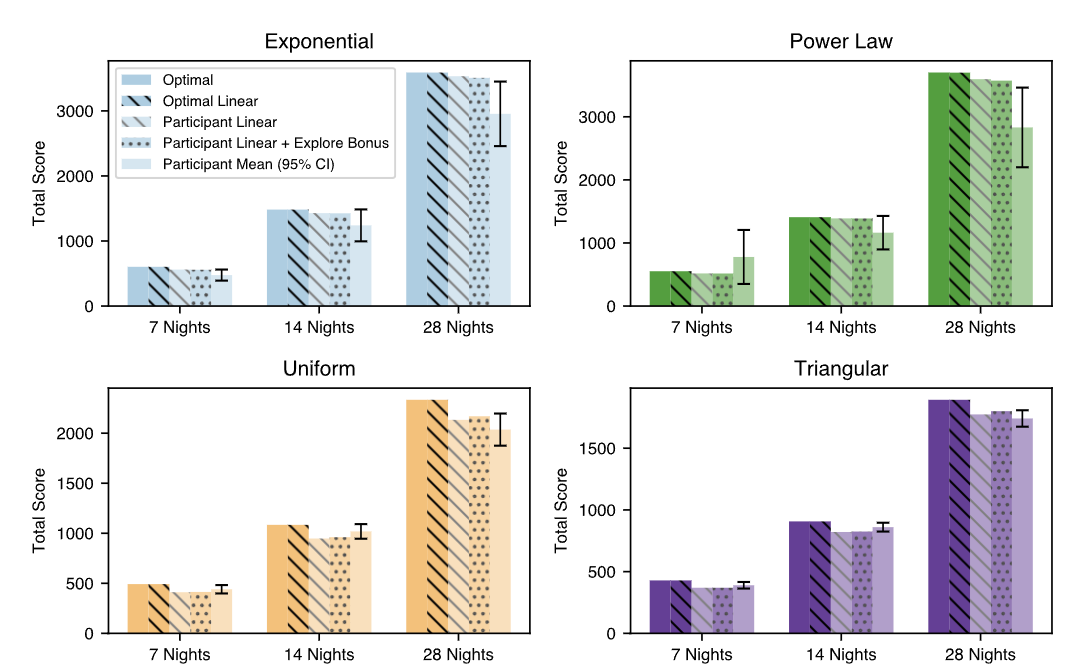
According to Griffiths, by deciding on an initial threshold and decreasing that threshold once the end of the trip gets closer, travellers will effectively apply a simplified yet effective version of Feynman’s formula, as you get closer to the end [of a trip]. And as long as you are doing something like that, that’ll actually work pretty well.”
“A preregistered experiment with 2,520 participants shows that people adopt thresholds that decrease linearly with the proportion of trials remaining, consistent with the observation of linear thresholds in other optimal stopping problems. However, we show that people tend to explore more than predicted by linear thresholds, and that different distributions of quality result in thresholds with the same slope but different intercepts. These results indicate that people adapt linear thresholds used in optimal stopping tasks in a way that is sensitive to the underlying distribution—a simple strategy that we show is nearly as effective as Feynman’s solution,” the researchers write.
In other words, travellers should not hesitate to switch restaurants at the start of their trip, as chances are they might stumble across better options. However, once the end nears, sticking to old favourites might be a better idea.