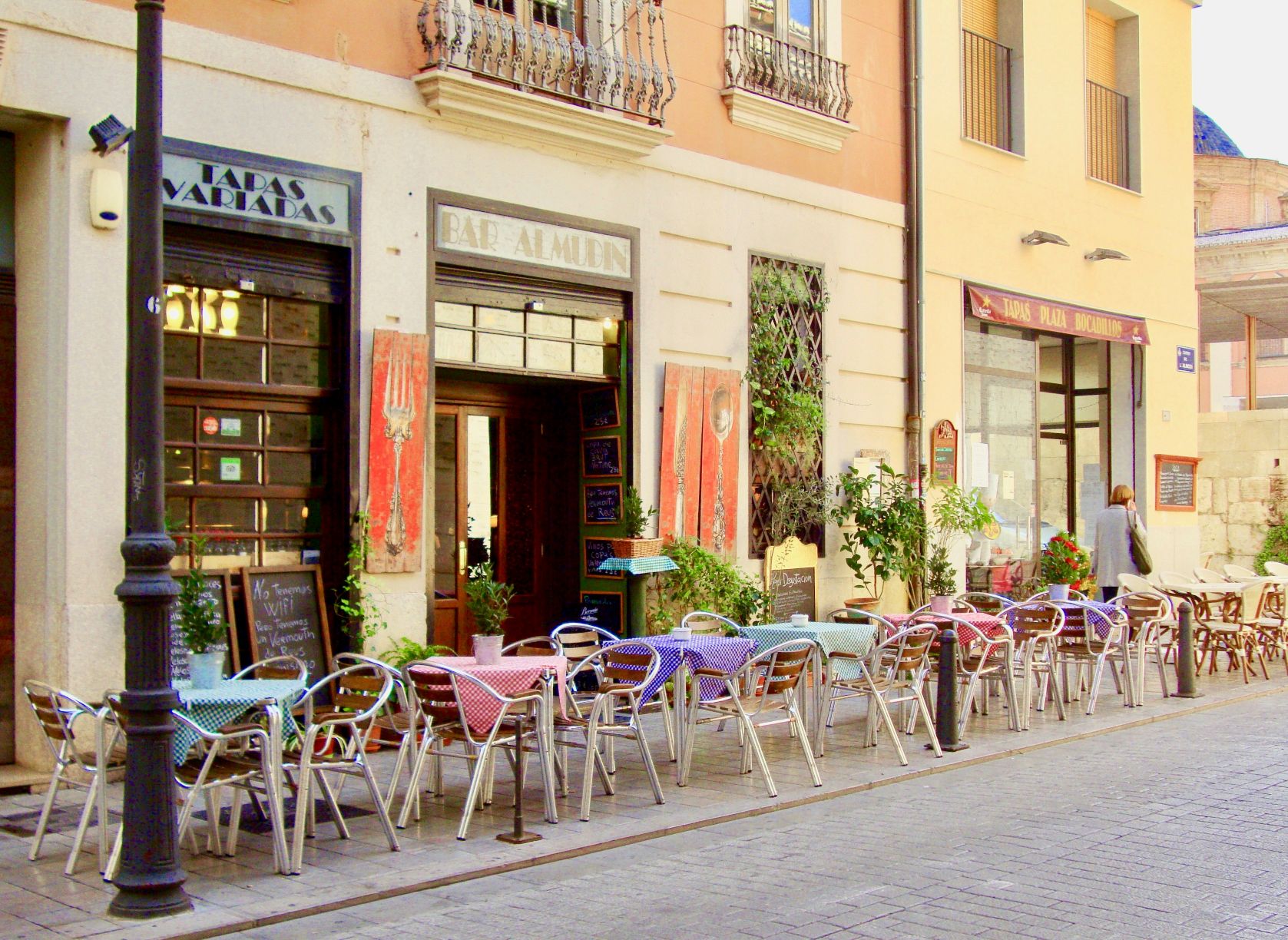



Spain could see outdoor terraces of bars, cafés and restaurants close temporarily during extreme heat under new labour rules aimed at protecting hospitality workers. The measures have been introduced as climate considerations have been formally added to the National Labour Agreement for the Hospitality Sector (ALEH).
One of Spain’s defining characteristics is its vibrant outdoor lifestyle, epitomised by its bustling terraces where people of all ages socialise throughout the day and late into the night. This way of life, long taken for granted, may now change due to rising temperatures.
On 13 April, an addendum to the agreement was introduced by trade unions FeSMC-UGT and CCOO Servicios, and was agreed with industry bodies Hostelería de España and CEHAT. The new rules are primarily aimed at protecting workers.
This change comes against a backdrop of intensifying heat. Last summer, temperatures reached 45.8 °C in Jerez de la Frontera during a heatwave that swept across the country, while Spain’s national average for the month was 25 °C, equalling the record set the previous year. The period from 8 to 17 August marked the ten hottest consecutive days recorded in Spain since at least 1950. Such extremes are unlikely to ease as global temperatures continue to rise.
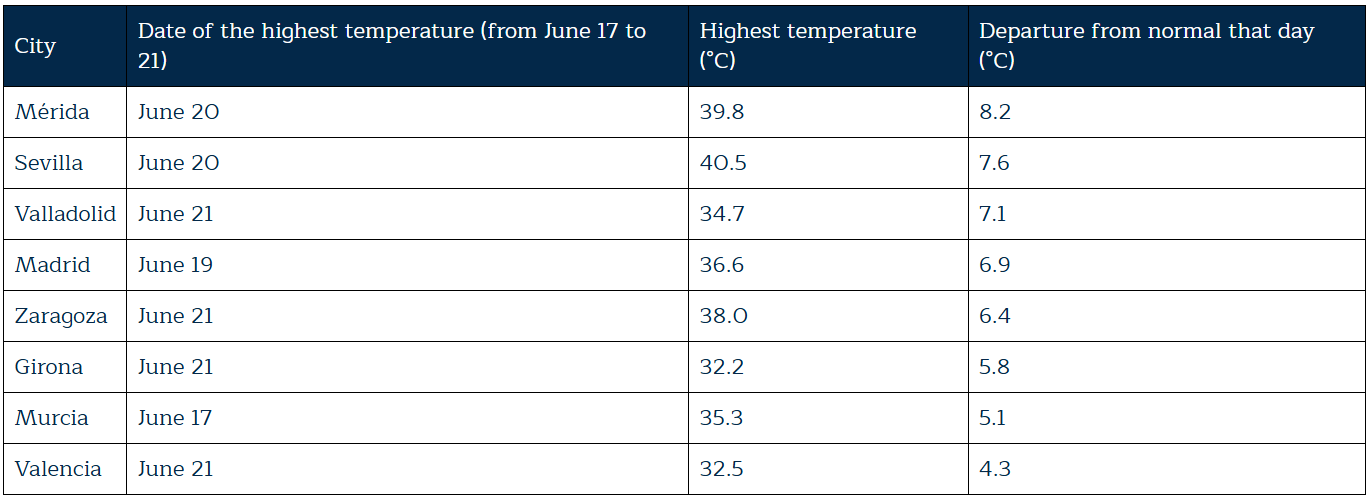
Under the new framework, whenever an official weather alert signals danger from extreme heat, heavy rain or snow, businesses must take protective measures for their employees. In practical terms, this means that staff working outdoors must be brought inside if conditions are deemed unsafe.
Waiters are now explicitly covered by these protections, moving between sun and shade with loaded trays. Service will shift indoors during extreme weather events. This already happens during heavy rain or when it is cold, when terraces empty and activity moves inside. The same logic will now apply to heat, unless the terrace has adequate shade or cooling systems.
Weather alerts are issued by AEMET, Spain’s national meteorological service, and these will trigger action. Businesses that fail to comply could face fines of up to €50,000 from labour inspectors.
Trade unions have praised the agreement as a significant step forward, with the FeSMC-UGT describing it as a “milestone that highlights the progress made through social dialogue and reaffirms the commitment to strengthening a model that guarantees rights, stability and progress for workers and companies”.
New rules in Spain mean some bar and restaurant terraces could close during red or orange heat alerts unless they have proper cooling measures.
— Spanish News Today (@MurciaToday) April 29, 2026
Do you think this will change how you spend summer afternoons out here?#SpainNews #HeatwaveSpain #LivingInSpain #HospitalitySpain pic.twitter.com/CpqlD1n3As
Beyond regulation, the measure carries a certain cultural resonance. Spain has long been associated with its unshakeable siesta tradition, during which activity would pause for several hours in the hottest part of the day, not only on terraces.
While this midday break has disappeared in many urban areas due to modern working patterns, air conditioning and tourism demands, it still exists in smaller towns and rural areas. The temporary closure of terraces during the hottest hours of the day may reflect this older rhythm, suggesting that taking a break during the hottest part of the day is not only a cultural tradition but also an increasingly necessary practice.
For travellers, however, the change is unlikely to be significant. Closures apply only during extreme heat events, and bars, cafés and restaurants will not shut entirely; rather, outdoor service will be temporarily unavailable. Activity is likely to shift towards the morning and evening, reinforcing a pattern already familiar in southern regions.
Rather than imposing blanket closures, the rules require businesses to act when official alerts signal risk, with implementation dependent on local conditions.
Spain’s terrace culture is not disappearing but adapting. Even its most emblematic social spaces are being reshaped as climate pressures intensify, striking a balance between tradition and the realities of a warming world.