German airline group Lufthansa is taking steps to acknowledge its responsibility for participating in the Nazi regime. As the first time the airline has so openly recognised its past actions, the moment marks a significant shift in policy and public relations.
The decision comes in the centennial year of Deutsche Luft Hansa, a carrier that was a state-subsidised international airline by the end of the 1920s, with a goal to connect a network of European cities. Deutsche Luft Hansa would later become an integral part of Nazi Germany’s power structure, its board of card-carrying Nazis carrying out war crimes, including secret armament production, forced labour, and turning facilities over to Nazi control.

The company was liquidated by the Allies after World War II.
For years, Lufthansa has tended to emphasise the complete break in its operations pre-and-post-war, treating the later Lufthansa AG as a separate new entity founded in 1953. During the 1990s, research was commissioned by the airline into its past, but the firm has until now refused to tackle its legacy.
But that is about to change, management says. “We at Lufthansa are proud of what we are today,” CEO Carsten Spohr told the press in a statement. “To then ignore the difficult, dark, terrible years would simply have been dishonest.”

Lufthansa wants to assume responsibility for its past, Spohr said. Part of that process has led to an exhibition about the airline’s history and legacy in the new visitors’ centre. In addition, the anniversary will be marked by the presentation of a new book about the airline’s history to each of its 100,000-strong staff. According to the historians who helped to write it, the book contains details of the wartime firm’s mass exploitation of people who worked in repair, maintenance, and arms production. Some of those abused were children.
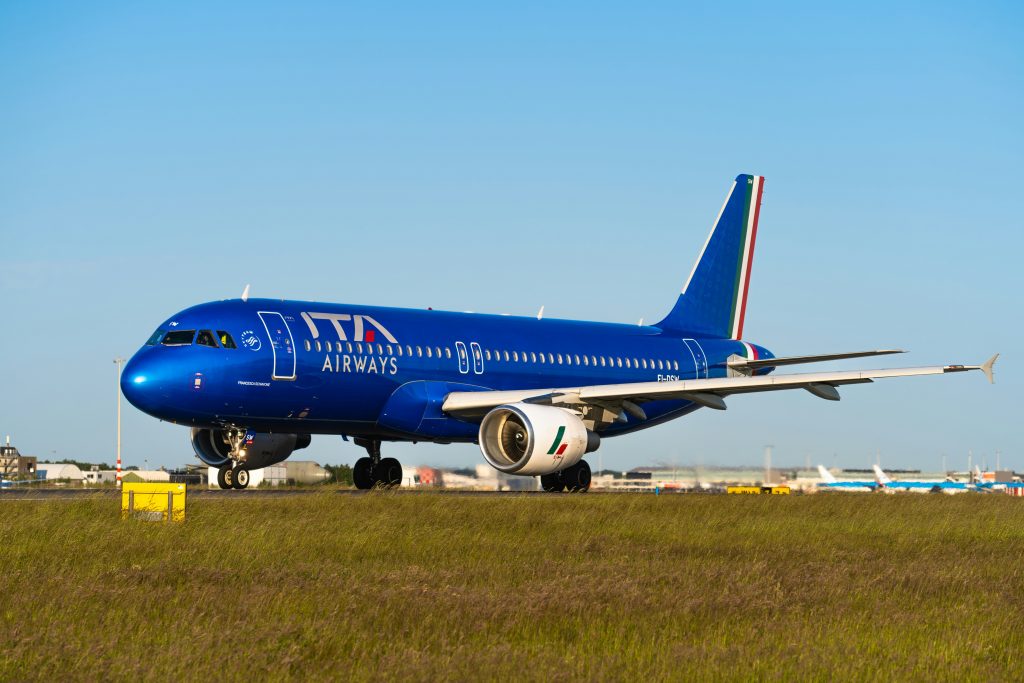
As Lufthansa enters its second century, though, it is facing criticism perhaps more for its future than its past. Despite a strong travel market and profits, Lufthansa has announced it will shed 4,000 jobs by 2030, mostly from German administrative positions, as it further integrates the operation of its group airlines, Austrian, Brussels Airlines, ITA, and SWISS, and seeks to “enhance efficiency across all business areas and activities.” The job losses are coming from areas where roles are duplicated, officials said in a statement, as well as in response to growing digitalisation and the use of artificial intelligence.