

More than 140 years after the original Orient Express linked Western Europe with the East, a new luxury rail journey will once again connect Rome and Istanbul. La Dolce Vita Orient Express will launch the five-day, four-night route in October 2026, offering travellers a slow journey through some of Europe’s best-known cities and landscapes. Tickets for the one-way trip start at €20,000 per passenger. The route is part of a wider revival of the Orient Express brand, which has returned to the spotlight in recent years through new trains, hotels, and luxury travel projects.
The journey begins at Roma Ostiense station, where passengers are welcomed into the private Orient Express lounge before departure. Guests can enjoy aperitivo-style dining, drinks, and live music before boarding the train in the evening. Onboard, La Dolce Vita Orient Express combines modern comfort with interiors inspired by 1960s Italian design. The train can host only 62 passengers at a time, creating a more intimate atmosphere compared to larger rail services.
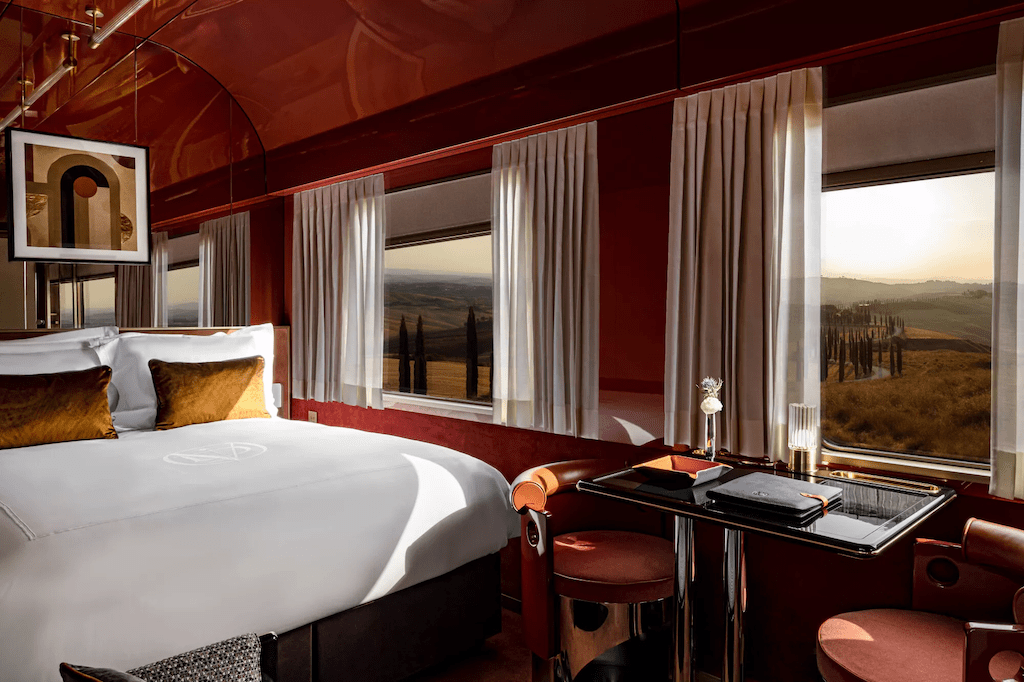
Accommodation includes deluxe cabins, suites, and the exclusive La Dolce Vita Suite. The interiors were designed by Milan-based Dimorestudio and feature bold colours, vintage-inspired furniture, and luxurious materials. Dining also plays a major role during the trip. Menus are created by three-Michelin-starred chef Heinz Beck and focus on regional ingredients linked to the destinations along the route.
The first stop is Venice, where passengers arrive the morning after leaving Rome. Travellers can spend the day exploring the canals, narrow streets, and historic palaces of the city. The company also offers curated experiences, including private boat tours across the Venetian lagoon. In the late afternoon, guests return to the train to continue the journey eastward. Dinner and live music are served onboard as the train departs northern Italy.
The following day, La Dolce Vita Orient Express reaches Budapest. The Hungarian capital is known for its grand architecture, historic bridges, and lively atmosphere along the Danube River. Travellers have time to walk through the city or join organised activities designed around Budapest’s culture and history. Lunch is served in the city before passengers return to the train later in the day. The evening onboard once again includes fine dining, cocktails, and musical performances.
After leaving Hungary, the train crosses the Carpathian Mountains and enters Romania. The route includes stops in Brașov and Sinaia, two destinations surrounded by mountain scenery. Brașov is known for its medieval streets and colourful squares, while Sinaia is a mountain town often associated with castles and historic villas. This section of the journey focuses more on landscapes and slower travel, giving passengers the opportunity to experience a different side of Central and Eastern Europe. Guests spend another evening onboard with aperitifs, dinner, and live music as the train continues toward Turkey.
The final stop is Istanbul, where passengers arrive on the fifth day of the journey. The Turkish city has long been linked to the history of the Orient Express and was the original eastern terminus of the famous railway line launched in 1883. Visitors arriving in Istanbul can explore its domes, bazaars, mosques, and busy streets after leaving the train. The route follows the spirit of the historic Orient Express, connecting Europe with the edge of the East through luxury rail travel.
Luxury train travel has experienced renewed popularity in recent years, with several companies investing in slower and more exclusive travel experiences. Alongside La Dolce Vita Orient Express, the wider Orient Express brand is also preparing the return of its historic train in 2027. The company has additionally announced new hotels in Rome and Venice, as well as the future launch of the Orient Express Corinthian yacht.