



Mobile connectivity on UK trains is still not reliable enough for everyday use, according to a new study by the communications regulator Ofcom. Many passengers experience weak or unstable internet while travelling, making it difficult to stream videos, scroll social media, or join video calls. The findings suggest that, for a large part of the journey, travellers are effectively disconnected from the digital world. As more people use train journeys to work remotely or stay connected on the move, internet access is increasingly becoming part of the overall travel experience.
Ofcom measured mobile performance across 24 sections of railway lines in England, Scotland and Wales. The regulator found that mobile performance was poor in between 58% and 83% of tests carried out on trains. It assessed whether passengers could reliably perform common online activities such as making video calls, browsing social media and streaming content. According to the regulator, “for too many people, stepping on board can mean going off grid”.
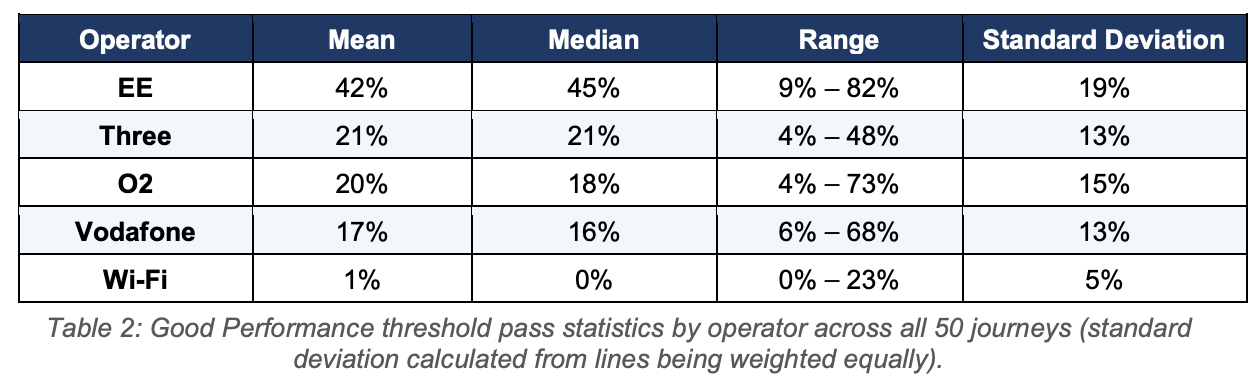
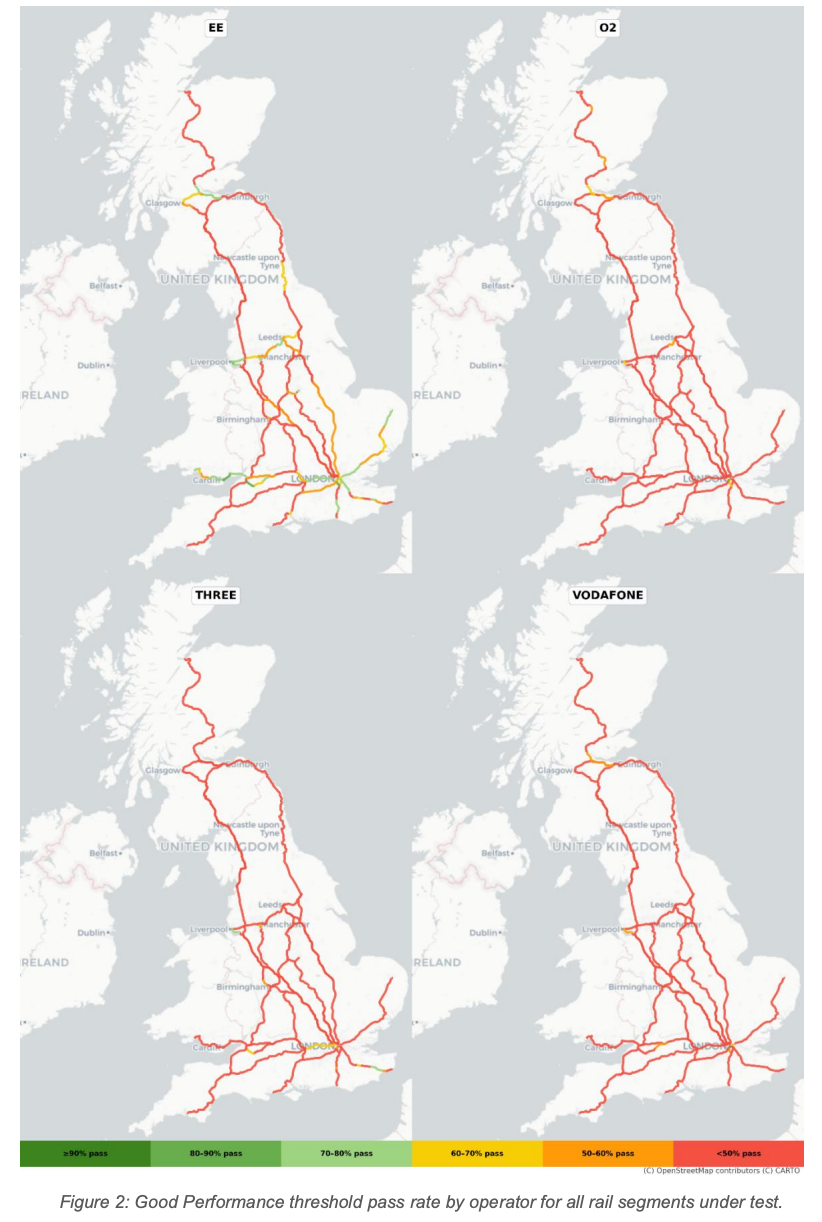
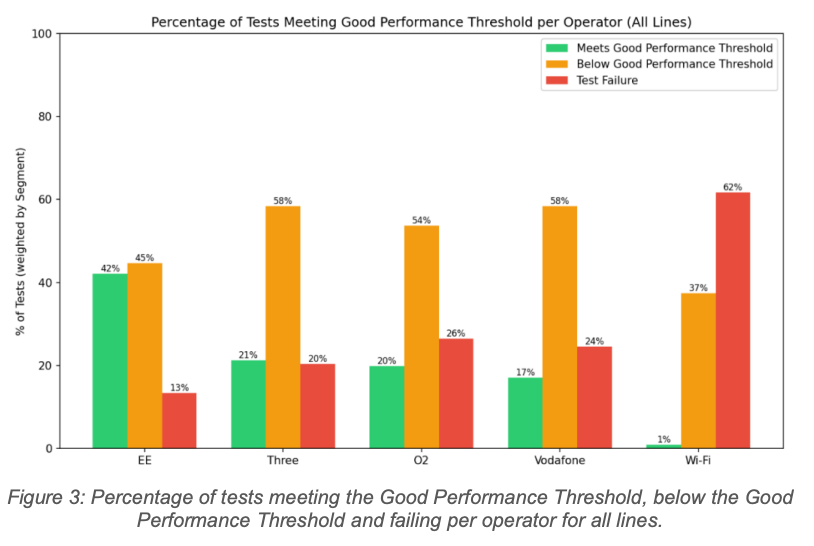
The study also revealed significant differences between mobile operators, although none delivered consistently strong results. EE achieved the best performance, meeting Ofcom’s standards on 42% of the railway segments tested. Three followed with 21%, while O2 and Vodafone achieved 20% and 17% respectively. Even the strongest-performing network therefore failed to meet the regulator’s benchmark on most routes.
To assess performance, Ofcom used a threshold that reflects basic modern internet use. A connection needed to deliver a download speed of five megabits per second, an upload speed of 1.5 megabits per second and a response time of 50 milliseconds. These speeds are considered the minimum required for activities such as video calls, streaming and social media browsing. Despite this relatively modest benchmark, networks often failed to achieve it during rail journeys.
Some routes performed considerably better than others. The line between London Victoria and East Croydon delivered the strongest results, particularly for EE customers, while O2 and Vodafone also performed well on that route. At the other end of the scale, the route between Basingstoke and Coventry, via Reading and Oxford, ranked among the weakest. Rural and intercity passengers were also found to experience poorer service than those travelling through cities and urban areas. Connectivity further deteriorated during peak commuting periods when more people were connected simultaneously.
Train Wi-Fi proved to be an even bigger problem. Ofcom found that onboard Wi-Fi performed well only 1% of the time. Many train operators still rely on outdated technology that struggles to meet current passenger demands. In addition, some services limit internet speeds to manage network capacity, which can further affect the user experience. As a result, travellers often find themselves switching between weak mobile data and unreliable onboard Wi-Fi.
The reasons behind poor train connectivity are not limited to mobile operators alone. Mobile signals from masts are often weaker along railway corridors, especially in less populated areas. The design of trains can also affect performance. Metal carriage structures and specially coated windows can partially block mobile signals from reaching passengers inside. Older rolling stock can make the problem worse, while double-decker trains are also known to create additional signal challenges.
The findings highlight a challenge that is not unique to the UK. Maintaining stable internet connections on moving trains has long been difficult across Europe, particularly on routes that pass through rural areas. However, expectations have changed significantly in recent years. Travellers increasingly use their journey time to work, attend online meetings, access travel information and stay in contact with family and colleagues.
Industry groups say improving connectivity requires both investment and regulatory support. Mobile UK, which represents the country’s major operators, said there are “unique structural and capacity challenges” to maintaining reliable service on trains. At the same time, telecom companies argue that improvements are already being made. “Nobody is investing more in the UK’s networks than BT,” a spokesperson for BT Group said, adding that the company expects to invest more than £40 billion this decade to strengthen connectivity across the country.
The UK government is now exploring new ways to address the issue. The Department for Transport plans to invest £57 million in improving connectivity through satellite technology on trains. The project would allow trains to connect to low-Earth-orbit satellites rather than relying solely on 4G and 5G networks. Meanwhile, Ofcom is calling for closer cooperation between telecom operators, local authorities, developers and government bodies. Natalie Black, Ofcom’s group director for infrastructure and connectivity, said: “We are determined to play our part and will work closely with industry, government, local authorities and others to break down barriers standing in the way of progress.” According to Black, such cooperation is needed to improve connectivity, support economic growth and ensure passengers receive the level of service they expect.