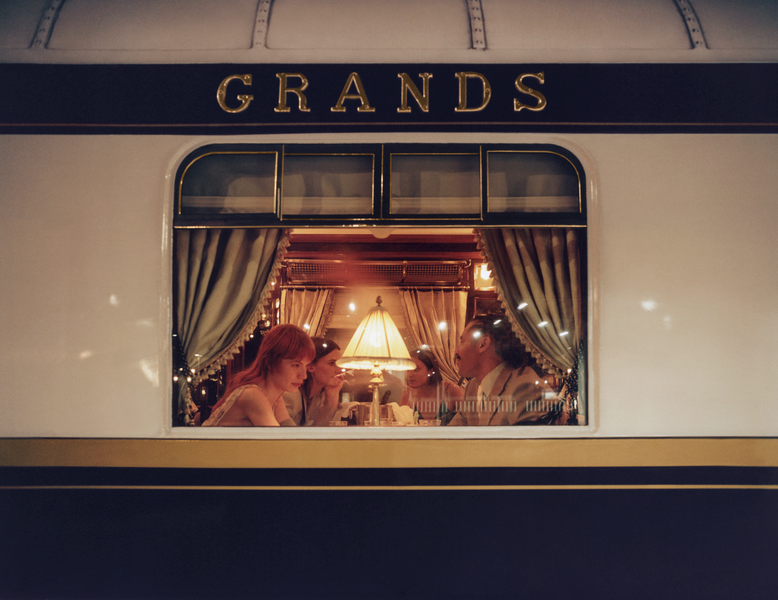
From 2027, travellers will once again be greeted aboard the timeless, luxurious carriages of the Orient Express, the world’s most famous train. For over a century, it has carried the upper class across the continent, inspired novelists, and become the setting for one of the world’s most famous crime novels: Agatha Christie’s Murder on the Orient Express.
While the precise route of the new Orient Express has not yet been announced, it is expected to follow the historic Paris – Constantinople (now Istanbul) line, stopping at major European cities including Strasbourg, Munich, Vienna and Budapest. The original line was launched in 1883 and ran until 1977, though sections continued until 2009.
Historians tracked down the 17 original carriages near the Poland – Belarus border, reportedly using Google Maps and 3D satellite imagery. They were then meticulously restored in France, with the interiors reimagined by architect Maxime d’Angeac. The renowned architecture firm studied original maps and archives, collecting every minute detail of the historic 1920s and 1930s carriages – from crockery and tapestry fragments to lampshades and accessories – to ensure the new design was authentic.

“When you think about what the Orient Express was in the 1920s and 1930s, it’s modernity that strikes you first,” d’Angeac told Vanity Fair. “Above all, we wanted to project the train into the idea of the present, or even the future, by bringing together the best savoir-faire in existence.”
To capture the spirit of the Art Deco masters and restore a sense of glamour and grandeur to the space enhanced by twenty-first-century technology, d’Angeac enlisted the help of around thirty master artisans, including Lalique, Rinck, Atelier Jouffre and the Tapestry Manufacture of Burgundy.
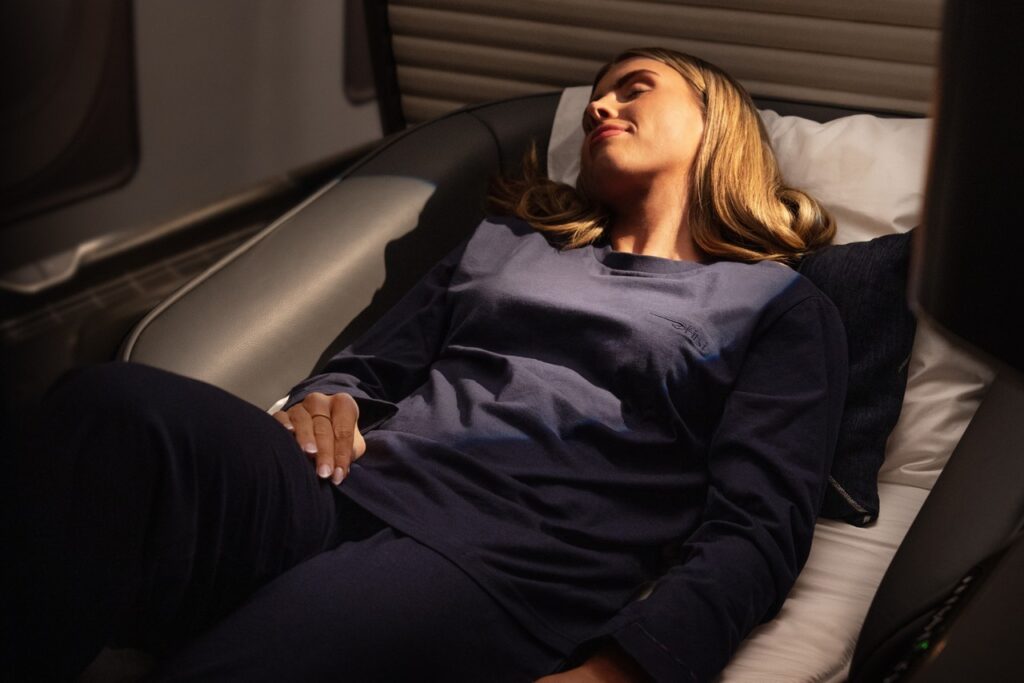
The suites are arranged as salons during the day and feature deep corner sofas, rounded mirrors, lacquered wood panelling and Cartier clocks. By night, they transform into double beds, evoking the unmistakable atmosphere of the Années Folles – or the Great Gatsby era. The compact yet opulent bathrooms are accessible through a sliding door and are lined with red and white marble and bespoke chrome fittings.
‘Tis the season to greet and gather! Take a look inside The Orient Express Bar Car in all its Art Deco glamour by architect and designer Maxime d’Angeac.https://t.co/ftK1OZSccU#OrientExpress#ArtisanOfTravel pic.twitter.com/euZWXAl7Pi
— ORIENT EXPRESS (@orientexpress) December 15, 2023
The presidential suite occupies an entire carriage and features a living room, bedroom and bathroom.
The corridors leading from the suites to the bar car feature rosewood panelling, softly illuminated curved ivory arches, and a patterned crimson carpet that echoes the line’s original geometric motif. With its vaulted ceiling, palm-leaf reliefs and green velvet banquettes curving beneath a warm, intimate light – courtesy of Lalique flower lamps salvaged from the Nostalgie-Istanbul Orient Express – the Bar Car is pure theatrical fantasy.
And fantasy is very likely what it will remain for most of us, with prices yet to be announced but expected to equal at least four to five months’ rent in any major city. The train will undoubtedly inspire a new generation of writers with its theatrical corridors, curved ceilings, and gleaming surfaces, all of which are currently on display in an immersive installation at the Musée des Arts Décoratifs in Paris. The scenography, reminiscent of a station platform, forms part of the exhibition 1925–2025: A Century of Art Deco, alongside masterpieces of fashion and design from the same era.
Luxury train travel has made a quiet comeback in recent years, with the launch of the Orient Express La Dolce Vita in Italy earlier this year and the Britannia Explorer in the UK. The Orient Express brand, jointly owned by Accor and SNCF, has also announced the opening of its first hotels in Rome and Venice, and revealed plans for the Orient Express Corinthian yacht, set to sail in June 2026.