

Tucked between rugged mountains and ancient legends, Nakhchivan, Azerbaijan’s landlocked exclave, beckons adventurers and culture seekers. Honestly, if you are not truly dedicated to history, it is a place easy to miss especially considering how much more public attention Baku has received. Recently, the capital hosted COP29 and was one of the host cities for UEFA Euro 2020, among other major events, while Nakhchivan remains comparatively under the radar, quietly preserving its unique cultural heritage and striking landscapes. Far from the spotlight of Baku, this hidden gem, birthplace of former President Heydar Aliyev, boasts a rich tapestry of folklore, from Noah’s Ark, on the region’s most iconic mountain to the unconquerable Alinja Castle.
Surrounded by Iran, Armenia, and Türkiye, the Autonomous Republic boasts a legendary past wrapped in mythology, rich cuisine, and warm hospitality. To truly experience Nakhchivan, visitors can spend several days wandering its mountains, talking with locals, and savouring the beauty of the region.
Hiking into Ilandag Mountain, where Noah’s Ark is said to have hit ground
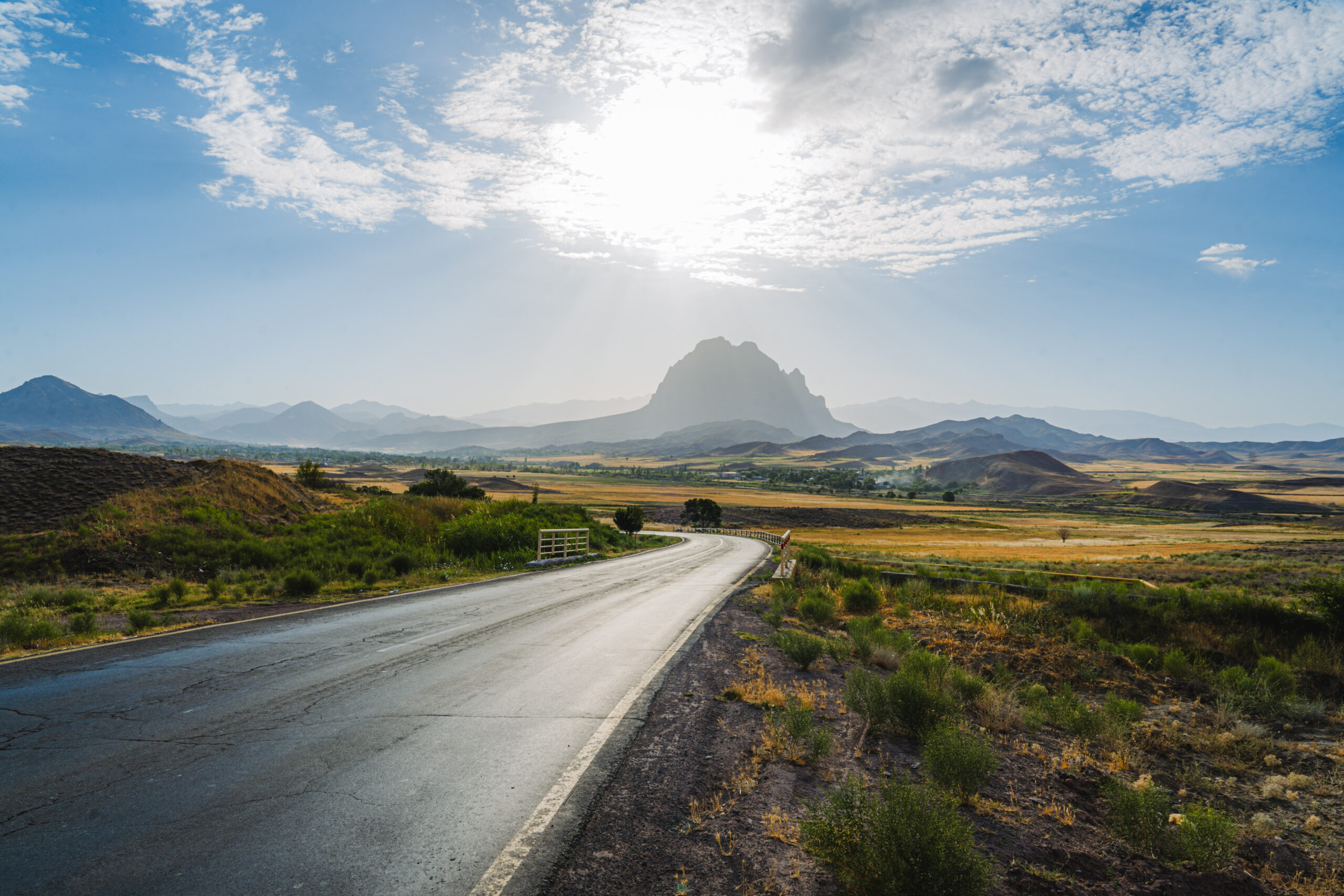
A great place to start the journey is Ilandag Mountain (Snake Mountain), also known as Hachadag (Split Mountain). Visible from many parts of the region, it is a fantastic destination for hiking adventures and a geological marvel enveloped in folklore.
Towering at 1,415 metres above sea level, this peak in the Lesser Caucasus range commands the surrounding landscape, and can be seen even from Nakhchivan City, which is located about 30 kilometres away. Its dramatic summits and steep slopes have inspired its names, each steeped in meaning and legend.

Arguably, Nakhchivan’s most iconic location, Ilandag Mountain, is the subject of many legends – from Noah’s Ark to stories of serpents. According to the most popular stories, Noah’s Ark touched down atop the mountain and split it in two. Another version says that Noah’s Ark struck the peak during the flood, breaking its top when Noah realised that land was near.
Whether these legends are true remains a mystery. However, local tourist guides will often note that similar myths exist in neighbouring regions such as Armenia and Türkiye.
Yet, there is scientific evidence that the area was once underwater. The presence of marine carbonate-terrigenous layers, brachiopods, corals, and other marine fossils confirms this.
Today, rich in flora and fauna, Ilandag is a place loved by eco-tourists, hikers, and mountaineers. Visitors have the chance to access the villages of Alinja and Khoshkesh, located not far from Ilandag, by bus. However, not the whole road is accessible by bus, so enthusiasts willing to explore more have to either hike or use a Sports Utility Vehicle (SUV).

Climbing Alinja Castle, the unconquerable fortress
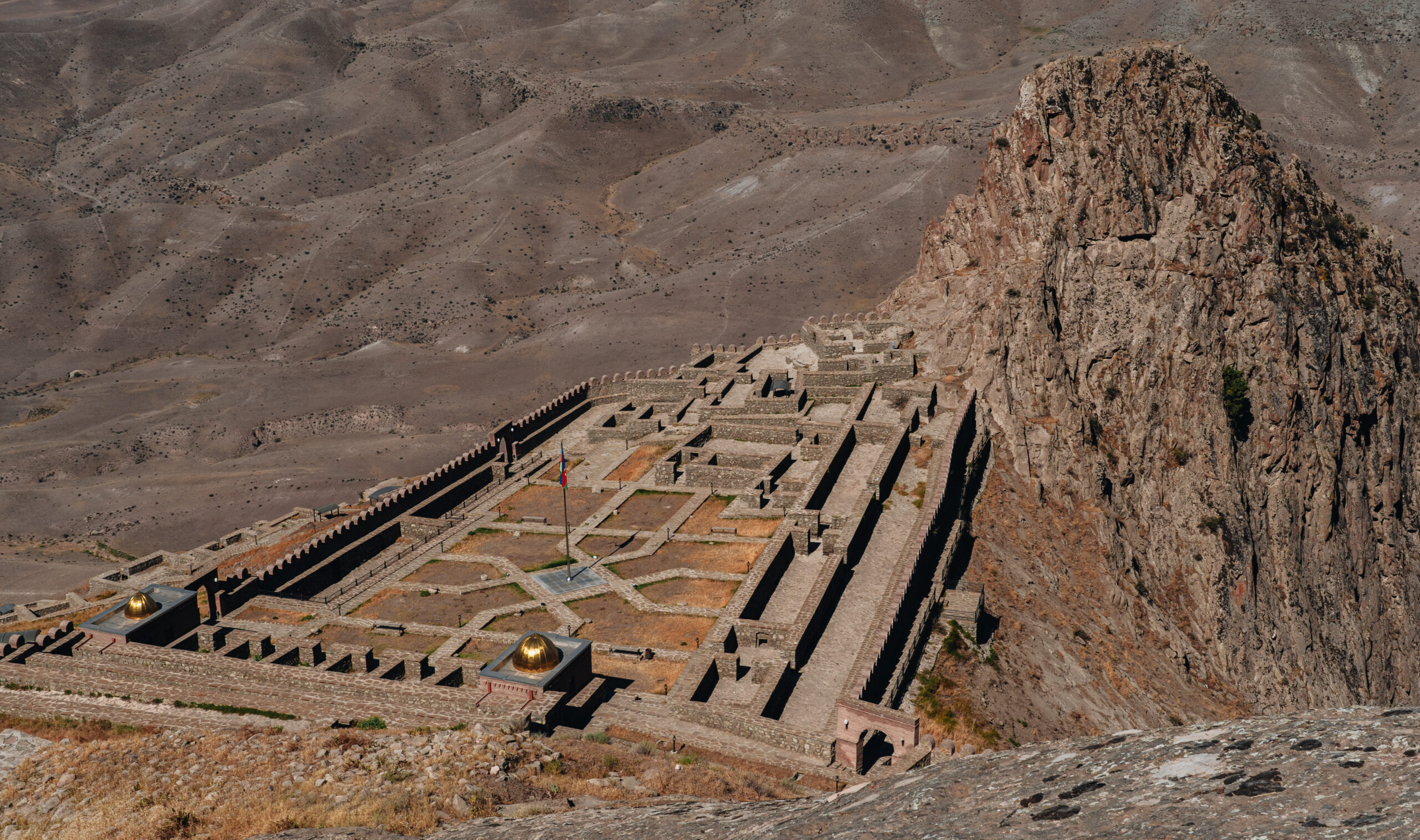
Another must-see destination is Alinja Castle, located west of Khanega village, near Julfa City. Perched on top of Mount Alinja at an altitude of 1,700 metres, the fortress is not just a tourist landmark but also a symbol of historic struggle and centuries-old character.
Named after its location, the castle has appeared in old sources under names such as Alanjik, Alanjug, and Alinja, among others. According to local folk etymology, the name comes from alinjak and Alinja Castle literally means “take off your hand,” a reference to the fortress’s legendary invincibility
Even though some historians claim that the fortress is approximately 2,000 years old, the oldest source in which it has been mentioned is the epic Book of Dede Gorgud. The stories in this book are known for reflecting the important morals and values of the nomadic Turkic peoples’ social lifestyle and pre-Islamic beliefs.
Moreover, Alinja Castle once had significant military importance. In the past, during the 14th and early 15th centuries, Amir Teymur (Tamerlane) attempted to conquer it, but his efforts bore no fruit. The Alinja Castle defence resisted the attacks for 14 years, solidifying the fortress’s legendary status.
Water resilience was crucial. There are several ponds of different sizes carved in the rock for collecting the melted snow, allowing people in the castle to access it when in need. In the past, Alinja used to be a small town with its own residential and public buildings. According to the Spanish traveller of the 15th century, Rui Gonzalez de Clavijo, “Alinja stood on a high, steep mountain, which was surrounded by walls with towers below. Inside the walls, on the slopes of the lower mountains, there were many vineyards, orchards, pastures, springs and cisterns of water.”
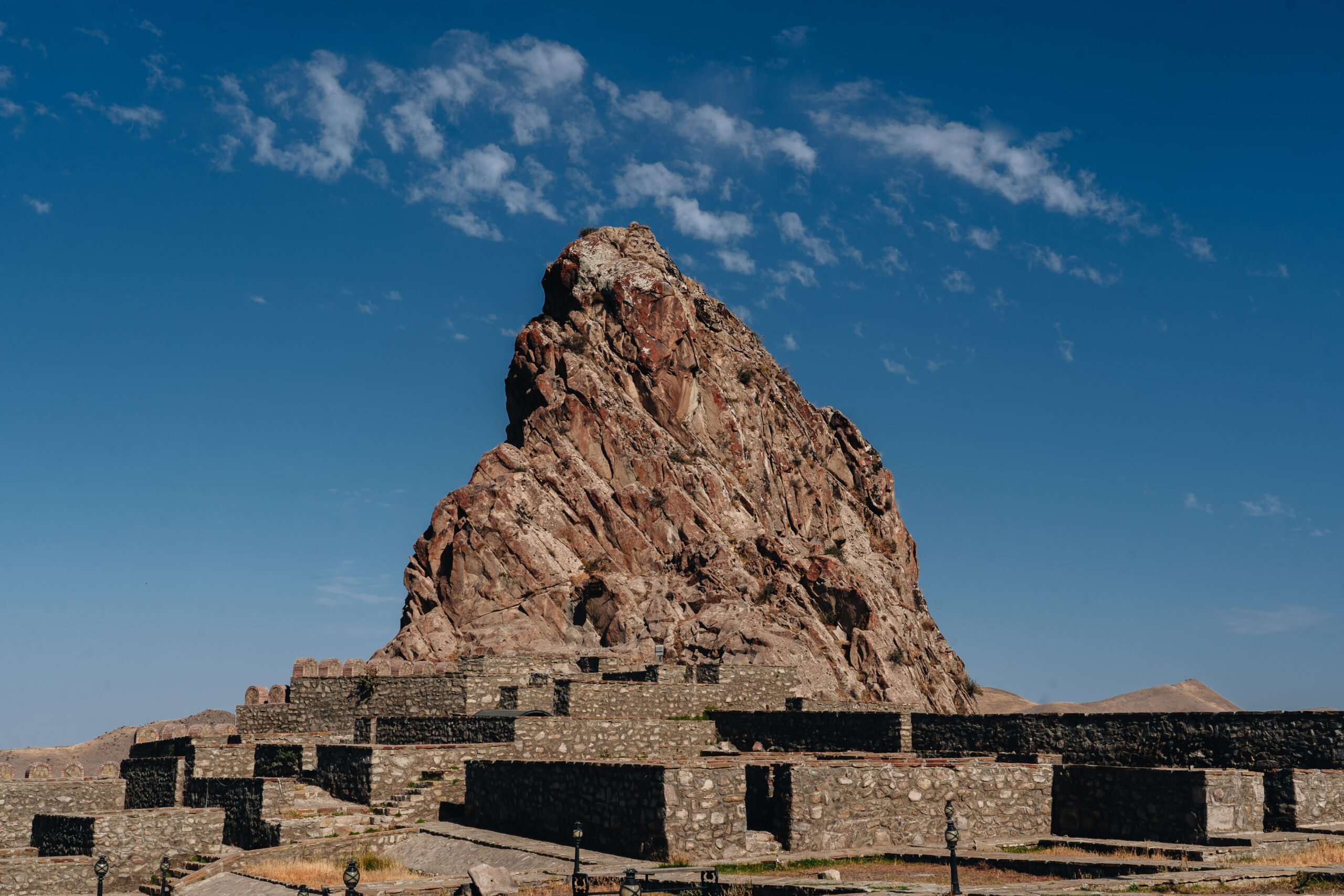
In 2014, the government restored the site to its historical form. Nowadays, the castle is a protected area at the state level, and it is also part of the list of the precious historical monuments in the territories of the Nakhchivan Autonomous Republic by the Azerbaijani state.
Reaching the top is a rewarding challenge, inviting people of all ages to delve into it and start exploring. Looking at the castle, it is not difficult to spot the resemblance to Machu Picchu in Peru. The journey to the highest point takes approximately 1 hour, depending of course on one’s pace and fitness. After all, achieving this goal requires a lot of willpower, some fitness, and an eagerness for a new challenge.
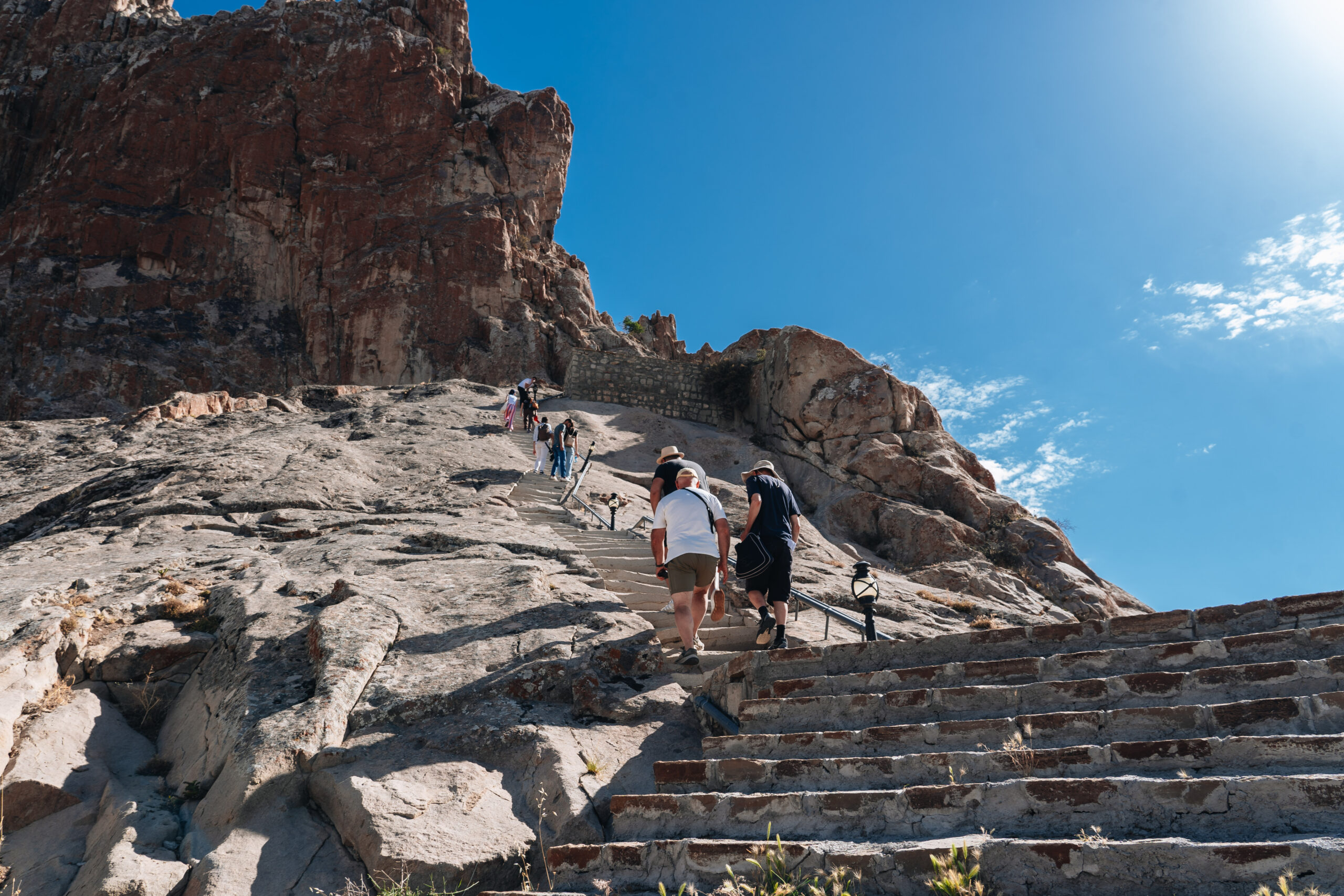
Once visitors conquer the 1,500 stairs to the top, there are beautiful places to take photos, relax, have a drink with a view, or just spend time marvelling at the picturesque view of the mountains.
Being far less discovered, Alinja Castle allows anyone enthusiastic about exploring it to simply go head-on without making a reservation in advance. While climbing, there is a chance to meet fellow visitors, but it is also highly likely that there are no other people around, which allows for privacy and a relaxing climb.