


The European Union is three years behind China in electric vehicle (EV) sales, according to a new report that blames the bloc’s weak carbon emissions standards for its failure to keep pace on climate goals in what is described as “an existential global competition”.
T&E’s new State of European Transport says the EU is in “a global race against time” to become “a global leader in the cleantech industries of the future,” with “climate, competitiveness, jobs and economic wellbeing” at stake.
Despite being neck-and-neck with China on EV sales share in 2020, the report points out that the EU fell behind China due to “weak European car CO2 standards after 2022.” Now, thanks to stronger targets in 2025 and with 70% of EVs sold in the bloc, manufactured in the bloc, the EU finds itself “only three years behind,” the T&E analysis shows.
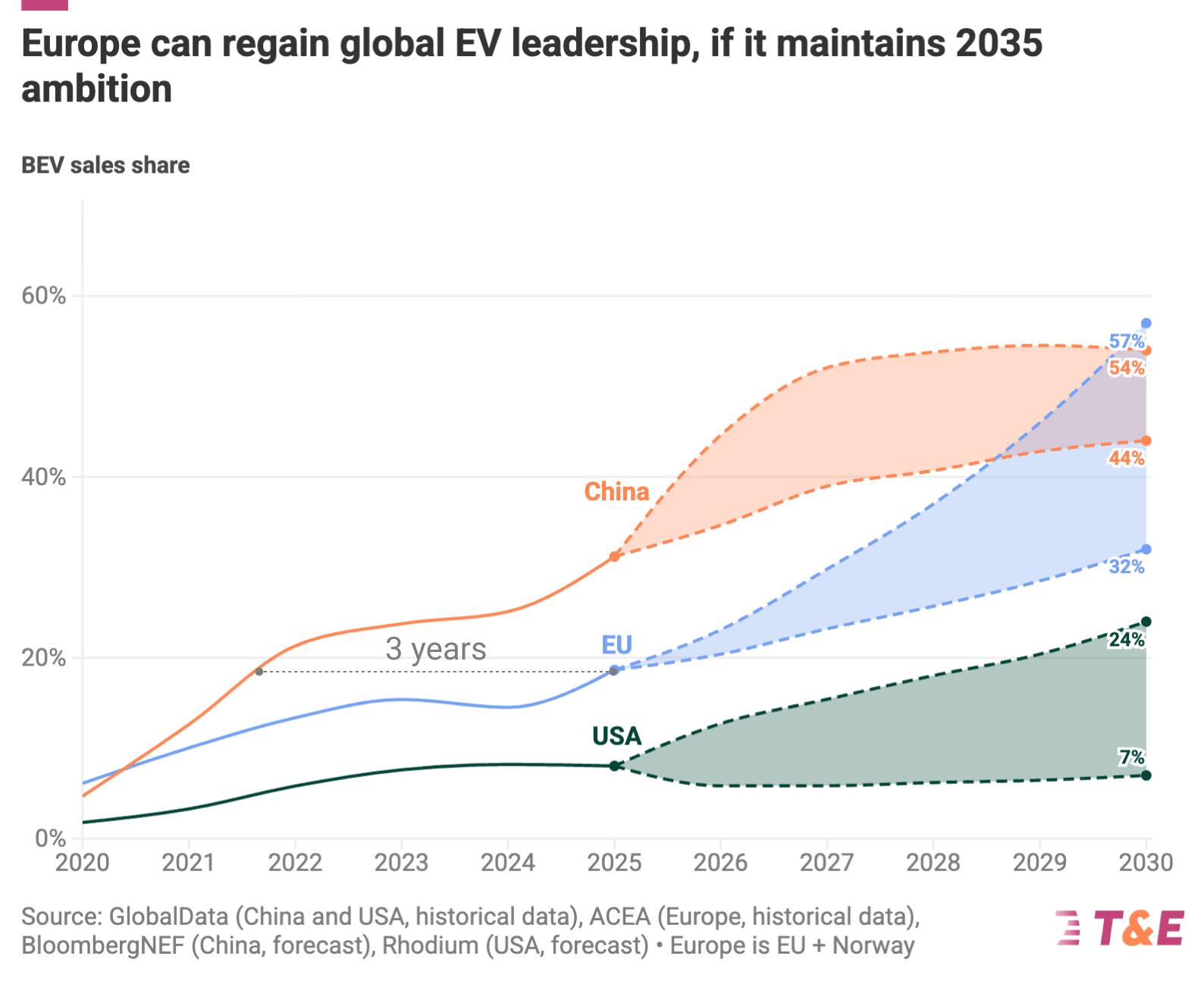
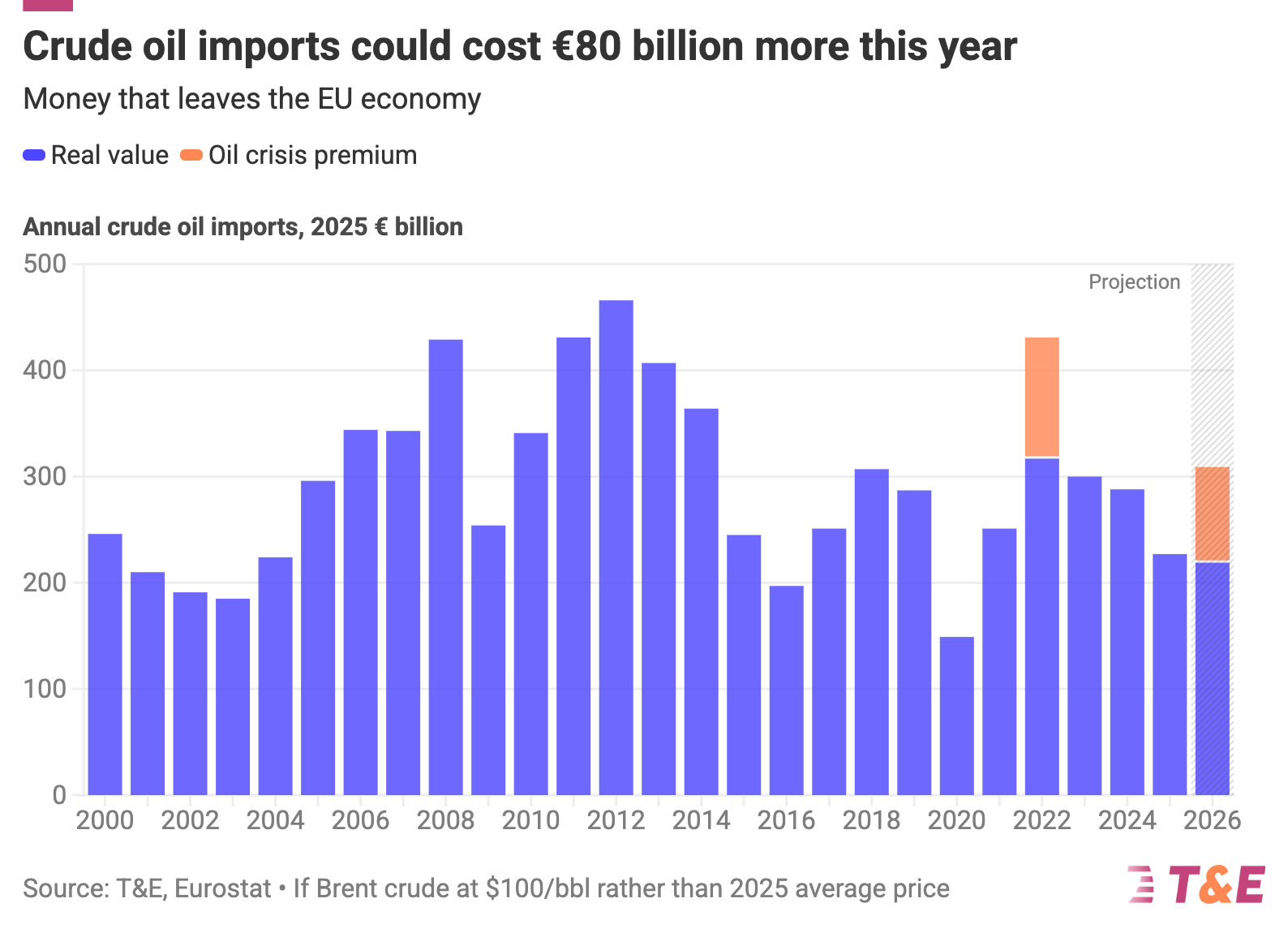
That gap can be closed before 2030, the authors argue, by maintaining “the right policies and financing” to grow Europe’s battery industry and push forward with Green Deal targets. By doing so, the bloc can not only improve its air quality, as has been seen in countries with high EV sales like Denmark and the Netherlands, which are seeing “strong cuts in vehicle carbon pollution.” It can also “rapidly reduce its dependence on imported oil. Europe’s eight million electric cars cut around 46 million barrels of oil in 2025,” the report notes.
Against a backdrop of insecure oil supplies and soaring prices, driven up by the ongoing security crisis in the Middle East, reducing oil dependence is vital, T&E says. William Todts, the green campaign group’s Executive Director, said: “EVs are the super-lever for ending Europe’s dependence on imported oil. The industry narrative that we are too far behind China and that we must weaken the car CO2 regulation to help them compete is fundamentally wrong. The regulation is not the problem. It is what keeps Europe in the race to be a global leader in battery electric cars. We need to accelerate, not capitulate.”
The EU’s battle with China on cleantech saw tariffs up to 35.3% imposed on Chinese EVs in 2024, after an investigation found that unfair subsidies had been awarded to EV producers in China, “causing a threat of economic injury to EU BEV producers”. In January 2026, that measure evolved towards an EU minimum pricing strategy for major EV manufacturers from China.