

The Belgian carrier has reported a steep fall in profits for 2025, despite a rise in passengers and an increase in the number of flights.
Some may ask how it is possible that, although Brussels Airlines has remained operationally profitable for the past three years, its adjusted EBIT (earnings before interest and taxes, a key indicator of operating profitability) fell by half compared with 2024.
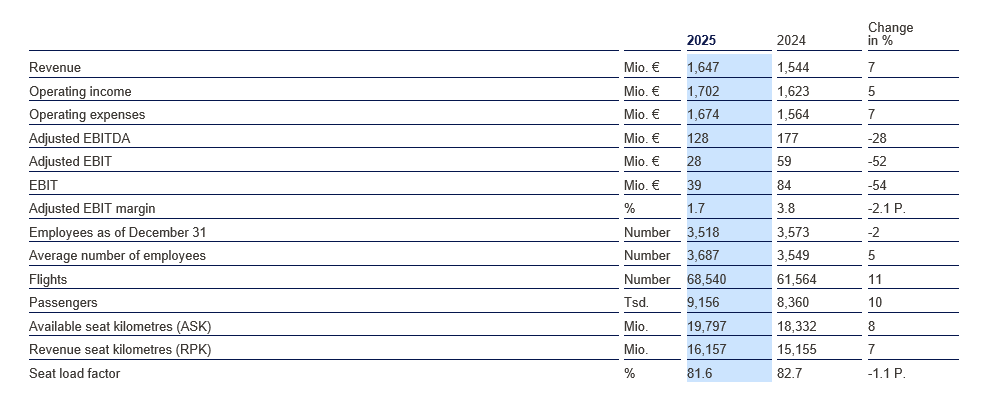
This decline occurred despite the airline increasing its flight capacity by 11% and operating over 68,500 flights during the year. Passenger numbers rose by 10% to over 9.1 million, while revenue increased by 7%. Total revenue for 2025 reached €1.6 billion, a 7% year-on-year increase.
The glitch appears to lie in a number of factors.
Firstly, strikes disrupted flights on at least seven occasions during the year, costing the company around €15 million. In addition to domestic industrial action, further disruption was caused by external incidents, such as cyberattacks and drone activity near airports, which temporarily grounded flights and affected operations. Broader geopolitical instability also increased costs by around €4 per passenger, according to Brussels Airlines.
Aircraft maintenance also played a role. Both scheduled and unscheduled maintenance kept planes on the ground for longer than expected. In several cases, Brussels Airlines had to lease additional long-haul aircraft to maintain services, an expensive stop-gap solution that further weighed on profitability.
As a result, Brussels Airlines reported an adjusted EBIT of €28 million for 2025, compared with €56 million the previous year.
Dorothea von Boxberg, chief executive of Brussels Airlines, said that the company “needs stronger profits to finance investments in new aircraft, improved services, and better connectivity for Belgium”.
However, she stressed that the airline had proved resilient despite the operational challenges of the past year.
Chief Financial Officer Nina Öwerdieck acknowledged a “clear step back” but insisted that the company’s long-term objectives remained unchanged. Brussels Airlines aims to achieve an operating margin of around 8%, which it considers to be the minimum necessary to support future investment.
The margin fell from 3.8% in 2024 to 1.7% in 2025. The airline now hopes to exceed its 2024 results in 2026 and resume its trajectory towards that 8% target.
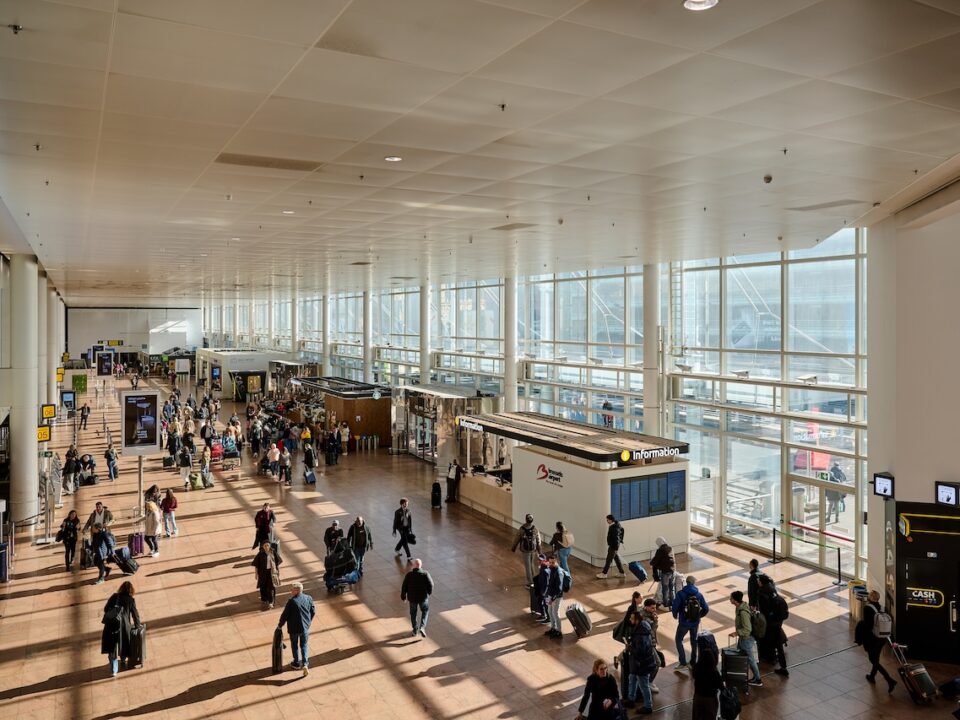
Reaching that goal may prove difficult in the short term, however. A new strike by Belgium’s three major trade unions – FGTB/ABVV, CSC/ACV and CGSLB/ACLVB – over pension reforms and wage indexation has been scheduled for 12 March. No departing flights are expected from either Brussels Airport or Charleroi on that day.
The conflict in the Middle East has also impacted the airline, which has cancelled or adjusted some flights to the region. This instability risks prolonging the disruptions and has already contributed to rising crude oil prices.
It is worth noting, however, that last year’s disruptions were largely external. Brussels Airlines stressed that none of its employees went on strike in 2025, a fact highlighted by Öwerdieck, who thanked staff for their efforts and said they had “gone above and beyond to take care of our passengers during these irregularities”.
Several measures are already being implemented to address delays and cancellations, according to Filip Aerts, the airline’s chief operating officer. The company has also announced plans to enhance the passenger experience, including improving service across several travel classes and renovating the Brussels Airlines lounge at Brussels Airport.