


I live in a small market town fifty miles from London. When I moved here some fifty years ago, it had a good mix of social classes, many large extended families who had lived in and around the town for many generations and a strong sense of community. The town has attracted “unhelpful” stories in the national press about what a great place it is to live; I am not naming the town as I don’t want to add to our problems.
As is the case for many communities with travel times of under an hour into central London, commuting has increased, and property prices have risen. Traditional terraced houses near the station, which were starter homes for local people wanting to start a family, are now being purchased by DFLs (Down From Londoners), and the houses are now beyond the reach of many of the children of those extended families. They are moving away to start their families, often expensive travel distances from parents/grandparents, aunts and uncles. My town is being gentrified as many of the traditional industries offering manual employment cease.
This gentrification is changing the nature of the place. At the heart of Responsible Tourism is the idea that great places to live are great places to visit, and inherent in that idea is the principle of putting local people and their interests first.
In my town, gentrification has had two impacts on housing and retail. There is a serious shortage of affordable housing, for purchase or rent, for the children of local people, many from families who have lived here for generations. Tourism contributes to this as people discover the town as tourists who then look to live here. Some buy a second home for their retirement, renting it out through Airbnb in the meantime.
The impact on retail in the town centre is also serious. The town centre in a small town is an important focal point where the communities can come together for the switching on of the Christmas lights and other events through the year. When I leaflet in the town centre on a Saturday morning, more than half of those I accost are not from the town; they are irregular day visitors attracted by our street market, which prospers. Great news for those of us who can afford to pay premium prices, but for many local people they cannot afford to purchase, and they feel excluded from the heart of their town, alienated.
Gentrification is one of the major causes of the community’s feeling that their place has been spoilt by tourism, that tourism and tourists exclude them. In the debates about overtourism, there has been a major focus on second homes and short-term rentals. Less attention has been paid to the impact on the High Street and the retail offer, as those that serve local needs are squeezed out by rising rental costs.
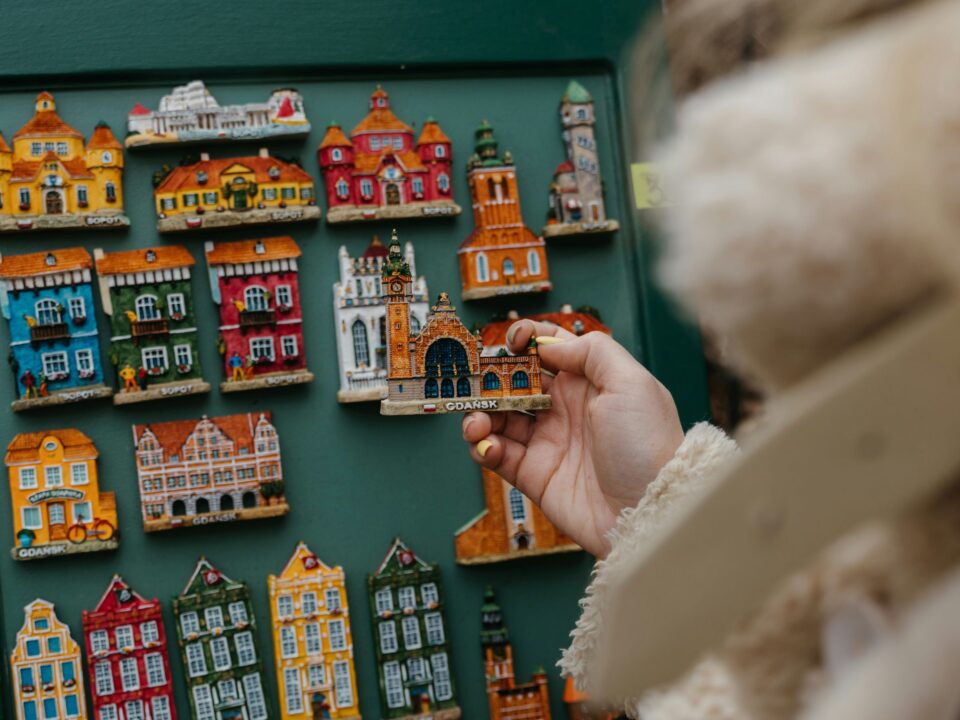
Cheung & Yiu’s research in Hong Kong suggests that touristification is not merely a subset of gentrification. Their research evidence suggests that shops oriented to serve tourists can pay higher rents and that areas with more tourists will make the retail rent gaps of small shops higher, resulting in the closing of traditional retailers.
In Barcelona, the city’s sustainable-tourism commissioner José Antonio Donaire is working to restore resident-oriented retail and neighbourhood life. Donaire frames the goal as ensuring that “any resident can buy a loaf of bread, a book or a screw in their neighbourhood.” The city is considering using part of its tourist tax to support local commerce rather than gift shops, building on restrictions on new tourist shops in sensitive zones such as Park Güell and Sagrada Família, plus rent support for commercial premises serving mainly local residents.
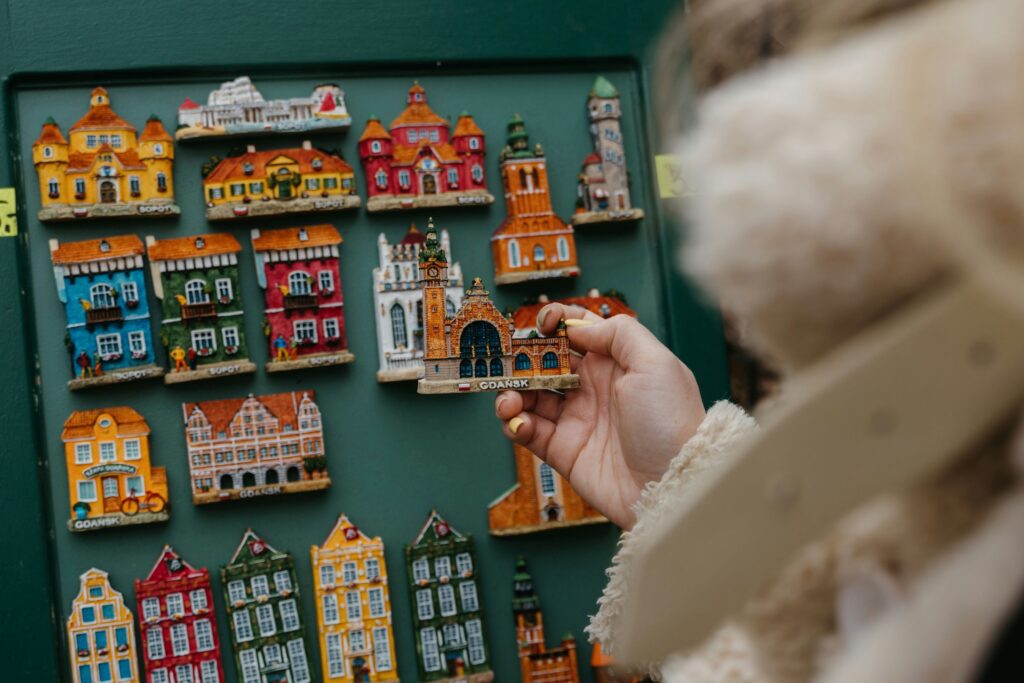
In Barcelona, La Rambla and its Mercat de la Boqueria are among the clearest examples of overtourism: a historic everyday public market and street have been reshaped by visitor volumes, tourist-oriented retail, crowding, and pressure on local life. La Boqueria attracts ±23 million visits a year, and many residents avoid it because of crowds and the shift from fresh-food shopping toward takeaway, fruit cups, juices, and other visitor purchases. Over the last 15 years, the balance of local to tourist has shifted from 50/50 to 20/80. On La Rambla itself, residents and local associations speak of it as a “tourist trap”, crowded, with fast-food outlets and souvenir shops displacing other uses.
La Boqueria and La Rambla are among the 16 areas which have been identified as oversaturated. Measures are being taken to redress the balance, including crowd monitoring, cleaning, civic-agent patrols, tourist-bus rerouting, and support for businesses serving residents. Tour groups in La Boqueria are limited to fewer than 15 people, and the city is also using sensors on La Rambla to measure pedestrian flows and identify saturation points. La Boqueria never ceased to prosper. Its function and its clientele changed.
The city is working to boost trade aimed at residents and to offer more community, neighbourhood, cultural, and family activities in spaces traditionally occupied by tourism. For La Boqueria, a major new regulation is planned but not yet fully in force: it would require the market overall to limit prepared foods to 50% and reserve at least 50% for traditional products. For individual stalls, reports indicate a proposed limit of up to 60% elaborated/prepared products and a minimum of 40% traditional products, with approval expected in late 2026 or early 2027. The aim is to restore La Boqueria’s function as a fresh-food market rather than a primarily tourist food court.
Barcelona’s deputy mayor for economic promotion, Jordi Valls, admitted that the city is “reaching the limit” in terms of the number of tourists, but he has admitted it is very difficult to prohibit the arrival of visitors. For this reason, authorities want to regulate the city’s offering and, instead of “enhancing” the Barcelona brand, he wants to “defend” it. “Tourism adds value, but after a certain limit, it no longer does,” he added, explaining that he wants above all to manage public space because this is what can help build a city for all.