


Travel souvenirs are nothing new, and the most popular types of mementoes have evolved over the centuries. Now, however, a Skyscanner travel trends report has identified a new craze for trips driven specifically by the desire to acquire a particular item from a particular place.
From the amulets and papyrus scrolls taken from sacred and cultural sites in Ancient Egypt as early as 2,200 BCE, to small local deities and replicas coveted by Ancient Roman soldiers and other colonialists; from the metal pilgrim badges and prayer beads gathered during medieval pilgrimages, to the natural rocks, fossils and seashells pocketed by Vikings and Victorian collectors, acquiring items that remind us of our travels appears to be an enduring human endeavour.
Top-selling souvenirs around the world: 🇪🇬 Papyrus scroll 📜 🇧🇯 Ritual masks 👺 🇧🇫 Football shirt 👕 🇹🇳 Ceramic plates 🍽️ 🇲🇱 Leather goods 💼 🇿🇦 Zulu spoon 🥄 🇰🇲 Spices 🌶️ 🇲🇺 Rum 🍹 🇳🇪 Leather goods 👜 🇱🇷 Ritual masks 👺 🇿🇼 Fabrics 🧣 🇯🇵 Origami paper 🇮🇳 Spices 🌶️ 🇵🇰 Shawl 🧣 🇰🇷 Korean tea 🍵 🇱🇧 Books 📚 🇰🇿 Chocolate 🍫 🇮🇱 Jewelry 💍 🇲🇳 Cashmere 🧣 🇮🇷 Carpet 🇷🇺 Matryoshka 🪆 🇧🇩 Recycled rice bags 🌾 🇱🇰 Carved masks 🎭 🇵🇸 Scarf 🧣 🇦🇺 Boomerang 🪃 🇳🇿 The one ring 💍 🇫🇯 Mako mask 🤿 🇺🇸 Sweets 🍭 🇨🇺 Cigar 🚬 🇨🇦 Maple syrup 🍁 🇲🇽 Lucha Libre mask 👺 🇧🇷 Hammock 🇦🇷 Leather goods 🧳 🇧🇴 Poncho 🇻🇪 Ron Aniversario rum 🍹 🇬🇧 Umbrella ☂️ 🇩🇰 Lego 🇱🇺 Watches ⏱️ 🇫🇷 Beret 👨🎨 🇭🇷 Lavender 🪻 🇩🇪 Beer 🍺 🇪🇸 Espadrilles 🇸🇪 Dala Horse 🐴 🇳🇴 Sweater 🇧🇪 Chocolate 🍫 🇮🇹 Venetian masks 🎭 🇱🇻 Amber jewelry 🇧🇬 Rose products 🌹 🇹🇷 The Evil Eye 🧿 🇬🇷 Worry beads 📿 🇷🇴 Painted eggs 🪺 According to Vacations & Travel
— World of Statistics (@stats_feed) April 16, 2026
Certainly, from the 17th century onwards, when wealthy Europeans began visiting southern European destinations to complete their classical educations, “the need to collect souvenirs, which the Grand Tourists could display in their homes … was tied to status,” Katherine Gazzard, Curator of Art at Royal Museums Greenwich, has explained. She adds that “creating a material legacy was really important for the Grand Tourists in order to solidify their social standing amongst their peers. They were looking to spend money and buy mementoes to prove they went on the trip.”
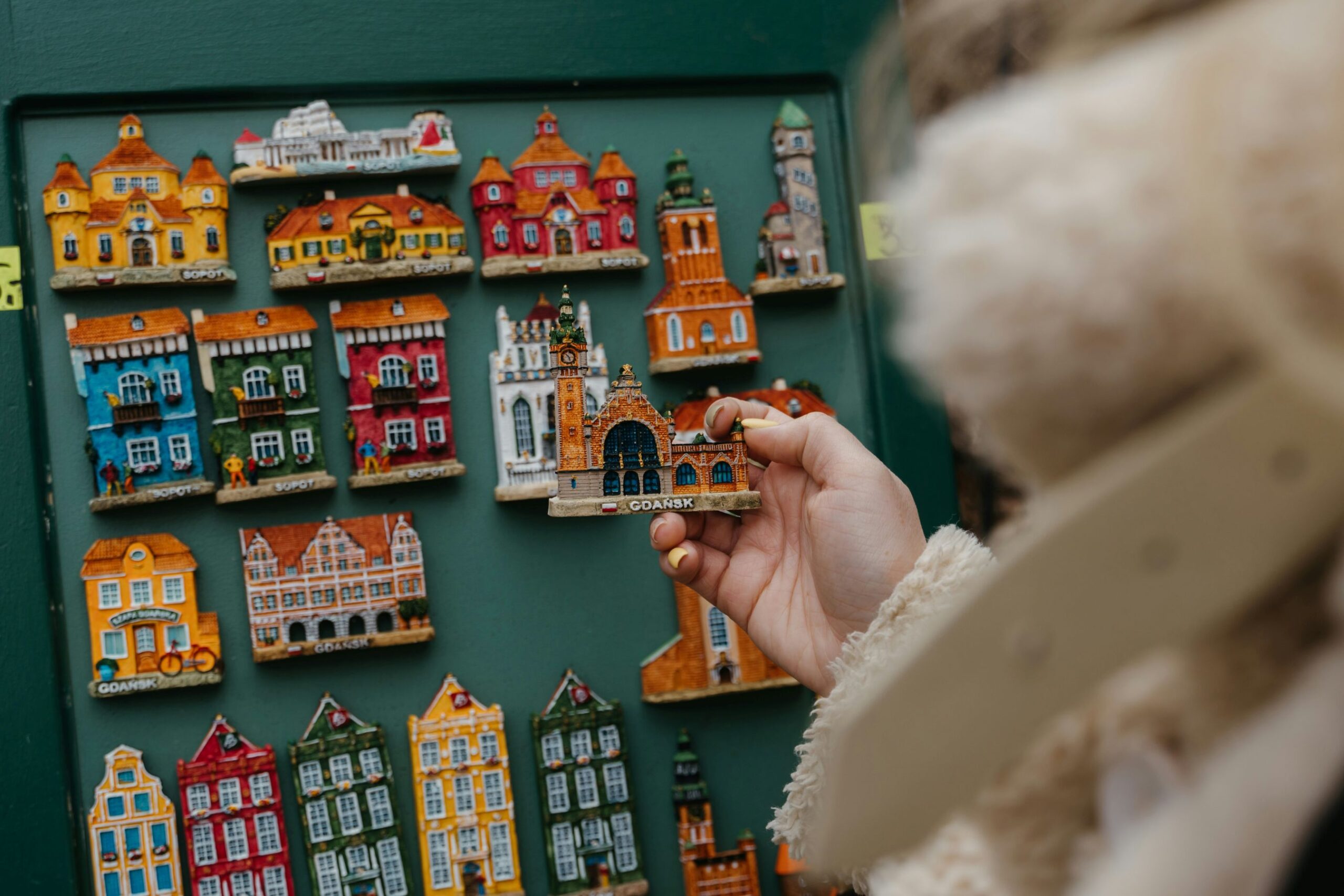
The 20th century’s rapid industrialisation and the advent of mass travel saw the proliferation of cheap souvenirs, accessible even on the most modest budget. However, these mass-produced, often low-quality pieces, such as fridge magnets or plastic Eiffel Towers, have gradually lost their appeal, as travellers become more discerning and concerned about the wasteful use of materials and negative impacts on local communities.
The Australian Government’s Productivity Commission found in 2022 that up to 75% of souvenirs marketed as “Indigenous” in Australia were fakes. The BBC has also reported that 95% of fabrics sold as pashminas in India’s Leh Market, in Ladakh, “aren’t genuine,” according to Sonam Angmo, co-founder of Lena Ladakh Pashmina, a slow textile brand.
Recent years have seen holidaymakers and travellers rebelling against mass-produced souvenirs, and even physical souvenirs altogether, choosing instead to take an intangible memory of an “experience” away from their travels. Participating in food or art workshops, running a marathon in a chosen destination, or combining attendance at a sporting fixture or performance by a favoured musician with the trip of a lifetime are all examples of a shift towards experience-led travel that has been well documented by Travel Tomorrow and other outlets over the last few years.
When the souvenir becomes the reason for the trip
But travel consumers are taking part in a “new” trend, Skyscanner says: a taste for souvenirs more akin to those Grand Tour status symbols. In perhaps one of the ugliest neologisms of recent years, the trend has been dubbed “pilgra-merch” (merchandise acquired via a pilgrimage). The defining feature, however, is that the pilgrimage is all about purchasing that specific item from that specific place. Skyscanner gives Trader Joe’s tote bags and merchandise from the Ritz Paris as examples.
The trend is undoubtedly tied to online culture. The internet has made almost anything available, anywhere, at any time, pushing up the value and cachet of “the genuine article” that can only really be acquired in a specific place. In a world where showing off one’s travel and taste credentials on social media is what many people do as a matter of course, doing it via a “humble brag” may be seen as more discreet. Imagine a lakeside sunset, an onlooker’s neck swathed in a textile from historic Finnish weavers Lapuan Kankurit and, maybe, a Visit Helsinki tote barely visible over the subject’s shoulder.
Ultimately, it’s easy to poke fun at consumer culture and pour scorn on online antics. Yet, as many psychologists have noted over the decades, the travel souvenir endures, albeit in changing form, because it stems from a desire to remember, connect and share experiences, and, more emotively, at least when it comes to gifts, a desire to let someone else know we thought of them while we were gone.