



Europe is expected to remain a leading force in global tourism over the next decade, with demand for tourist accommodation forecast to rise by 32% between 2026 and 2036, according to a new report from hospitality group Accor.
Based on data commissioned from Tourism Economics, The Changing Face of Europe’s Tourism Map to 2036 predicts an additional 1.6 billion overnight stays annually by the end of the period. International accommodation nights are projected to increase by 42%, outpacing domestic growth of 24%.
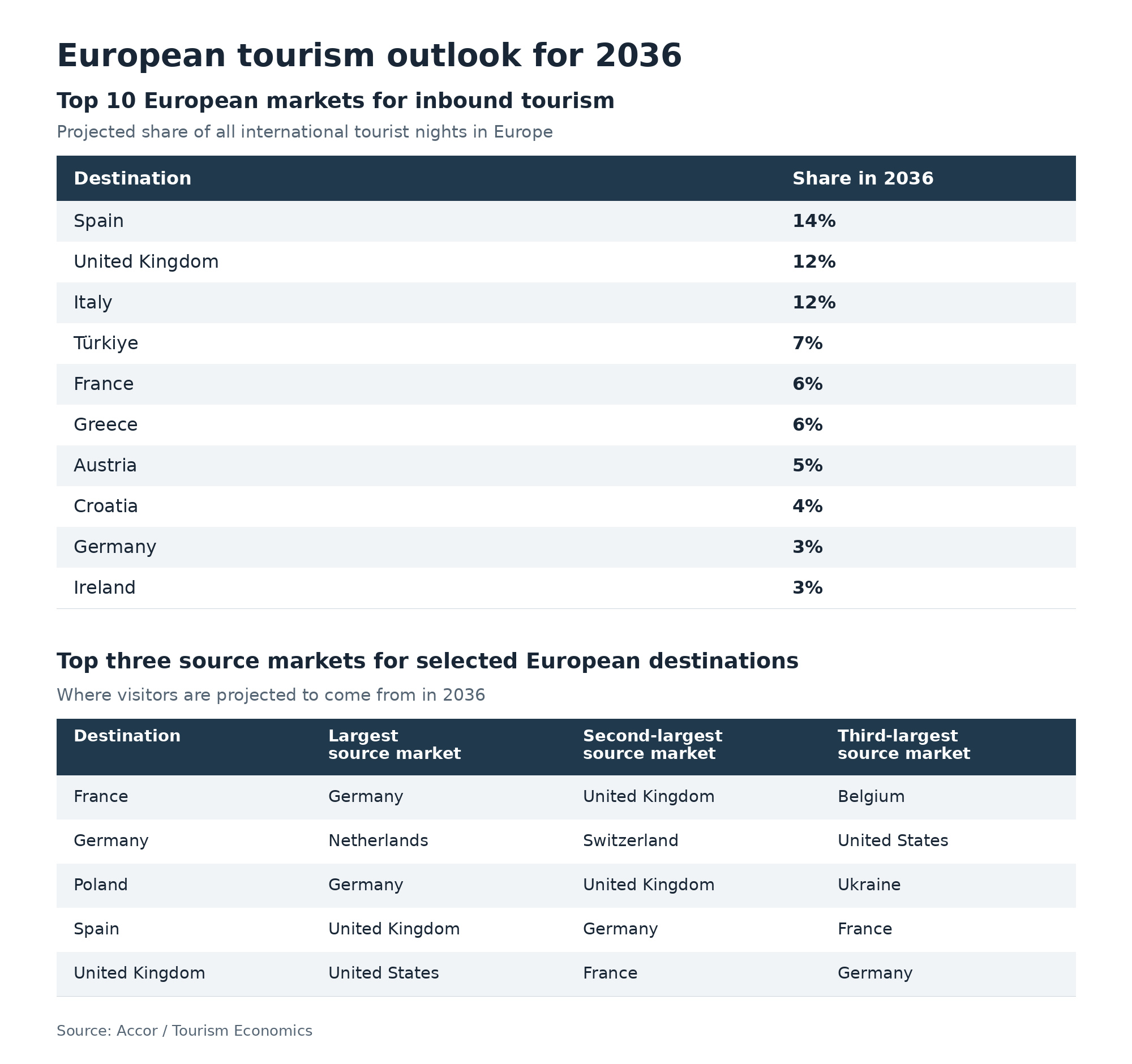
Spain is forecast to account for 14% of all international tourist nights in Europe by 2036, followed by the UK and Italy at 12% each, according to Accor’s report. Türkiye is projected to hold a 7% share, ahead of France and Greece at 6% each, Austria at 5%, Croatia at 4%, and Germany and Ireland at 3% each.
The expansion is expected to bring changes in both where visitors travel and where they come from. While established destinations will retain their appeal, some of the fastest growth is forecast beyond Europe’s traditional tourism centres.
International accommodation nights in Azerbaijan are projected to increase by 116% over the decade, followed by Latvia at 83% and Romania at 82%. Germany, meanwhile, is forecast to account for 14% of international arrivals across Europe by 2036, ahead of the UK at 8%.
Travel within Europe will remain the foundation of the industry, accounting for 77% of international arrivals in 2036. However, arrivals from emerging European source markets are expected to grow by 52%, compared with 34% from Western Europe. Improving connectivity and rising incomes are among the factors supporting this shift.
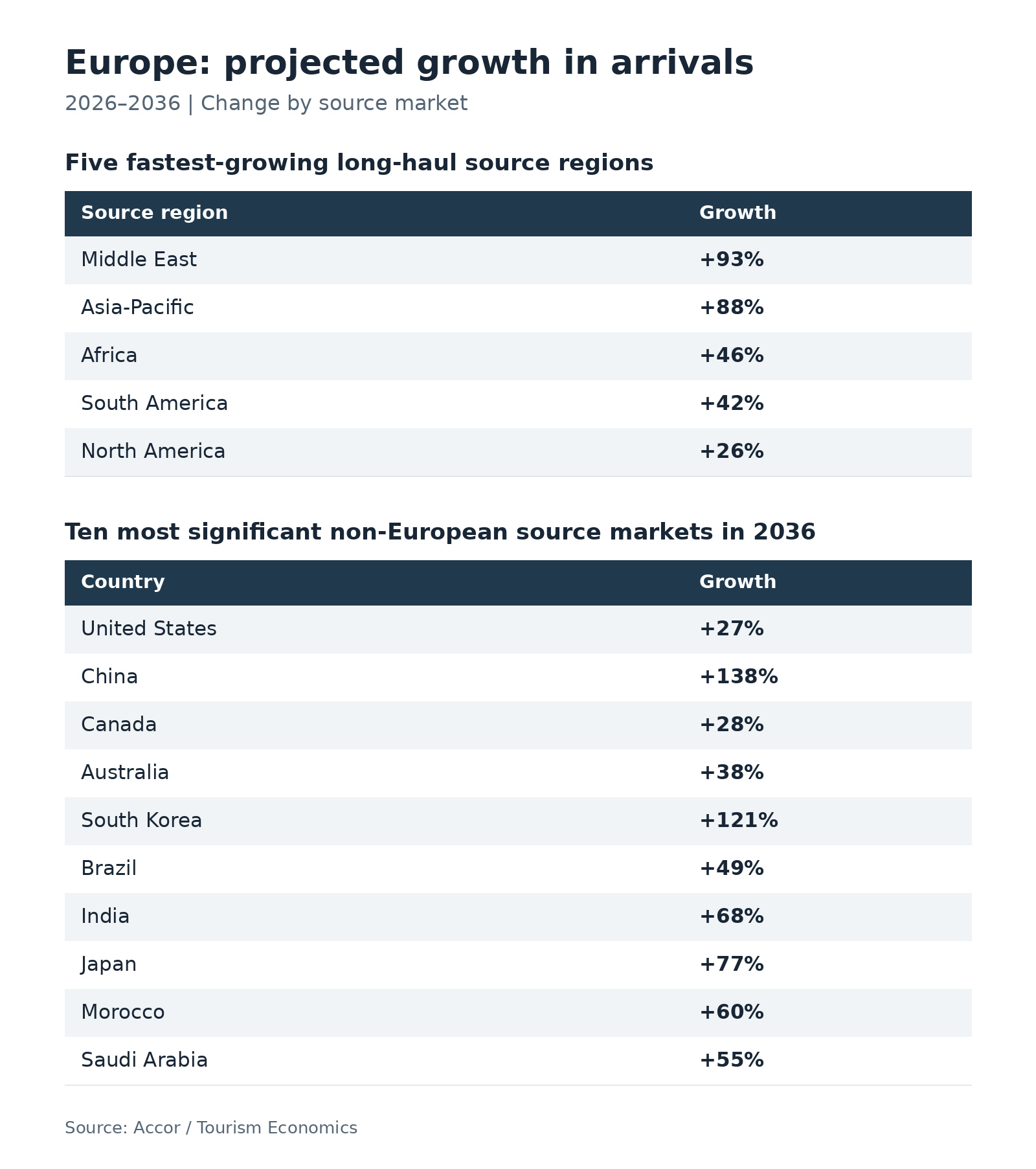
Long-haul markets are also set to become increasingly important. Arrivals from the Middle East are forecast to rise by 93%, while those from Asia-Pacific are projected to increase by 88%. China and South Korea are expected to record particularly strong growth, at 138% and 121% respectively.
Accor identifies opportunities for economy hotels as international travel becomes accessible to a wider range of consumers, including visitors from emerging European economies and expanding Asian markets.
“Europe remains the world’s most desirable destination because of its extraordinary diversity,” said Accor spokesperson Aiden McAuley.
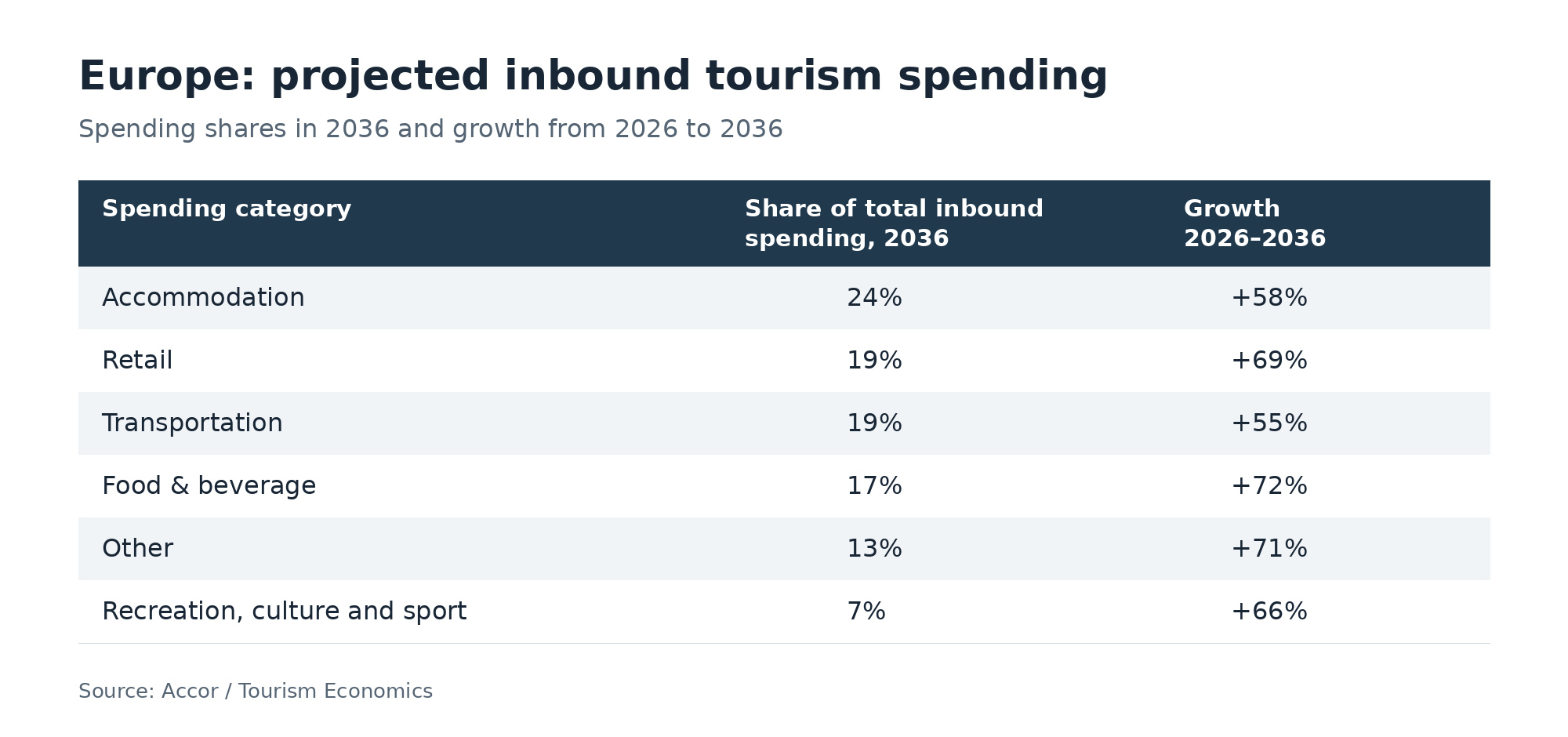
The financial impact is also expected to increase substantially. Inbound visitor spending is forecast to climb from €825 billion in 2026 to more than €1.3 trillion in 2036, a rise of 64%. Business arrivals are projected to grow by 50%, compared with 39% for leisure arrivals.
The outlook follows separate World Travel & Tourism Council forecasts that Europe’s travel and tourism sector will grow by 3.1% in 2026, exceeding the projected global rate of 2.5%. International visitor spending in Europe is expected to rise by 5.8% this year.
Europe already accounts for a substantial share of worldwide demand. WTTC figures show the region attracted $2 trillion in leisure travel spending in 2025, approximately one-third of the global total, underscoring its continued importance to the international tourism economy.