

Travel consumers continued to seek destinations where they could escape soaring summer temperatures in 2026, according to new reporting from the United Nations University Institute for Water, Environment and Health, and other local datasets.
After successive years of record temperatures, droughts, and wildfire risks across southern Europe and other traditional summer holiday hotspots, so-called “coolcations” have been growing in popularity in recent times. Travel Tomorrow has previously reported on a top 20 coolcation list by Inghams Walking, and the trend went on to make itself felt again as the months went on, with a year-on-year 10% surge in visitor numbers between April and June across Northern Europe recorded by the European Travel Commission.
Even holidaymakers from within those countries, who traditionally are thought of as sunseekers looking to toast themselves away from rainy climates, are succumbing to the heat and looking to cool things down. A survey by travel app Polarstes found that 35% of British travellers had opted for a vacation out of the heat of the sun in 2026. What’s more, approximately 76% of Europeans say climate-related factors now influence their travel behaviour, with 16% hankering after breaks in cooler climes.
The seven Northern European destinations in question are: Denmark, Finland, Iceland, Ireland, Norway, Sweden and the UK—particularly Scotland, which makes an interesting study in terms of the balance to be struck between a burgeoning tourist offer and keeping locals onside.
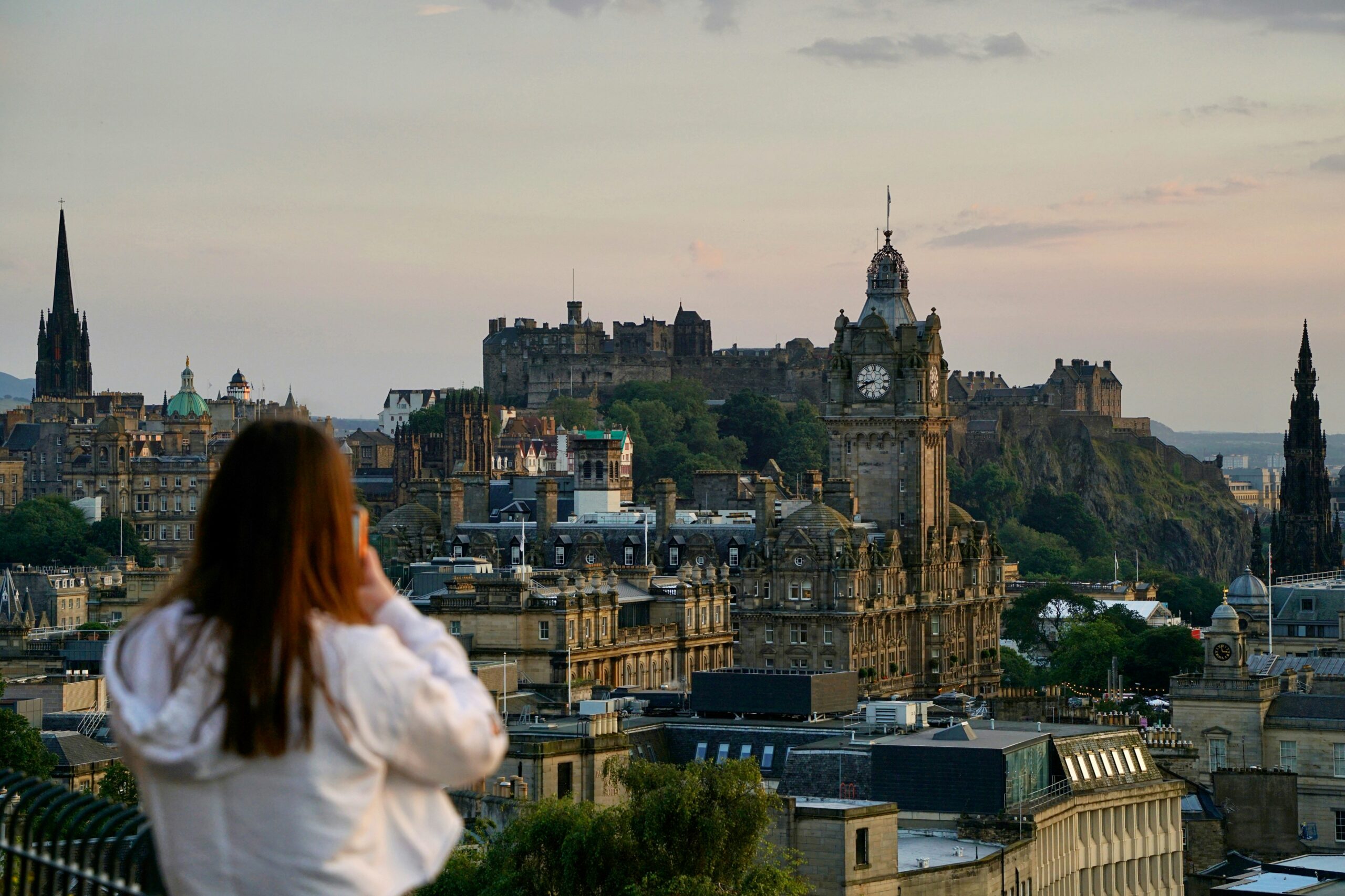
Vicki Miller, chief executive of VisitScotland, recognises that in 2026 there has been “strong demand from Europe including Spain and Italy, which is potentially the climate impact.” National tourism agency VisitBritain also notes that flight reservations for Scottish airports rose 15% during the six weeks ending mid-July, compared with the same period in 2025. Simultaneously, bookings for London, in the midst of an excruciatingly humid heatwave, fell.
Interestingly, this suggests coolcationers do not yet trust climate trends, and are choosing to book late, very much responding to local weather conditions when selecting where to go.
Early data hint that Scotland’s tourism sector saw growth in 2026, with Edinburgh Festival sales up 30%. But spending seems to be down, according to Marc Crothall, the chief executive of the Scottish Tourism Alliance. That decline might partly be due to a switch from hotel stays to campervan tours, as registered by the Moffat Centre for Travel and Tourism at Glasgow Caledonian University and reported by The Guardian.
If visitor spending and the benefits of tourist footfall are not felt by locals, it could create issues in destinations not accustomed to mass tourism’s impact on local services, housing, and habitats. As the UN Institute remarks, “In 2025, 32% of Highland and 48% of Orkney residents felt tourism placed too much pressure on their area.”
Tourist taxes and channelling the funds raised into local amenities may help to deal with some of those pressures. Edinburgh has recently put in place a 5% tourist tax on the first five nights of any stay, and Norway, which saw a 3.2% increase in international hotel bookings between May and July 2026, has done the same, giving municipalities the power to charge up to three percent on tourist accommodation.
For now, the rise of the coolcation appears inexorable, but the proliferation of those same tourist taxes could potentially suppress some prospective cooler travel markets. It should perhaps also be borne in mind that traditional hotspot Spain is also booming. And, with the World Meteorological Organization predicting with almost 100% certainty that El Niño will bring peak weather impacts to destinations around the world across the end of 2026 and start of 2027, climate factors are bound to continue to influence travel—in perhaps unforeseen ways.