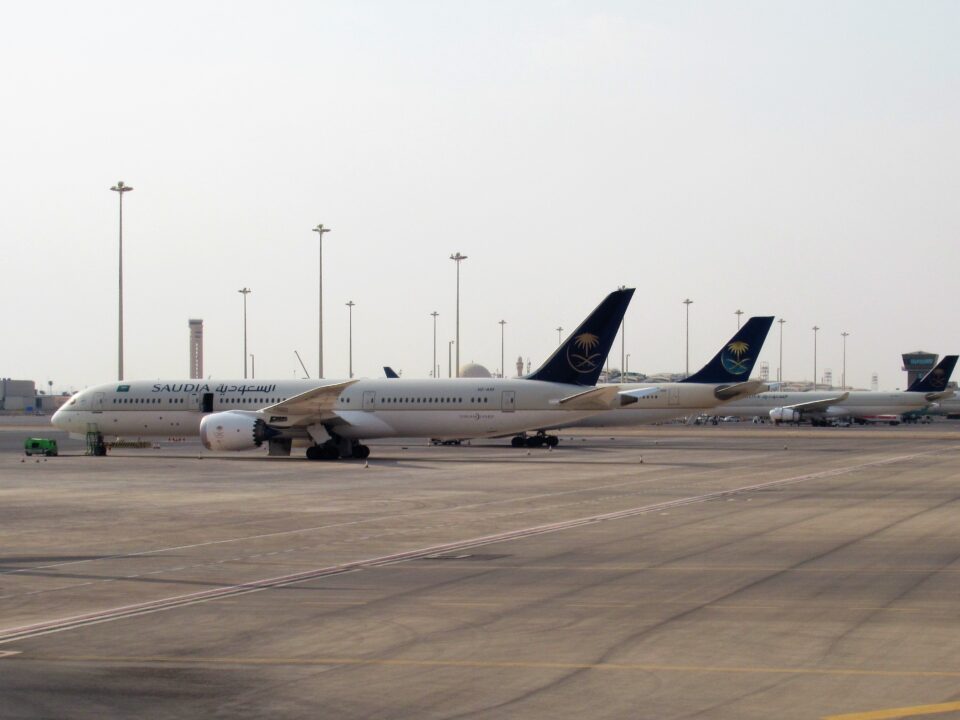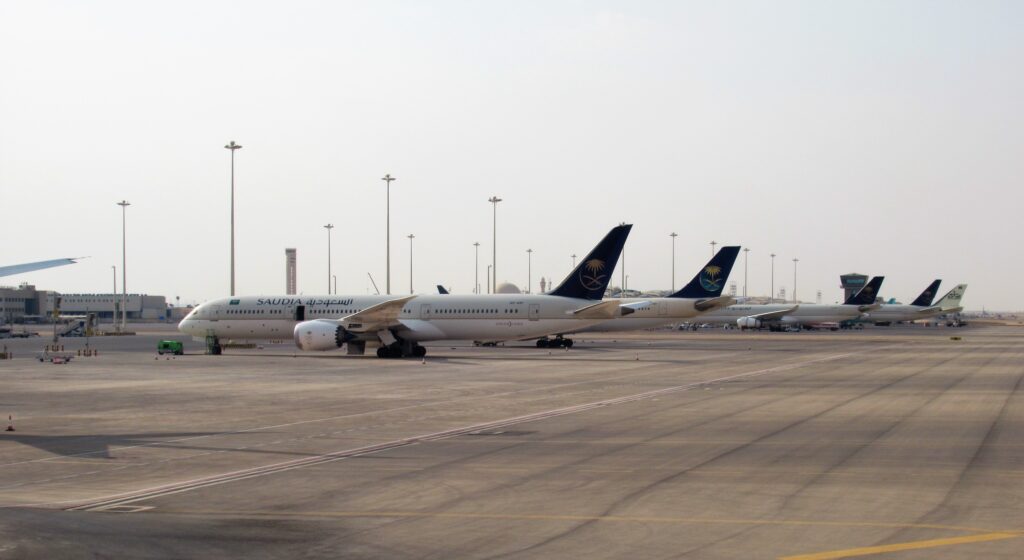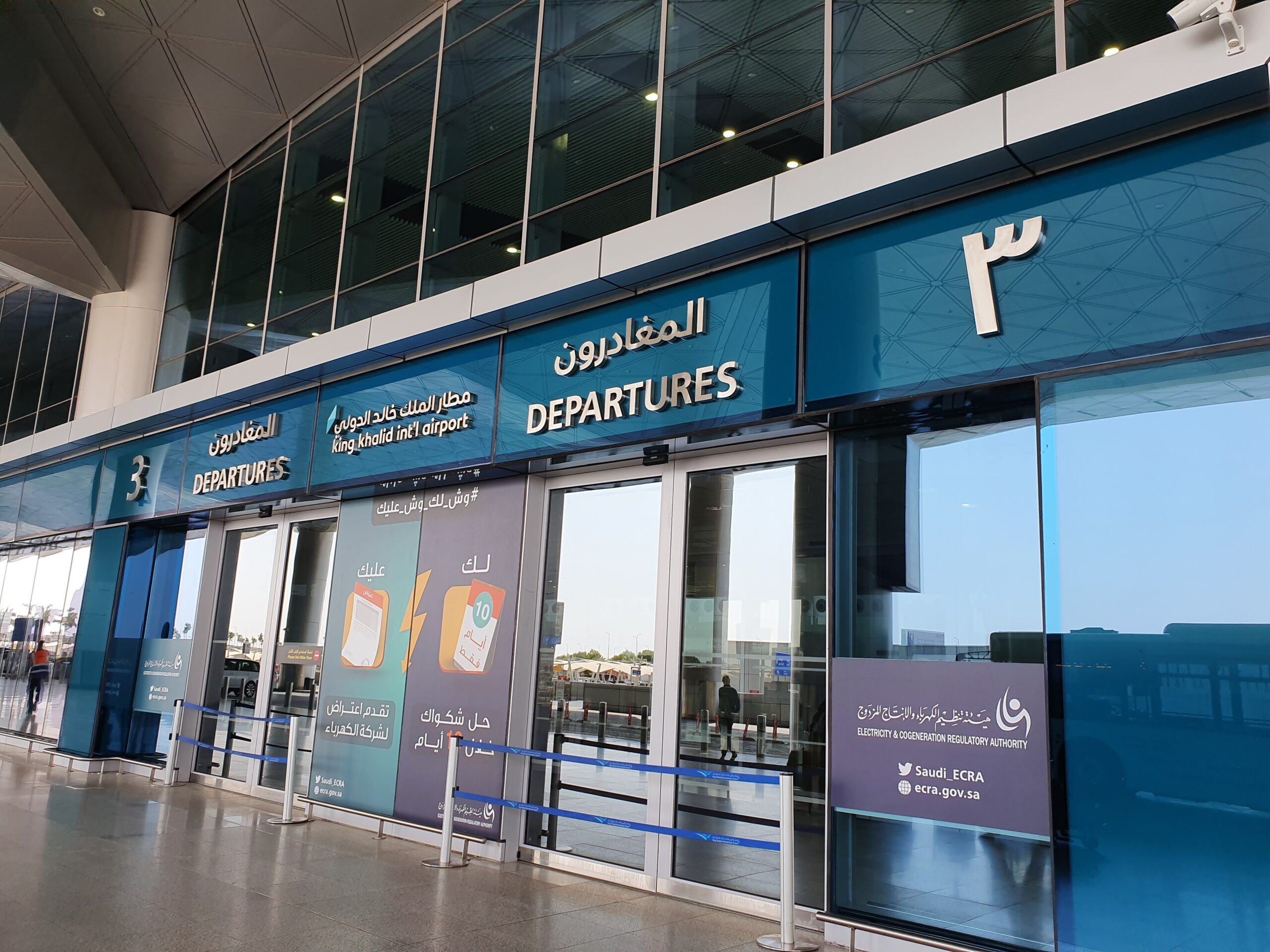


Saudi Arabia’s King Khalid International Airport was struck by a projectile on Sunday, 11 October 2026, killing one Pakistani national and injuring 11 others, according to the General Authority of Civil Aviation. The incident marked the fourth attack on the airport in five days, with Iran-backed Houthi rebels in Yemen claiming responsibility for all strikes.
The Saudi Arabia’s civil aviation authority called the event a “heinous attack” while specifying the strike on terminals 3 and 4 also caused material damage. Damage assessments and safety inspections of the airport are underway according to the General Authority of Civil Aviation. The suspension of operations at the airport has been extended to that regard and it is yet unclear when it will reopen.
🚨 Watch the terrifying moment a missile strikes #Riyadh’s international airport triggering a fiery explosion 💥 as panicked passengers run for their lives. The attack has left at least 12 dead & over 300 injured, according to #Saudi authorities https://t.co/38ruzYgSx9
— Manoj Gupta (@PassionForNews) October 11, 2026
In a statement, Saudi Arabia’s energy minister Prince Abdulaziz bin Salman has shared that the country’s response to the attacks on Riyadh airport will be “equally serious”. Meanwhile, UAE presidential adviser Anwar Gargash has stressed the importance of joint Gulf action to preserve the security of all Gulf states.
Over the last week, Saudi Arabia’s King Khalid International airport has suffered a total of four attacks. The deadliest took place on Saturday 10 October, when 13 people were killed and over 300 people were left injured.
Among the deceased were four Saudi nationals, two Bangladeshis, one American, one Egyptian, one Jordanian, one Syrian, one Palestinian, one Indian, and one Sudanese national. In footage released by Saudi Arabia’s Ministry of Media, travellers can be seen taking cover as flames and smoke take over the airport.
Saudi Arabia’s General Authority of Civil Aviation (GACA) said the October 10 attack on King Khalid International Airport in Riyadh killed 12 people and injured 309 others, some critically. The dead included four Saudis, two Bangladeshis, and nationals of the U.S., Egypt, Jordan, Syria, Palestine and Sudan.
— Clash Report (@clashreport) October 10, 2026
All attacks, including what is considered to be the deadliest attack on Saudi Arabia in over 10 years and the deadliest on a Gulf country since the start of the US war against Iran, were claimed by Iran-backed Houthi rebels in Yemen. The rebels have been targeting Saudi Arabia due to its support of the government forces in Yemen’s civil war.
Watch this heartbreaking moment as Umrah pilgrims prepare to board their flights when a Houthi attack strikes Riyadh’s King Khalid International Airport. #SaudiArabia #Riyadh #Umrah #Pilgrims https://t.co/lQBjImKfwa
— Sajjad Tarakzai (@SajjadTarakzai) October 12, 2026
Many governments, including the British Foreign Office, have been advising their citizens against travel to Saudi Arabia since the attack on 10 October. The Houthis themselves have warned airlines and passengers to stay away from Saudi airports, while America’s Federal Aviation Administration has urged US airlines to exercise caution when flying to or over Saudi Arabia.
At the moment of writing, it is unclear what exactly will be the consequences of the series of deadly attacks at Riyadh airport on the global tourism industry. While travel to and through Saudi Arabia will undoubtedly stagger for a while, some industry experts are warning for long term effects. In an analysis for Sky News, for example, Middle East correspondent Adam Parsons says the Houthis could very well take control of their side of the Bab el Mandeb strait, thus driving the global oil prices even higher.