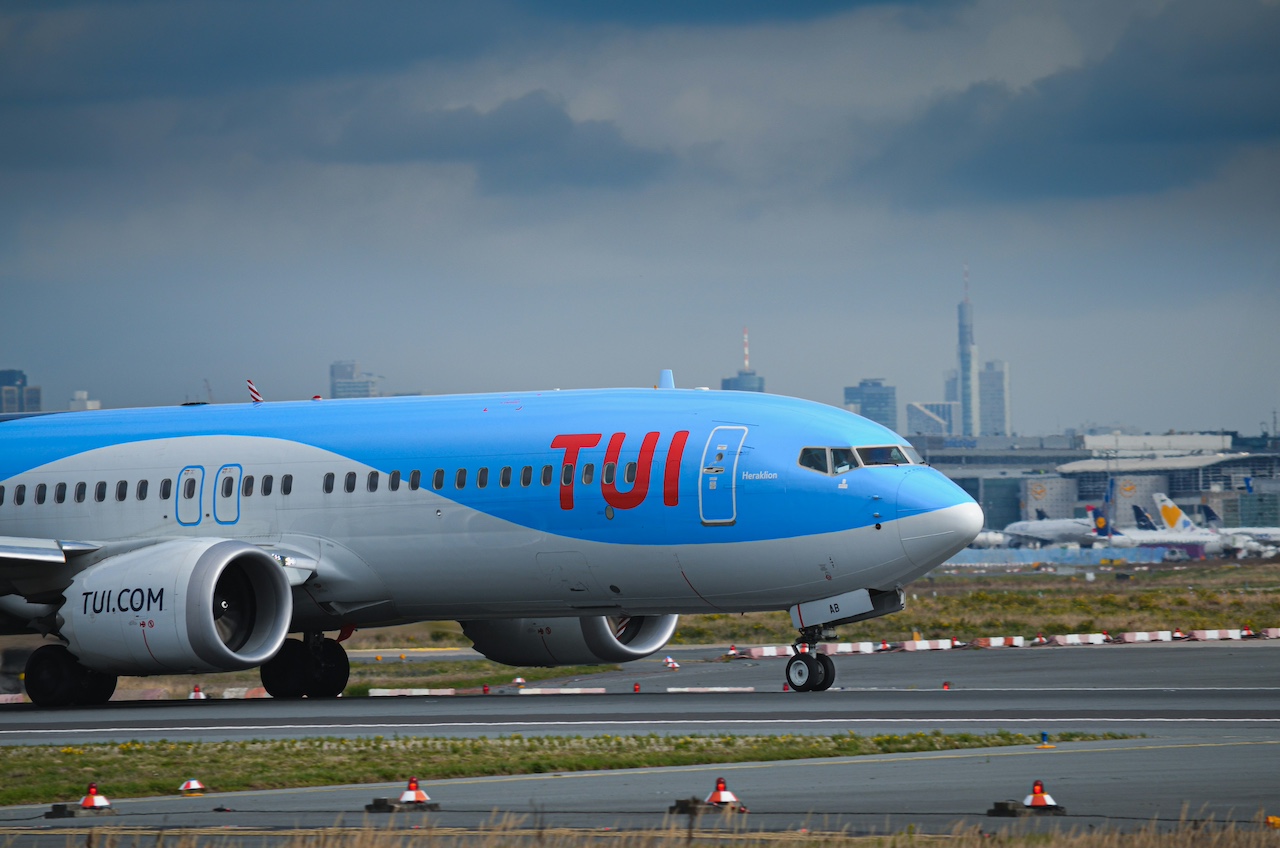



Third quarter profits have fallen at Europe’s biggest holiday operator, TUI, as bookings slowed and costs remained high due to the fuel blockade in the Middle East. The firm has, however avoided revising its full year forecast for 2026, pointing to strong travel demand even as consumer habits are changing.
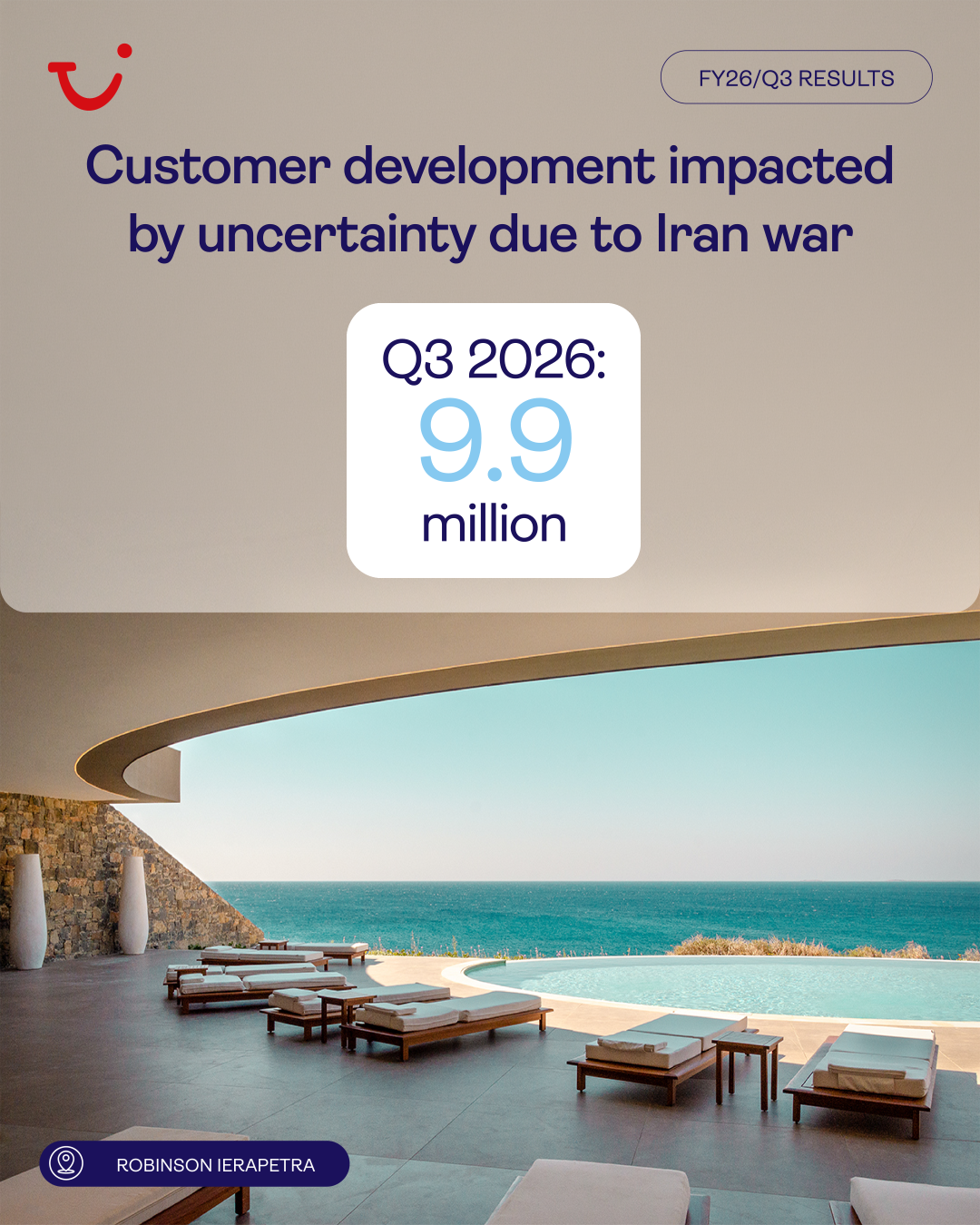
The German-headquartered business suffered a 43% drop in pre-tax profits to €153.4 million during Q3, with underlying earnings down 27% to €233.8 million and customer numbers falling 3% to 9.9 million. Its airline and markets arm lost €17.4 million compared to the previous year.
TUI had already slashed its forecast in March 2026, blaming the US-Israel war on Iran for soaring costs and poor consumer sentiment, especially for travel to the Eastern Mediterranean and Middle East, from where the firm had to operate repatriation flights for approximately 5,000 guests, while cruise ships remained stuck in Gulf ports, losing €20 million as a direct result of the conflict.
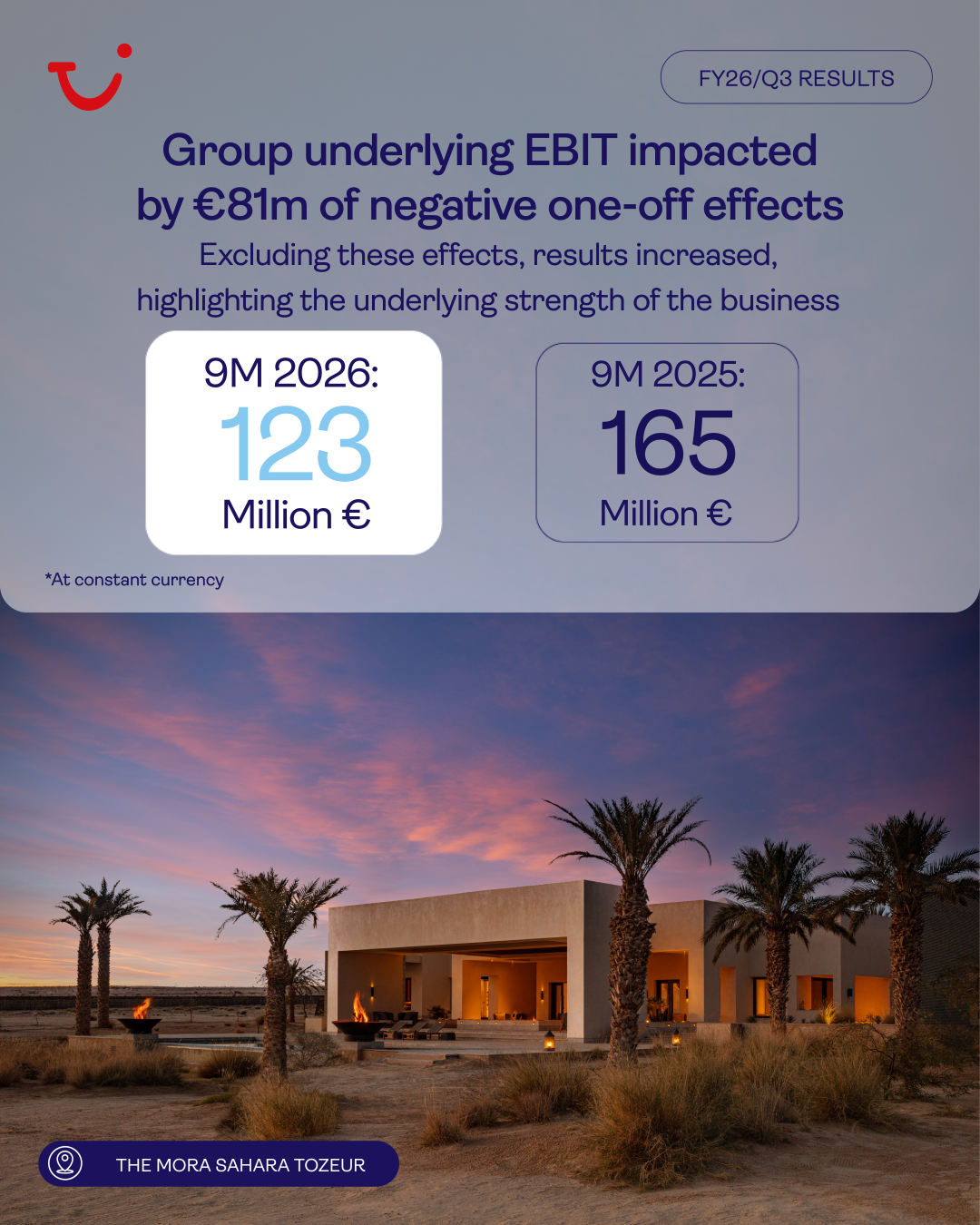
Over the year to date, that loss now stands at €81 million, exacerbated by the ongoing geopolitical crisis, as well as hurricanes in the Caribbean. Despite this, TUI’s previously adjusted operating profit outlook of between €1.1 billion and €1.4 billion for 2026 still stands.
Sebastian Ebel, chief executive of Tui, emphasised that “2026 is no ordinary year” and said: “Tui has held its own well in a difficult global environment.” A significant factor has been customer caution in making advance reservations, he said, noting that, “the timing of travel decision has shifted.” He explained that clients are holding off to the last minute before booking. “Wars and geopolitical tensions, consumer caution, economic weakness and rising inflation in Europe’s core markets – all these factors have influenced consumer sentiment and the timing of purchasing decisions.”
TUI’s markets and airline bookings over the summer sit six percent down for the quarter, although there has been a seven percent uptick in the last month, which the firm is taking as a sign of recovery. “Travel remains highly relevant to people’s lives,” Ebel said, underlining strong intention to travel data from the European Travel Commission(ETC) in early July, and reflecting a recent Airports Council International (ACI) Europe report on growing air passenger numbers.
The figures from TUI’s Experiences branch also fit with wider industry insights about the rising relative strength of experiential travel, since earnings from its cruise liners, hotels, and “Musement” offering (focusing on activities, attraction tickets, excursions, and multi-day tours) only declined 5.6% over the period.