


For years, Angola has been described through the familiar vocabulary of oil dependence, post-conflict recovery and unrealised potential. But between 17 and 19 June 2026, in Luanda, a different story took centre stage.
The Global Tourism Forum Angola Investment Summit did not merely promote Angola as another emerging destination. It attempted something more ambitious: to turn Angola’s tourism potential into an investment agenda, supported by policy dialogue, international partnerships, private-sector engagement and measurable commitments.
With more than 2,000 participants, the summit became one of Angola’s most significant tourism investment gatherings in recent years. It brought together government officials, international institutions, hospitality investors, sustainability partners, local tourism operators, business chambers and global decision-makers around one central question: how can Angola convert tourism potential into bankable investment?
That distinction matters.
In global tourism, natural beauty is rarely enough. Many countries have coastlines, wildlife, cultural heritage and undeveloped land. What separates destinations that attract capital from those that remain permanently “promising” is the ability to convert those assets into bankable projects, credible partnerships and a clear policy framework.
Angola used the summit to make precisely that case.
Its achievement can be measured across three areas: visibility, credibility and execution.
First, visibility
Angola entered a crowded African tourism investment landscape where countries are competing for hotel groups, infrastructure capital, airline connectivity and destination branding. By hosting an international summit under the Global Tourism Forum platform and attracting more than 2,000 participants, Angola moved from being a country with latent tourism potential to one actively presenting itself to global investors at scale.
The setting mattered. Luanda was not used merely as a backdrop; it was positioned as the political and commercial gateway to Angola’s tourism future. From the welcome programme to the official sessions, the summit projected a message that Angola wants to be seen not only as a resource economy, but also as an Atlantic tourism and investment destination.
Second, credibility
One of the summit’s most important outcomes was the positioning of Angola’s tourism sector within a stronger institutional framework. The presentation of UN Tourism’s Tourism Doing Business – Investing in Angola investment guidelines gave the event a policy dimension that extended beyond speeches and panel discussions. The focus was not only on what Angola has to offer, but also on how investors can understand the country’s opportunities, legal framework, institutional partners and priority sectors.
Those priority areas were clear: ecotourism, nature-based tourism, hotel and resort development, coastal tourism, cultural heritage and historical destinations. In other words, Angola was not selling a vague dream. It was beginning to define investable opportunities.
The summit also gave international investors a clearer sense of political commitment. Angola’s Ministry of Tourism did not treat the event as a symbolic gathering. The presence and active engagement of the country’s tourism leadership sent a clear message that the sector is being taken seriously as part of Angola’s economic diversification strategy.
Third, execution
This is where the summit proved most significant.
Too many tourism forums end with applause, photographs and little follow-through. In Luanda, the emphasis was placed on moving from promotion to transactions, from conversation to commitments, and from visibility to implementation.
Several memoranda and strategic cooperation initiatives were advanced under the umbrella of Angola’s tourism investment agenda. These included international investment groups, global business networks, sustainability partners and domestic tourism operators.
One of the most significant outcomes was the signing of 11 memoranda of understanding during the summit. That figure matters because Angola does not simply need visibility; it needs a pipeline of partnerships capable of moving the sector from promotion to implementation.
The summit also demonstrated that Angola’s tourism strategy is not centred on one type of investor or one narrow market. It brought together foreign capital, institutional partners and local operators, creating a broader platform for hotel development, destination infrastructure, sustainability and private-sector participation.
In this chapter of Angola Narratives, Bulut Bağcı delivers a clear message to global investors: Africa should no longer be seen as a distant opportunity waiting to happen.
— Global Tourism Forum (@gtourismforum) July 5, 2026
Africa Is Not the Future, Africa Is Today!
The opportunity is already here.
For investors, timing… pic.twitter.com/4mRj2JOmpL
This balance between international engagement and domestic participation is essential. Tourism development cannot be imported wholesale. It must be built on local knowledge, local employment and local ownership of the country’s tourism story.
The summit also produced something less visible but equally valuable: a new narrative.
For decades, Angola’s international image has been dominated by oil, reconstruction and infrastructure. Tourism rarely occupied the centre of that story. The Global Tourism Forum Angola Investment Summit helped change that narrative. It presented Angola as a country with an Atlantic coastline, national parks, rich cultural heritage, growing cities and a genuine opportunity to diversify its economy through tourism.
That shift is not merely symbolic. Perception influences investment. Investors rarely enter markets simply because governments say opportunities exist. They engage when they see organisation, accessibility, policy direction and credible intermediaries. In Luanda, Angola began to offer that combination.
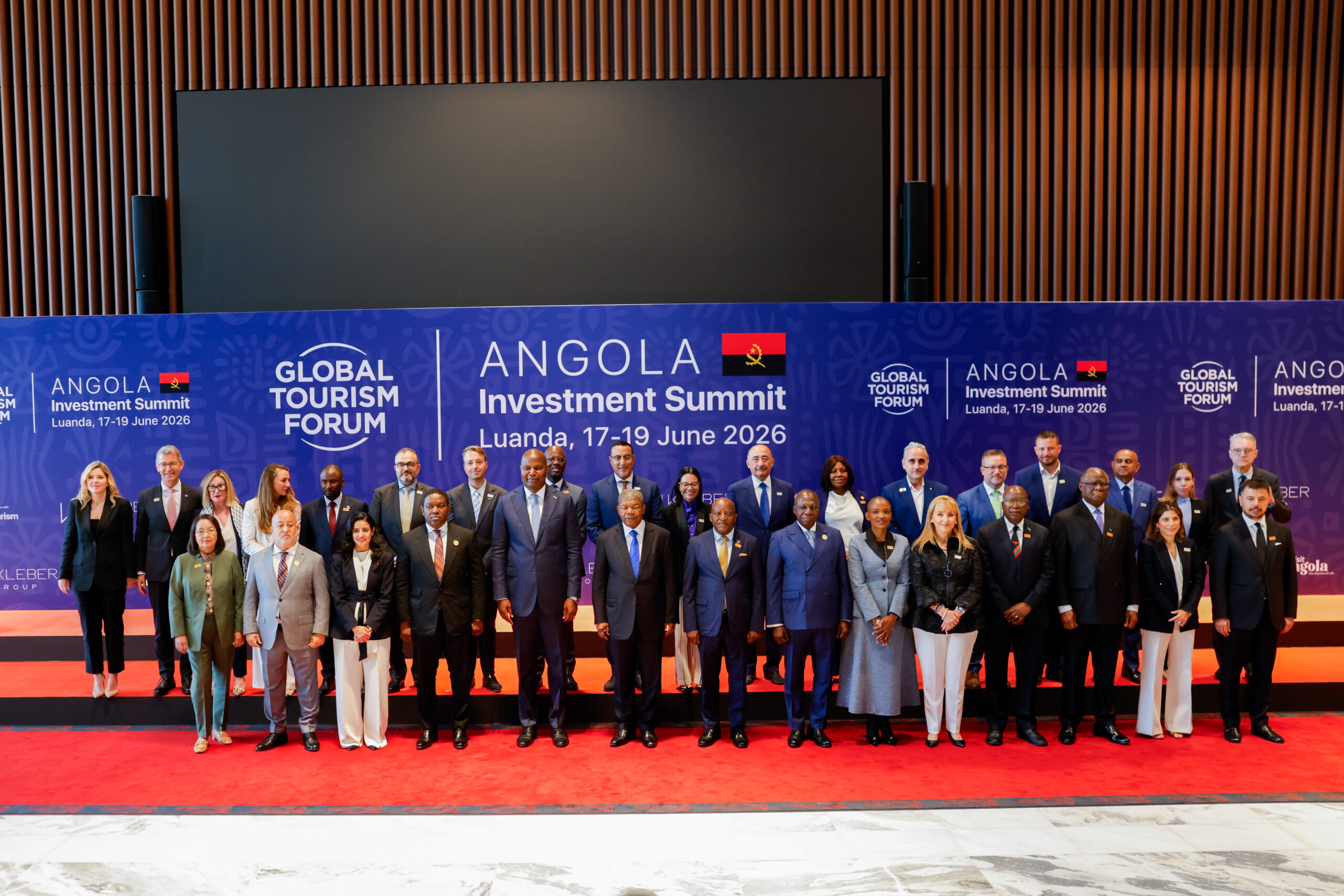
The role of the Global Tourism Forum was to act as a bridge between state ambition and global capital. It brought together the language of diplomacy and the language of investment. It helped translate Angola’s tourism potential into a format that international investors, hotel groups, sustainability partners and media stakeholders could understand.
This is platform diplomacy in practice.
Modern tourism development is no longer only about destination marketing. It is about building ecosystems that connect investors, policy-makers, operators, media, airlines, hotel groups, sustainability partners and local communities. The Angola summit worked because it recognised this complexity. It did not reduce tourism to beaches and brochures. It treated tourism as an economic development sector.
Of course, the real test begins after the summit.
Angola must now convert visibility into projects. Memoranda must become implementation plans. Investor interest must become capital allocation. Policy guidelines must become simpler procedures. Local operators must be supported. Infrastructure must improve. International hotel brands must see viable routes into the market. Sustainability commitments must move from conference rhetoric to effective destination management.
Angola 🇦🇴 did it — and did it with remarkable success.
— Global Tourism Forum (@gtourismforum) June 19, 2026
The Global Tourism Forum Angola Investment Summit has become more than a high-level gathering; it has become a statement of confidence, leadership, and ambition. With distinguished leaders, ministers, investors, and global… pic.twitter.com/h91SOguyAt
But the significance of the summit lies in the fact that Angola now has a stronger platform from which to do that work.
The Global Tourism Forum Angola Investment Summit achieved more than a successful three-day gathering. It placed Angola’s tourism sector firmly within the international investment conversation. It connected the country with institutional partners, commercial networks, hospitality investors and local tourism stakeholders. It gave Angola’s tourism story structure, credibility and direction.
In a sector where perception shapes investment, that is a significant achievement.
Angola is no longer simply a country with future tourism potential. After Luanda, it is a country beginning to build a present-day tourism investment agenda.
And for an economy seeking to diversify beyond oil, that may be the summit’s most important legacy.