

For as long as tourism has existed, seasonality has been one of the industry’s defining challenges.
Climate patterns, school holidays, and long-established travel habits naturally concentrate demand into relatively short periods of the year. For some destinations, this means operating at full capacity during peak months while facing significant underutilisation during the rest of the year.
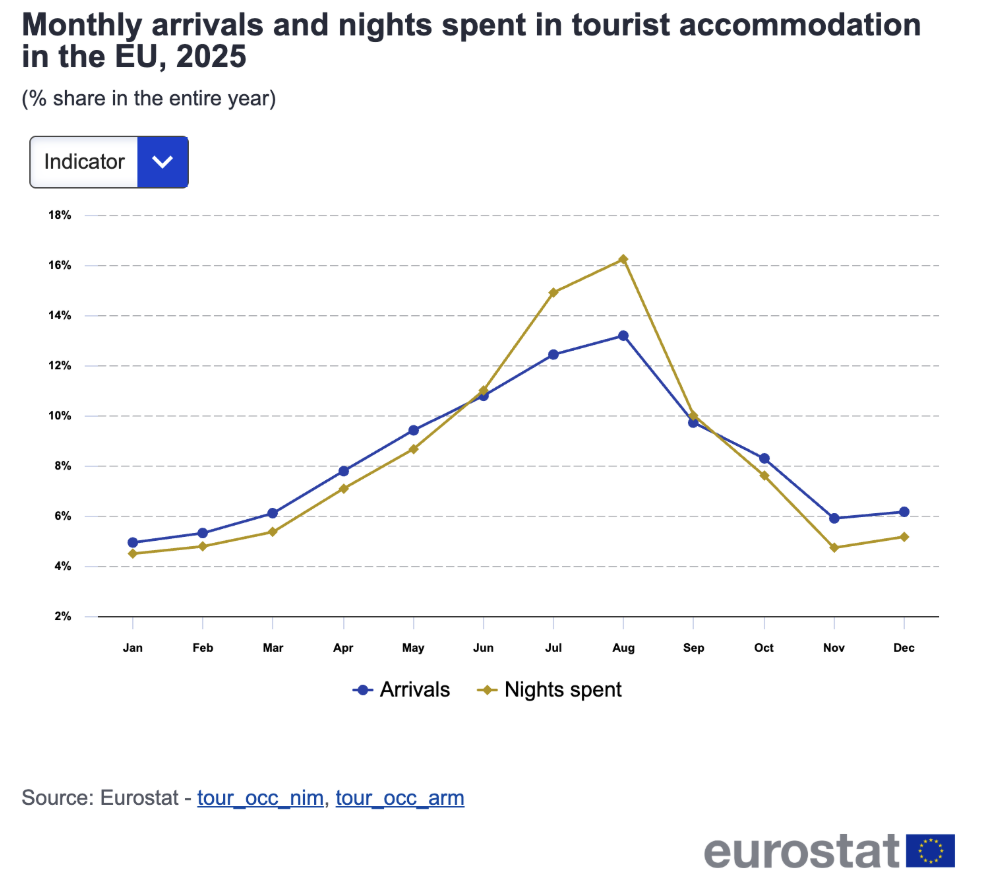
The challenge is substantial. According to Eurostat, “July and August accounted for 31% of all annual nights spent in EU tourist accommodation in 2025.” In countries such as Croatia, Greece and Bulgaria, more than 40% of annual tourism nights were concentrated during those two months.
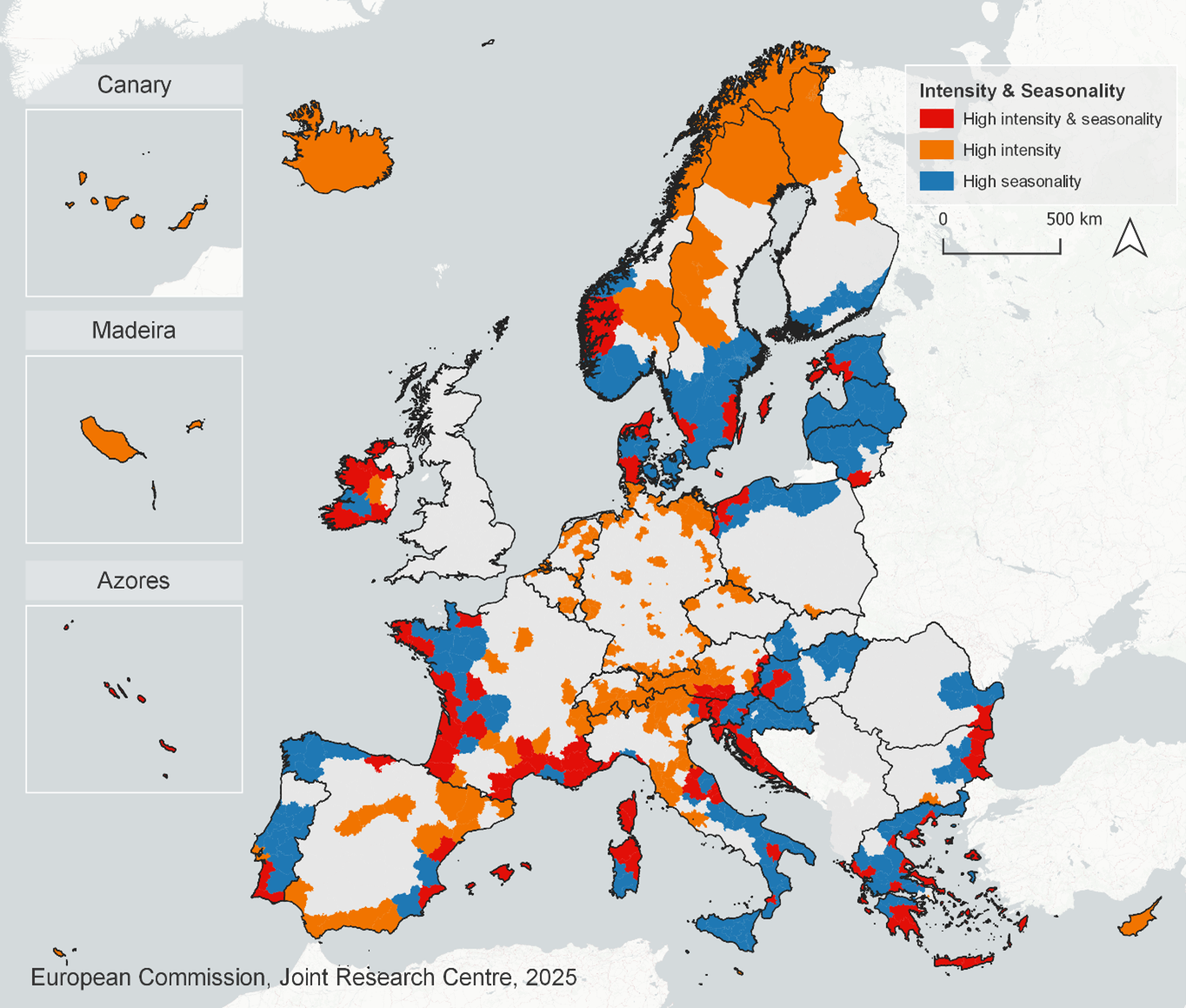
The Joint Research Centre of the European Commission has similarly highlighted variability of tourism demand throughout the year as a potential source of economic vulnerability. Destinations that combine high tourism intensity with high seasonality can become particularly exposed to sudden sectoral shocks because so much economic activity is concentrated within a small part of the year.
Against this backdrop, the latest European Accommodation Barometer set out to explore this very theme.
Rather than accepting seasonality as a challenge to be endured, hoteliers are experimenting with and deploying creative strategies to bolster demand outside traditional peak periods.
Moving beyond discounts
Discounting remains the most common tool used: nearly nine in ten European accommodations offer special rates, discounts, or bundled packages during quieter periods.
However, the more important lesson is that this structural challenge cannot be addressed through a one-size-fits-all approach. European accommodation providers are remarkably diverse, ranging from independent guesthouses and short-term rentals to campgrounds and international hotel chains.
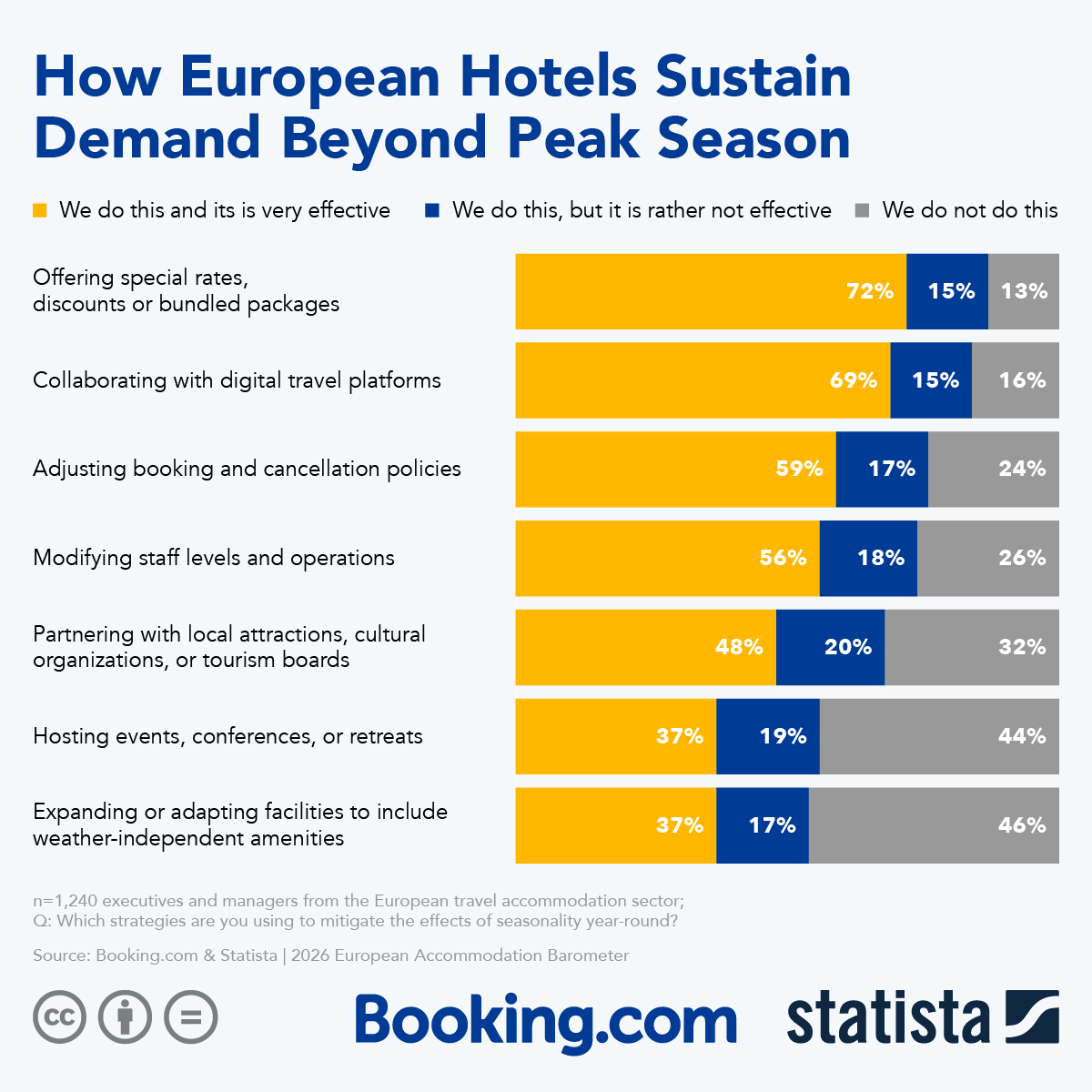
The strategies that work best depend on the type of property, its location, and the visitors it hopes to attract. The common thread is not the specific tool being used, but the willingness to mix and match multiple approaches and calibrate in real time.
European accommodations use a wide range of distribution channels, host events, or partner with event organisers. Creating demand outside the peak season requires both an attractive offer and an effective route to market.
A discounted stay becomes hotel revenue only if and when a potential guest discovers it.
When asked which channels are most effective in securing off-season stays, hoteliers overwhelmingly pointed to online travel agencies. More than four in five respondents described them as effective.
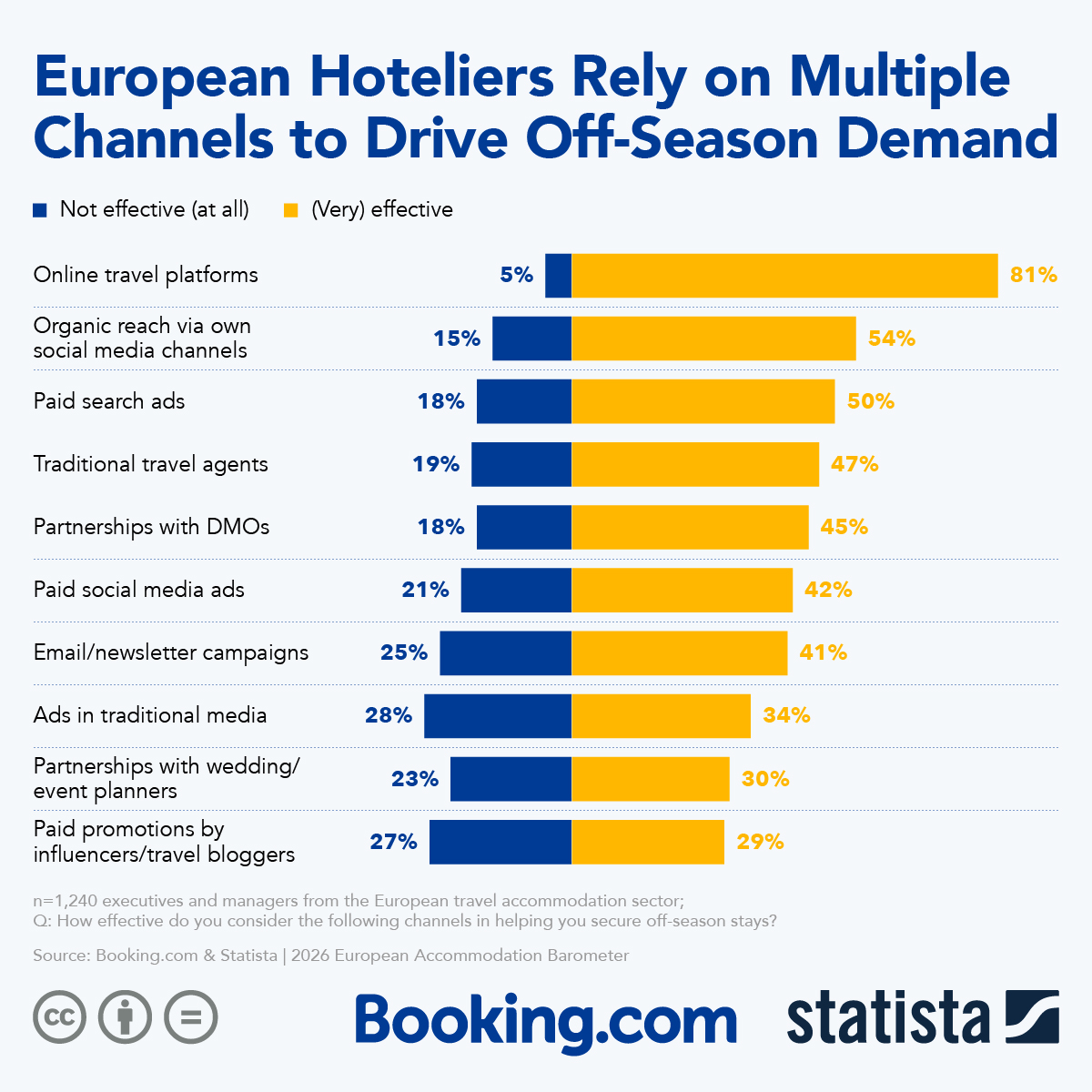
Platforms like Booking.com, Expedia, and Airbnb make it easier for travellers to discover destinations, compare options, and make informed choices. As two-sided marketplaces, online travel platforms depend on the success of the hospitality partners that list with them, including smaller and independent properties that get access to scale and thus are better able to stay competitive.
This matters particularly for destinations outside the traditional tourism hotspots.
Previous research commissioned by Booking.com and carried out by Tourism Economics found that while only 16% of accommodation bookings in Europe were in rural areas overall, that figure increased to 38% for bookings made through online travel platforms.
In other words, the tools used to market and distribute tourism can also influence where tourism takes place.
Events are becoming a strategic tool
Another notable finding from this year’s Barometer is the growing role of event-driven hospitality. Half of European accommodations reported benefiting from events over the past twelve months.
For many operators, events are doing far more than generating short-term occupancy gains. Two-thirds reported higher revenue per room, while six in ten saw increased bookings during periods that would otherwise have experienced weaker demand. More than half said event-driven travel helped offset lower income-generation at other times of the year.
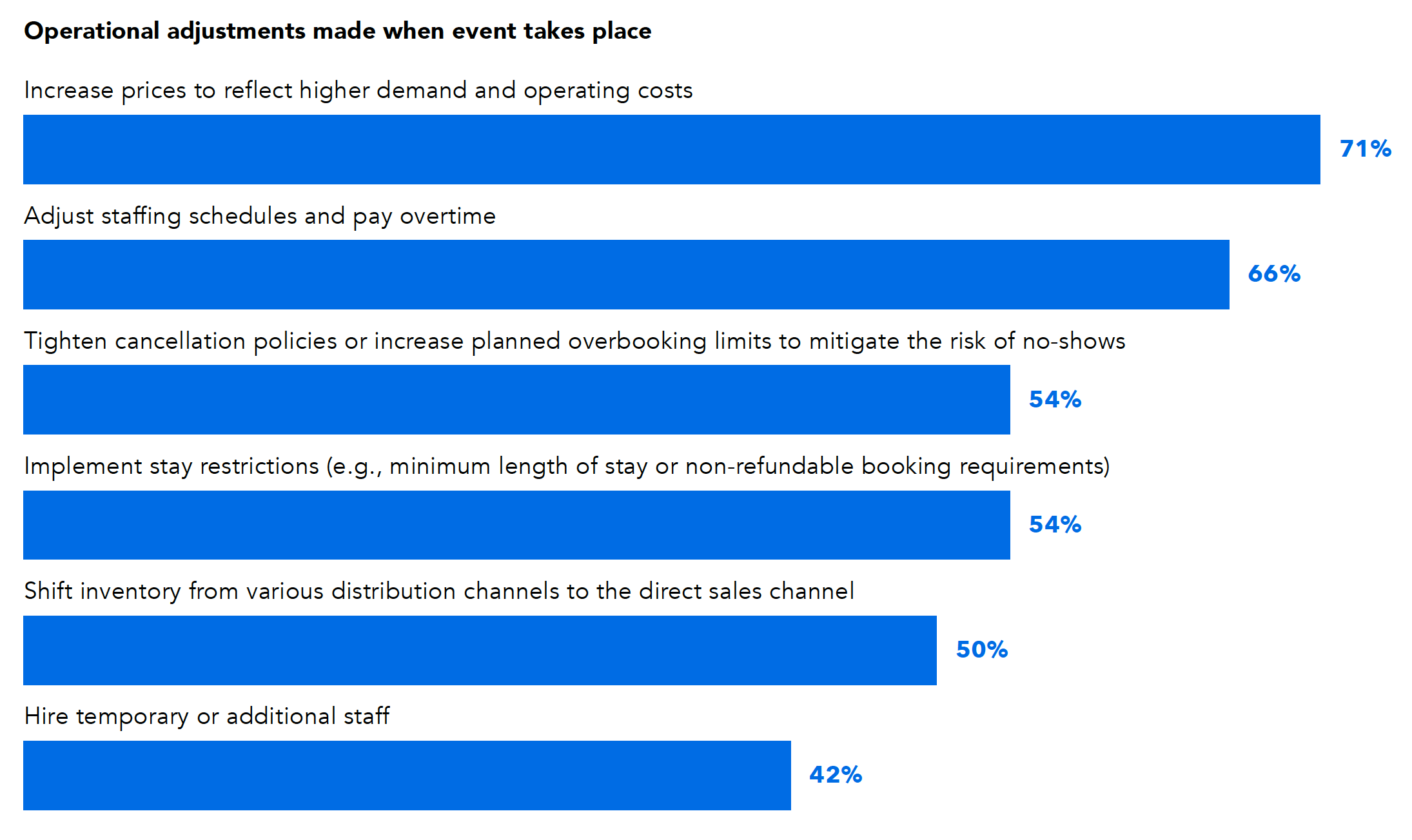
This is an important distinction. Unlike many businesses with relatively stable demand curves, accommodation providers face high volatility. When events take place, they also face higher operating demands: 66% adjust staffing schedules and pay overtime, while 42% hire temporary or additional staff. Room rates are one of the mechanisms that help balance supply and demand during these periods, but they also reflect the additional costs of operating at peak capacity and the reality that demand is often concentrated into relatively short periods of the year.
Conferences, trade fairs, sporting competitions, concerts, festivals and cultural events all have the potential to attract visitors during shoulder season. In doing so, they can help spread tourism activity more evenly throughout the year.
Half of European hoteliers say they would like to coordinate more closely with local authorities and tourism boards around event-related demand. This was one of the clearest signals in the survey: accommodations increasingly view seasonality not simply as a hotel issue, but as a destination-wide challenge requiring collaboration across the tourism ecosystem.
Local communities are part of the solution
The Barometer also highlights a connection that is sometimes overlooked in discussions about seasonality. Travel accommodations are deeply embedded within their local economies.
Across Europe, many establishments source a substantial share of their non-labour spending locally, while 43% also make facilities such as restaurants, meeting rooms, fitness centres, or wellness areas available to residents.
This local integration becomes particularly relevant when thinking about year-round tourism.
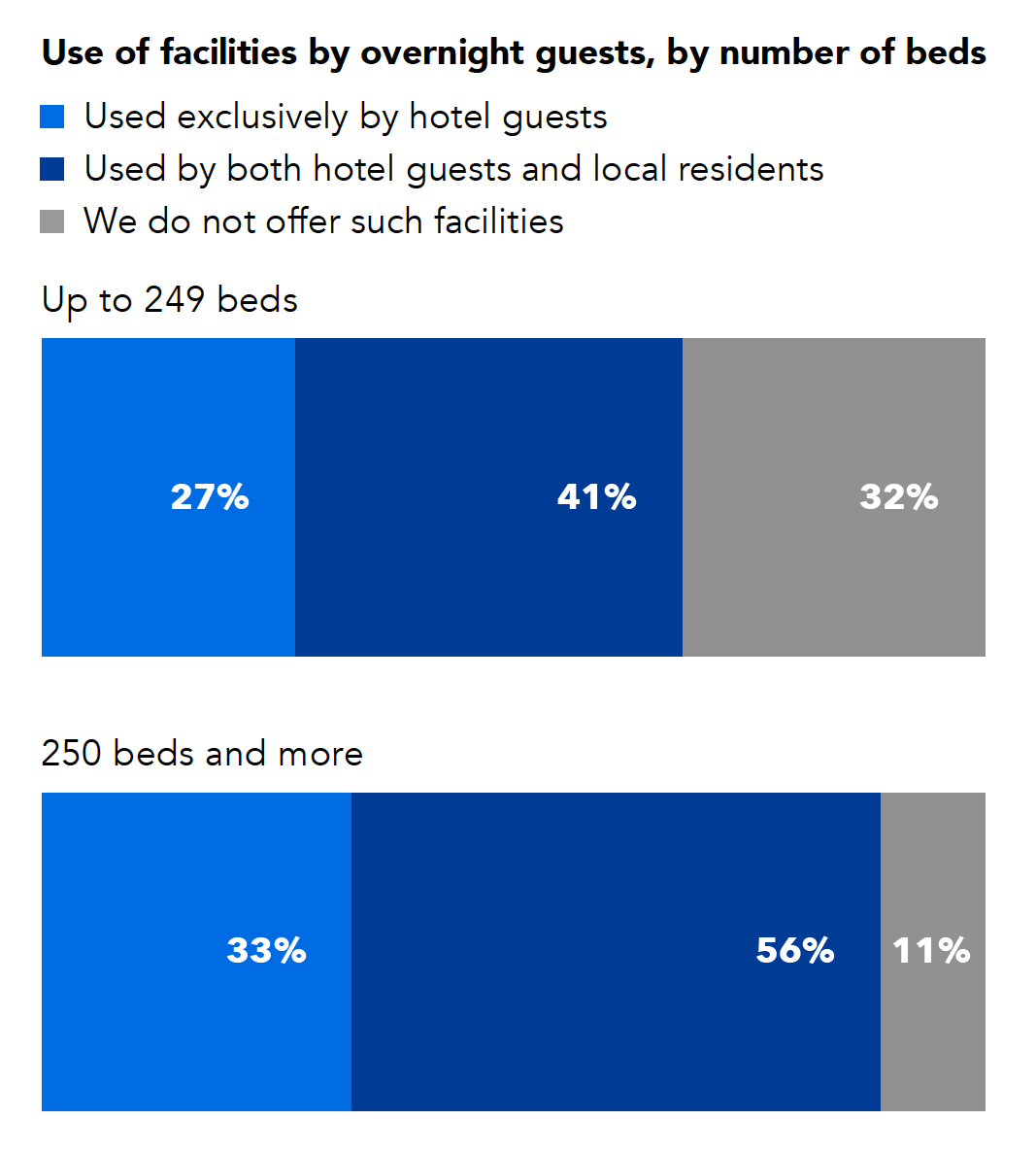
Destinations that maintain vibrant economies, active cultural calendars, and strong community engagement often create more reasons for visitors to travel outside traditional peak periods. At the same time, more evenly distributed tourism activity can support local businesses beyond the summer season.
The relationship works both ways.
A shared challenge
The European Commission has noted that better use of existing tourism infrastructure and staff in the low season can help businesses improve productivity and support a more stable workforce. That is a useful way to frame the issue: seasonality is not only about filling rooms, but about making better use of the capacity Europe has already built.
This cyclical pressure isn’t going anywhere. As an industry, we can and should strive to make the peaks less overwhelming and the quieter months more viable. This has to be a multi-stakeholder, destination-specific conversation that provides a view of what makes it worth visiting: not only beds and beaches, but also events, culture, seamless transport infrastructure, unique local businesses, and the distribution channels, digital or otherwise, that connect travellers to them.
The more destinations that get this right, the stronger Europe’s travel ecosystem will be.