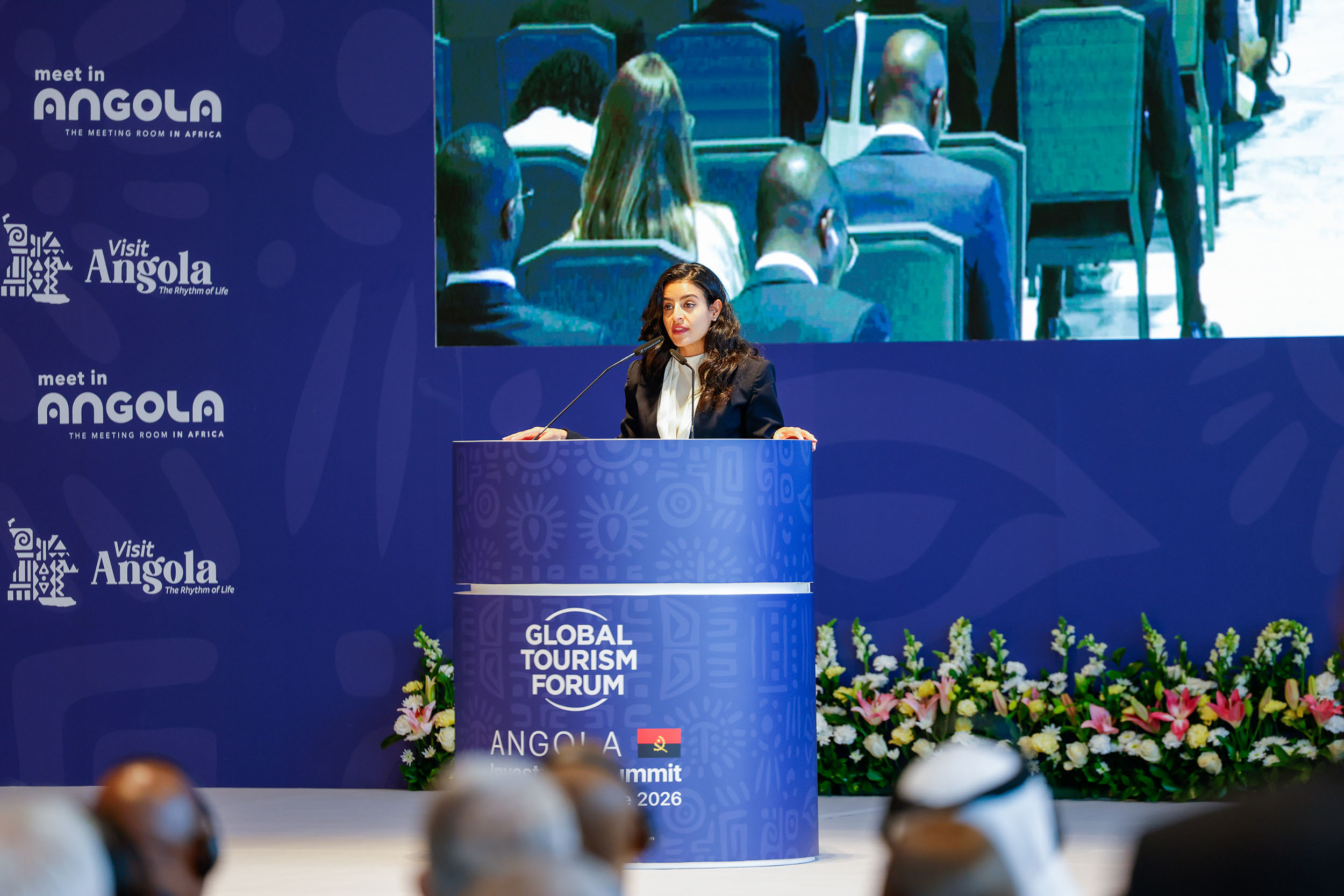



Angola is moving beyond tourism potential and becoming a credible investment destination, UN Tourism Secretary-General Shaikha Al Nuwais said at the Global Tourism Forum Angola Investment Summit in Luanda, praising the country’s leadership, reform agenda and growing international confidence.
Addressing President João Lourenço, Mozambique’s President Daniel Chapo, Namibia’s Prime Minister, ministers, investors and tourism leaders, Al Nuwais opened her keynote with a clear message: “Investment matters, and this forum matters.”
She said Angola is no longer treating tourism simply as an economic sector, but as a driver of prosperity, opportunity and long-term national transformation.
Confidence is attracting investment
Recalling her meeting with President Lourenço during the World Government Summit in Dubai, Al Nuwais said his commitment to tourism as part of Angola’s future had left a lasting impression.
According to the UN Tourism chief, that vision is now being translated into concrete action.
She highlighted more than €8 billion mobilised through Angola’s national tourism strategy, PLANATUR, alongside visa-free access for citizens of more than 90 countries and the Luanda Ministerial Statement, which aims to strengthen air connectivity across the region.
Her central message focused on investor confidence.
“Investment follows confidence,” she said, arguing that confidence in Angola is growing.
As evidence, she pointed to the full flight she had taken to Luanda and the strong presence of international hotel brands, tourism investors and business leaders at the summit, describing them as clear signs that Angola is attracting growing international attention.
Closing Africa’s tourism investment gap
Al Nuwais also reflected on Angola’s participation at ITB Berlin earlier this year, where the country showcased its culture, music, cuisine and traditions to an international audience.
She said one of the performances presented there symbolised more than cultural heritage, representing national pride and growing confidence in Angola’s future.
Turning to investment across the continent, she referred to remarks previously made by Angola’s Tourism Minister Márcio Daniel, who noted that Africa continues to receive the lowest share of global tourism investment.
For UN Tourism, she said, closing that investment gap has become a key priority.
“Potential is distributed widely, but investment is not,” she said, arguing that destinations with strong tourism assets deserve greater access to international capital.
She explained that UN Tourism will continue supporting governments through investment guidelines, investment forums and initiatives designed to connect the public and private sectors.
“Ready, ambitious and open for business”
According to Al Nuwais, Angola is one of the destinations best positioned to benefit from that approach.
She described the country as “ready, ambitious and open for business”, adding that the summit should become a platform for practical partnerships rather than simply speeches and discussions.
Referring to Angola’s national tourism campaign, Visit Angola: The Rhythm of Life, she said the country’s “rhythm” is now being heard far beyond its borders by investors, tourism businesses and travellers alike.
Her address echoed one of the summit’s central themes: that Angola is building a new tourism economy founded on leadership, connectivity, investment and international cooperation.
Strengthening cooperation with UN Tourism
One of the summit’s symbolic moments came when Al Nuwais presented the Tourism Doing Business – Investing in Angola guidelines to President João Lourenço.
The handover underscored the partnership between Angola and UN Tourism while reinforcing the country’s ambition to make tourism a strategic pillar of economic diversification.
The publication is designed to help international investors better understand Angola’s tourism opportunities, priority development areas and long-term investment potential.
Concluding her address, Al Nuwais said Angola is no longer waiting for the future but actively building it.
Its tourism potential, she concluded, “is no longer only a promise – it is becoming a reality.”