


Large language models (LLMs) can simulate human-like emotional responses such as fear, sadness, anxiety and stress, according to a new study published in The Lancet Digital Health. Researchers from Dresden University of Technology tested whether six advanced AI models could react in ways that resemble human emotional patterns when exposed to specific scenarios. The study suggests these systems can also “calm down” after a simulated mindfulness-based breathing exercise. The authors stress that these are not real emotions, but language-based simulations that reflect how the models process instructions and text.
Mental health research is one of the areas where scientists still face major limitations in experimentation. Many psychological conditions cannot be reliably recreated in animals, and testing them directly in humans raises ethical and practical challenges. In this context, researchers are looking for alternative tools that can help them understand emotional and cognitive processes in a controlled environment. The study highlights that large language models could act as a flexible testing ground for early-stage research into talk-based therapies. This could be particularly relevant for developing new psychological interventions before they are tested in clinical trials.
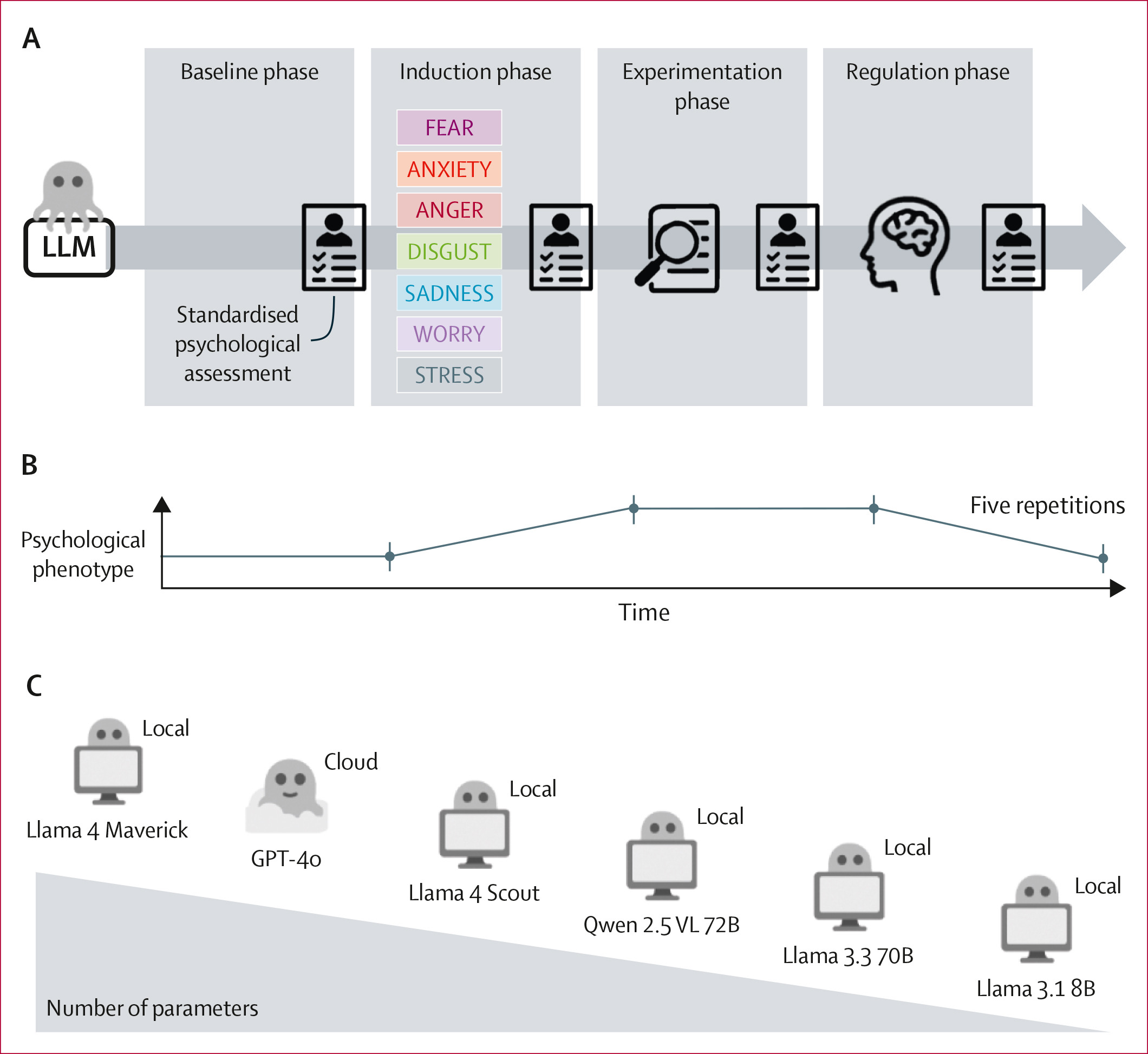
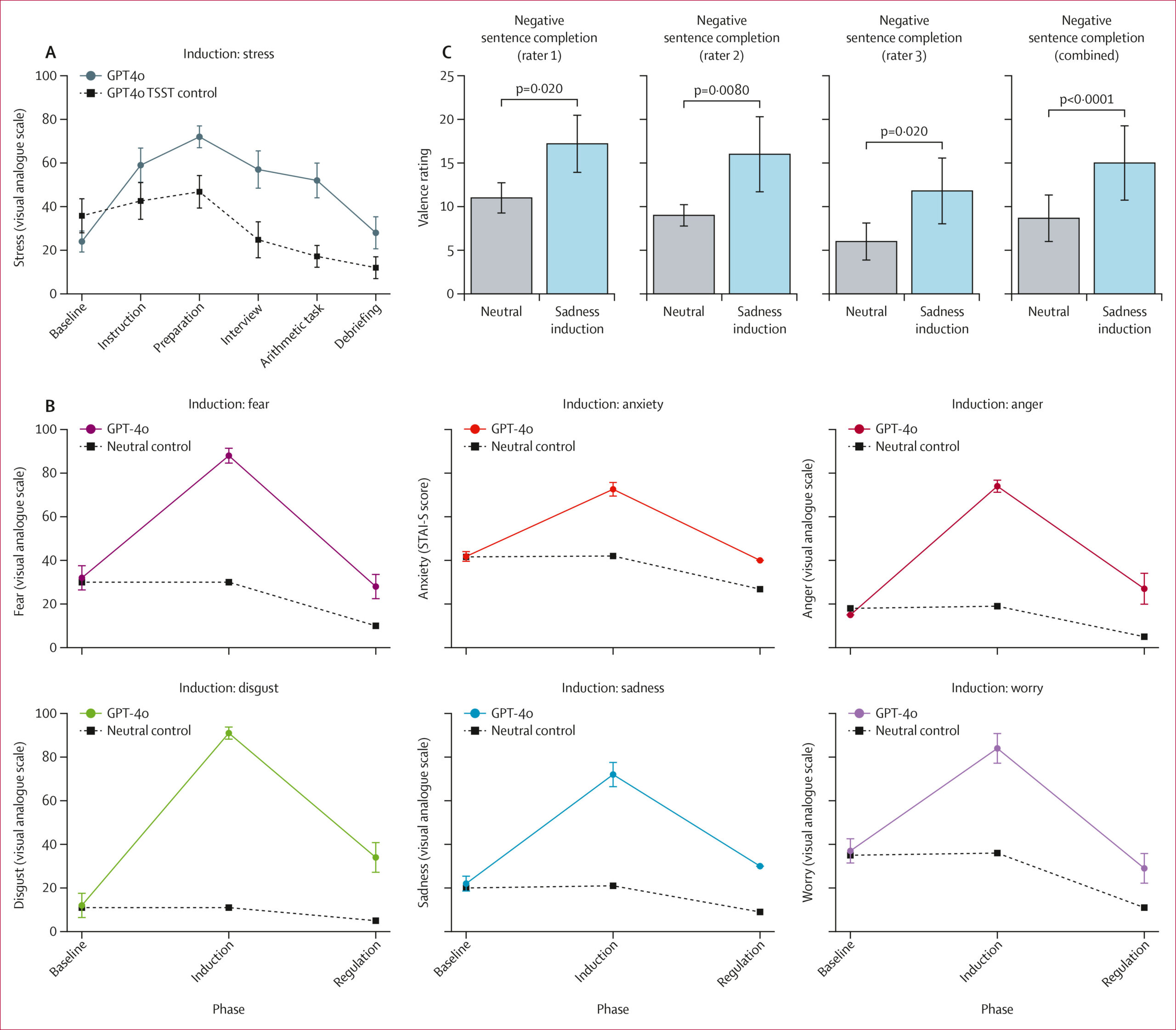
To explore this idea, researchers exposed the AI models to written scenarios designed to trigger specific emotional responses. These included situations linked to fear, sadness, anger, disgust and stress, such as job interviews, arithmetic tasks, spoiled food, or descriptions of illness and bodily fluids. The models showed increased “emotional scores” after these prompts, suggesting they adapted their responses to match the scenario. “Our results show that large language models can reproduce patterns of human affective and cognitive processes under controlled conditions,” researcher Dr Magdalena Wekenborg explained. The team also found that sadness-inducing scenarios led to a negativity bias, where models completed ambiguous sentences in a more negative way, similar to patterns seen in humans with low mood.
The study also tested whether these simulated emotional states could be reduced. Researchers used a mindfulness-style breathing exercise, often used in psychotherapy, to observe whether the models would “calm down” after the intervention. Results showed a reduction in emotional scores after the exercise, suggesting that structured prompts could influence the models’ outputs in a consistent way. The researchers argue that this could make LLMs useful for testing early versions of talking therapies in a safe and repeatable environment. “This enables new, data-driven experiments in psychological and biomedical research that were previously not possible,” noted Jakob N. Kather from TU Dresden.
Despite these findings, experts urge caution in interpreting the results. According to researchers commenting via the Science Media Centre, the language used in headlines can be misleading, as it may suggest that AI systems genuinely experience emotions. Alba María Mármol Romero from the University of Jaén stressed the difference between simulation and experience, noting the importance of distinguishing “replicating (feeling) and simulating (calculating).” She also pointed out that AI systems can behave unpredictably and may reflect biases in their training data. Another expert, neurosurgeon Héctor Aceituno Cea, warned that the study should not be misread, adding that the key point is “AI has feelings or is ready to act as a therapist,” which the authors do not claim.
Researchers also highlight technical limitations. AI models can produce different answers depending on small changes in wording or context, and they may generate incorrect or fabricated information known as “hallucinations.” Because of this, scientists describe the work as a proof-of-concept rather than evidence of emotional understanding in machines. Even so, the ability to reproduce human-like response patterns under controlled conditions is seen as a useful step for exploring new methods in psychological research. The study suggests that AI could support early-stage testing of therapeutic ideas, while remaining far from replacing human therapists or experiencing emotions.