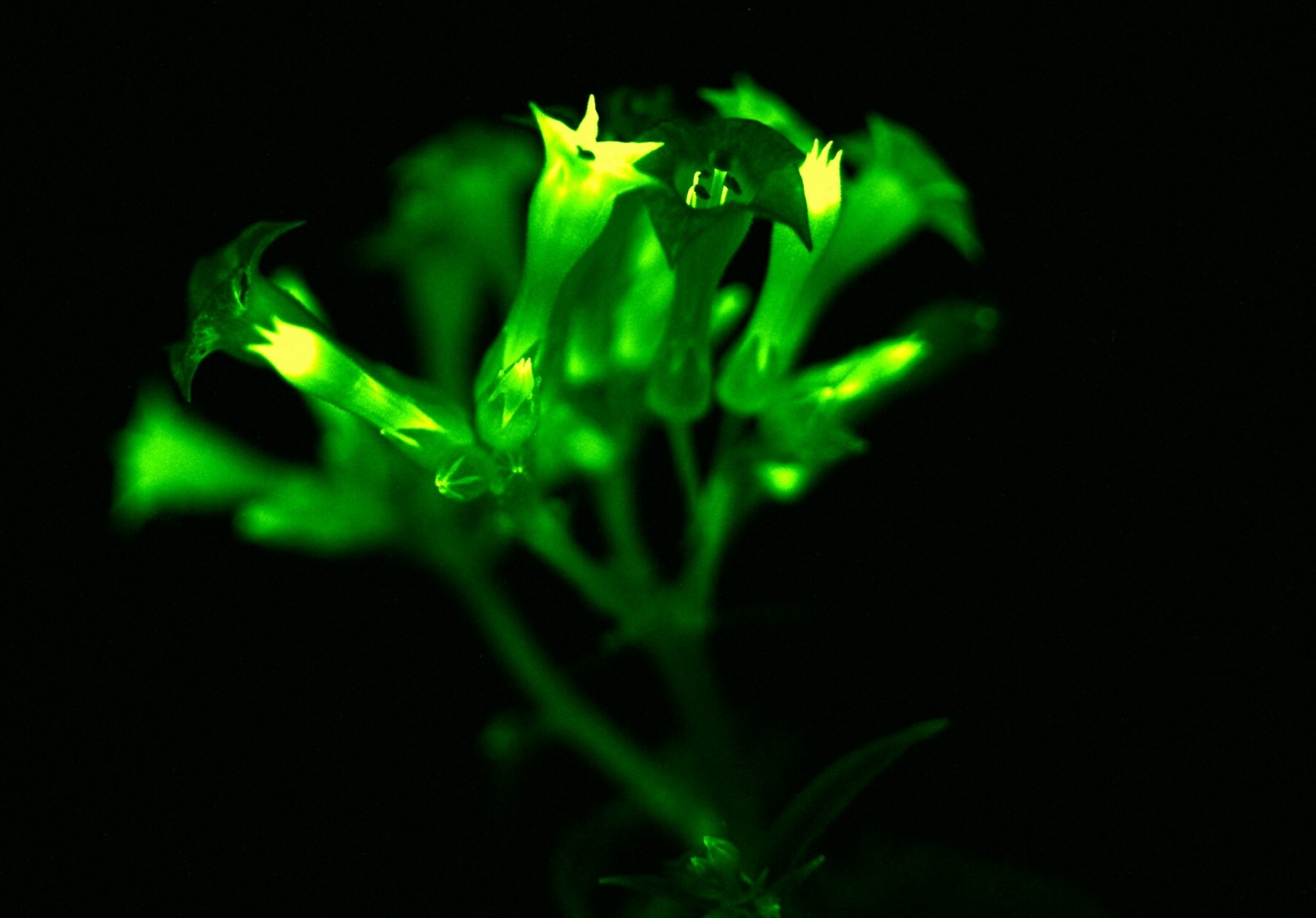



Going for a long weekend to see the big city lights could soon take on a whole new meaning thanks to a breakthrough in bioluminescence by Chinese researchers. Drawing on gene editing science, biotechnology company Magicpen Bio recently unveiled a collection of over 20 species of glow-in-the-dark plants at the Zhongguancun Forum, sparking global buzz, as well as concerns, about the potential urban design applications.
Magicpen Bio founder, Dr Li Renhan, a PhD graduate of China Agricultural University, was inspired by the fireflies that used to light up his grandfather’s bamboo grove to explore whether genes and biological mechanisms could be transferred into plants, reports Euronews.
Some domestic gardeners’ favourites are among the plants that have been successfully modified, including chrysanthemums, orchids, and sunflowers, but if Li’s ambitions are met, the idea could have far wider uses, especially in urban planning, since Magicpen Bio is “dedicated to bringing this technology to cultural tourism and the nighttime economy. Imagine a valley filled with glowing plants in the dark, it would be like bringing the ‘Avatar’ world to Earth,” he says.
It is not hard to imagine existing plant-based attractions transformed by leafy illuminations, rejuvenating their appeal and extending their opening hours as evening draws in. In Belgium, the medieval central square of Brussels is already turned into a flower carpet every other year; lavender fields in France and Spain attract thousands of visitors, not to mention Japan’s world-famous cherry blossom season, or even rare superbloom years in deserts like Death Valley.
What’s more, as the world moves albeit haltingly towards climate targets, and energy resilience is heavily on the agenda, Li also anticipates the research could provide economical solutions for lighting in public spaces, pointing out: “We could also use them in urban parks without the need for electricity. These plants don’t need electricity. They only need water and fertiliser. They save energy, reduce emissions, and can light up cities at night.”
While some celebrate these developments as a way to reduce the costs and harsh glare of street lighting while boosting revenues from natural attractions, others might question the broader implications. Negative consequences could ensue in terms of disruption to natural circadian cycles and uncontrollable light pollution, due to uncertainties over how easy (or not) it would be to “turn off” lights that are coming from plants.
Mo Helmi, landscape artist and the founder of Tricoastal Scapes design studio, is a British designer based between London and Los Angeles. He told Travel Tomorrow that, “While this technology holds value in medical research and other scientific fields, it feels too early to define it as a truly sustainable design method,” since the “ecological risks alone are difficult to ignore.” He explains: “the potential for engineered genes to escape into wild plant populations introduces unknown consequences.” Bees, Helmi points out, “are diurnal; active during the day and resting at night, typically sleeping for five to eight hours. Solitary or male bees sleep on flowers and plants. Introducing artificial light risks interfering with deeply embedded behavioural patterns.” He also notes the risk of “disruption to mating signals in species such as fireflies, which rely on precise bioluminescent flash dialogues in darkness to reproduce.”
At the laboratory of Magicpen Bio in Hefei, east China's Anhui Province, Chinese researchers have successfully cultivated a number of gene-edited plants that steadily glimmer in dark environments. They managed to introduce gene fragments from organisms such as fireflies into… pic.twitter.com/H0n2LZyhAE
— Anhui China (@AnhuiChina) December 15, 2025
As well as these environmental and ethical concerns, there is a practical issue, Helmi says, because technically the plants produce “only low levels of light that fall short of functional use, while their biological stability over time remains uncertain outside controlled conditions.”
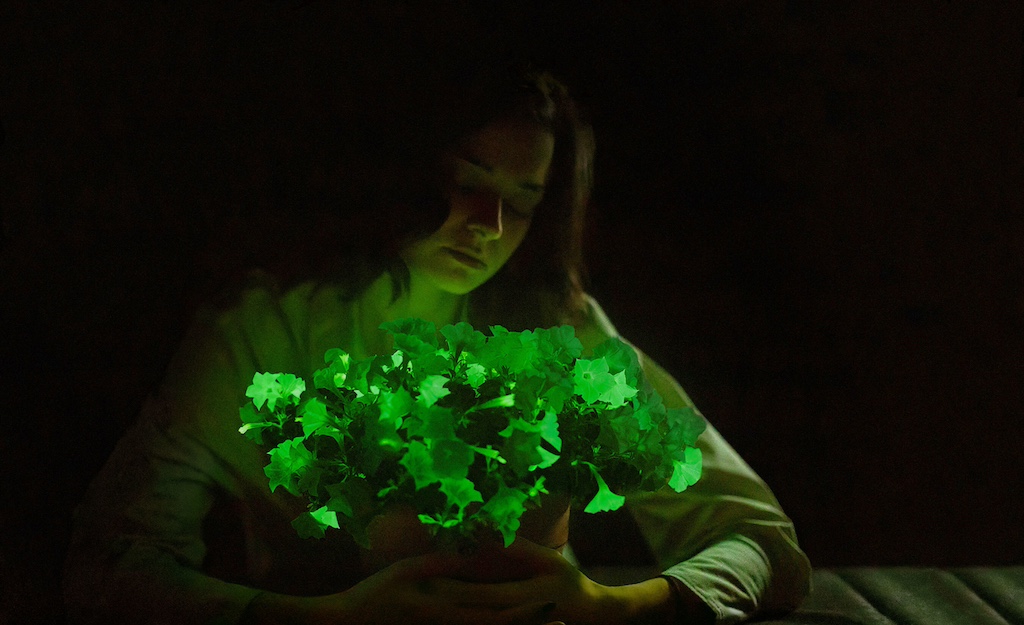
Still, the seeds of this science have already been sown. Magicpen Bio is, in fact, not the first in the field. In 2025, another Chinese team at South China Agricultural University injected phosphor particles into succulents, resulting in shorter-lived but brighter lights that can recharge via sunlight or LEDs, as published in Matter journal. And in the US, Light Bio has built on work by Massachusetts Institute of Technology (MIT) researchers to produce what it claims are “the world’s first naturally glowing plants,” in the shape of so-called “Firefly Petunias” that use fungal genetics to illuminate indoor and outdoor nooks.
Bioluminescent plants then are already with us, and will likely be seen in installations and attractions coming soon, prompting questions, in Helmi’s words, over “whether urban nature should be engineered for spectacle, or protected in its existing, complex form. True sustainability”, he notes, “often lies in working with natural systems, not rewriting them.”