

UK’s biggest low-cost airline has urged travellers to “book now” to stay ahead of potential airfare rises, driven by the ongoing conflict in the Middle East and strikes on energy infrastructure that have sent oil prices soaring over the past three weeks.
Since the outbreak began, prices have risen sharply from below $100 per barrel on 28 February to around $119-$125 today. Some analysts are warning of prices reaching $150 if the Strait of Hormuz remains blocked, while Iranian officials have explicitly warned the market to “get ready” for oil at $200 a barrel. Airspace closures and strikes targeting airports have rerouted traffic across already congested corridors, pushing up costs and, ultimately, fares.
Global average jet fuel prices rose +82.8% MoM – Bloomberg pic.twitter.com/YXl0X4byIn
— Energy Headline News (@OilHeadlineNews) March 17, 2026
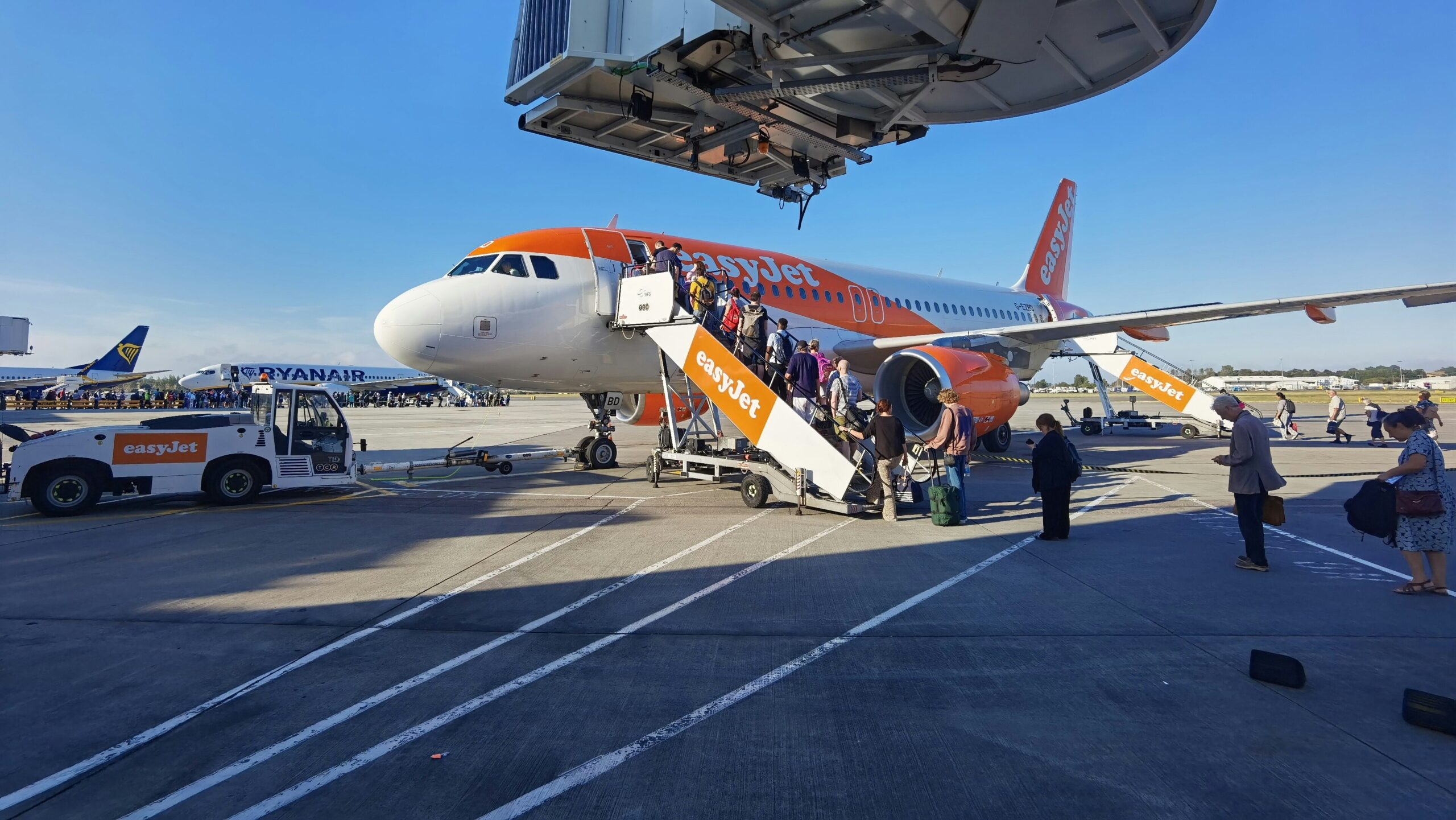
EasyJet’s chief executive, Kenton Jarvis, has advised passengers to secure tickets while airlines are still partially shielded from fuel volatility. Like many European carriers, easyJet relies on hedging, a mechanism designed to protect both airlines and consumers from sudden price spikes.
In an interview with The Telegraph, Jarvis said, “the hedges will drop off, and the longer prices remain high, the more you will have to start covering your position”. Therefore, he advises passengers to “book as early as possible”.
“My expectation is that prices will go up”, he added.
“The industry has no choice. We make about £7 per seat, so if fuel prices increase by £10, we have to address that.”
He was more reassuring on supply in the short-term range, saying there were no issues for now, while cautioning that the situation could change if the conflict drags on. “I’m confident that we’re all good for a week or two. I’m probably confident that we’re good for three weeks. But am I confident over four weeks? Nobody’s telling me ‘don’t worry about it’ halfway into May.”
Speaking at an Airlines for Europe event in Brussels, Ryanair CEO Michael O’Leary said he did not foresee any imminent cancellations or fuel disruptions. “It’s hard to imagine the US and Israel maintaining this level of attrition for more than another five or six weeks. It’s hard to say whether the regime will survive… but none of us knows”, he said, adding that he could not speculate about the third quarter.
“If the Strait of Hormuz remains closed, oil prices will stay high and this will inevitably lead to higher fares.”
Carsten Spohr, chief executive of the Lufthansa Group, offered a broader perspective, explaining that “before airlines run out of fuel, many other parts of the global economy will be short of fuel”. He added that aviation uses only a small proportion of the world’s fuel. “We will see petrol stations running out before there is any effect on aviation.”
For now, fares are expected to remain relatively stable for much of the summer, cushioned by existing hedging positions. However, this window may be narrow.
Online, reactions have been mixed. Some travellers have welcomed the warning as pragmatic, while others have accused airlines of creating a sense of urgency in order to stimulate bookings at a time when demand remains fragile and hesitation is growing.
As Greg Carlstrom, The Economist’s Middle East correspondent, noted, even a swift end to the conflict would not bring immediate relief. Restarting oil production, repositioning tankers, reopening LNG facilities and stabilising shipping routes could take months. In the meantime, supply chains will remain misaligned, insurers will remain cautious, and key transit routes such as the Strait of Hormuz will remain uncertain.
In other words, even the most optimistic scenario will be delayed.