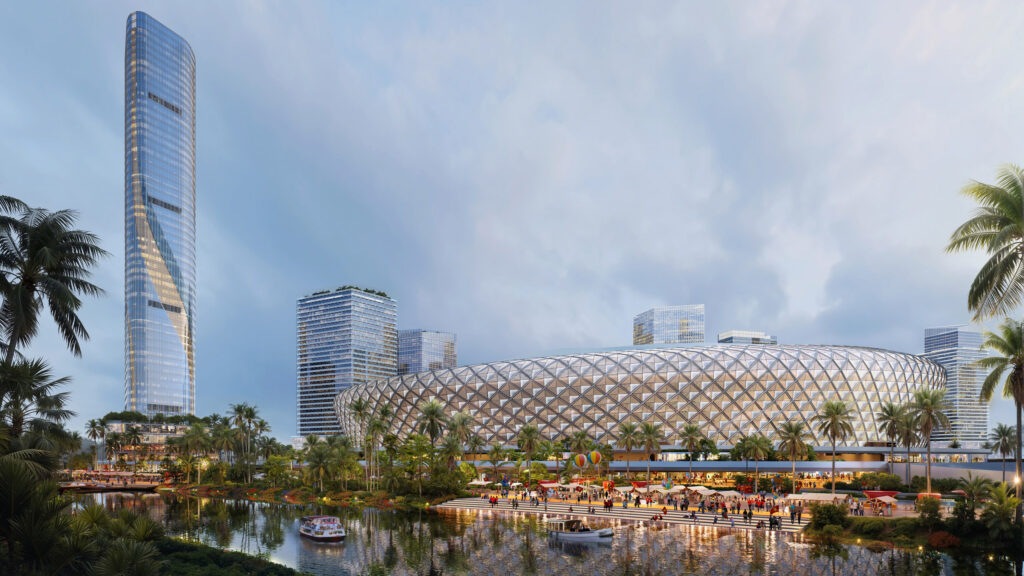
Zaha Hadid Architects (ZHA), in collaboration with Bureau Cube Partner, has revealed their newest project for Alta Bank in Belgrade, Serbia. The 35-storey skyscraper, set to become the bank’s new headquarters, is conceived as a mixed-use development, combining residential units and office space, but also retail and dining areas.
In a statement, ZHA notes that the design of the new Alta Tower is defined by the bank’s core values of “stability, security and resilience” and aspires to “provide a future-proof base of operations supporting 21st century working patterns in an evolving business ecosystem that brings people together and fosters collaboration”.
The tower will be situated in Block 32 of the modern part of the city, also known as the New Belgrade, adjacent to the Merkator Shopping Centre and within walking distance of Ušće Park. The complex is conveniently integrated with the city’s public transport infrastructure, including plans for the new Merkator metro station nearby.

The bank’s offices will be primarily located on the lower and podium levels, while the residential units, situated on the upper floors of the tower, will offer views of the Danube and the Sava rivers, beyond Ušće, as well as Belgrade’s older city centre. The top executive floors of the skyscraper are designated for executive offices and amenities for the bank, with terraces offering panoramic views.
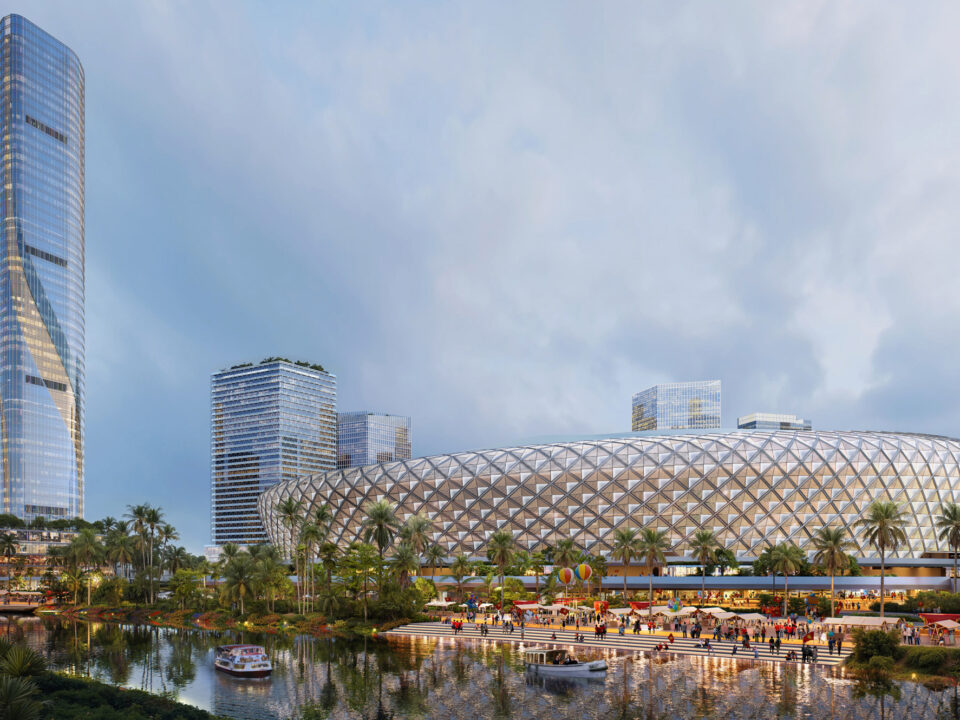
Adjacent to the main tower, a smaller secondary building will provide additional office space for rent, along with expanded facilities for Alta Bank. A landscaped plaza will frame the base of this lower structure, around which cafés, shops, and restaurants will be integrated. The pedestrianised public plaza is intended as a “civic hub for residents, office workers and visitors, as well as the many students and academics of the new University Centre” nearby, explained ZHA.

The architect’s firm’s signature is immediately recognisable in the tower’s fluid geometry, sculptural elegance, and sense of movement, a composition that seems to blur the boundaries between structure and sky.
Always ahead of its time and attuned to the city’s mild continental climate, the project reflects ZHA’s ongoing commitment to optimising sustainability by applying passive environmental strategies. Natural ventilation is integrated throughout the tower and podium, allowing fresh air movement.

The spiralling vertical louvres or ‘fins’ wrap around the façade to reduce solar heat while creating a subtle interplay between opacity and transparency that accentuates the tower’s fluid composition. The design prioritises lightness, transparency, and rhythm with floor-to-ceiling glass panels and recessed balconies that interact with sunlight to create a shifting pattern of reflections and shadows throughout the day.
ZHA also emphasises local procurement, and materials and systems used will be sourced within Serbia to support sustainability and the local economy.
This is not the first collaboration between the two firms, which already won the proposal for the new Nikola Tesla Museum in Belgrade to transform a historic paper mill into a cultural centre to honour Tesla’s scientific achievements.