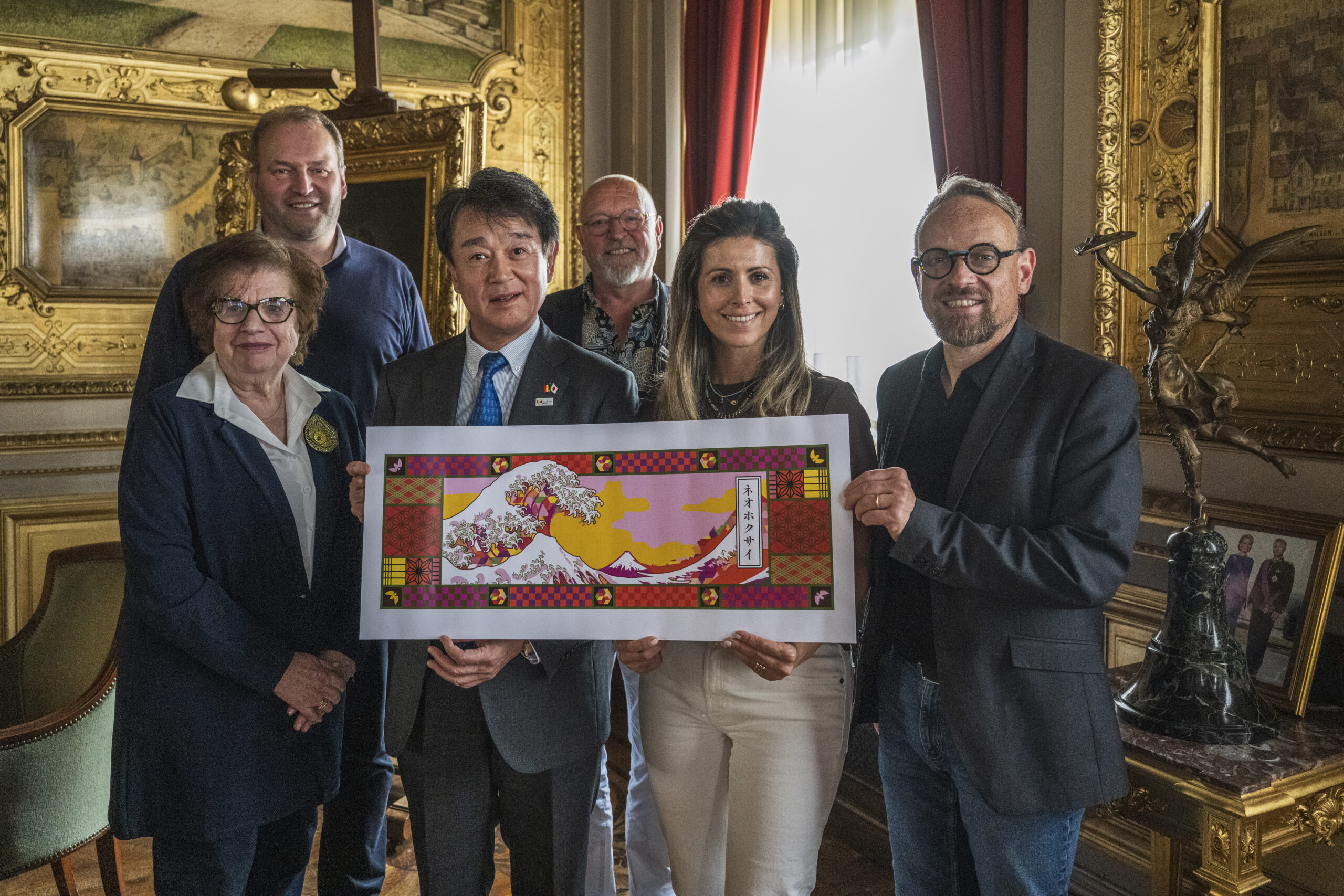



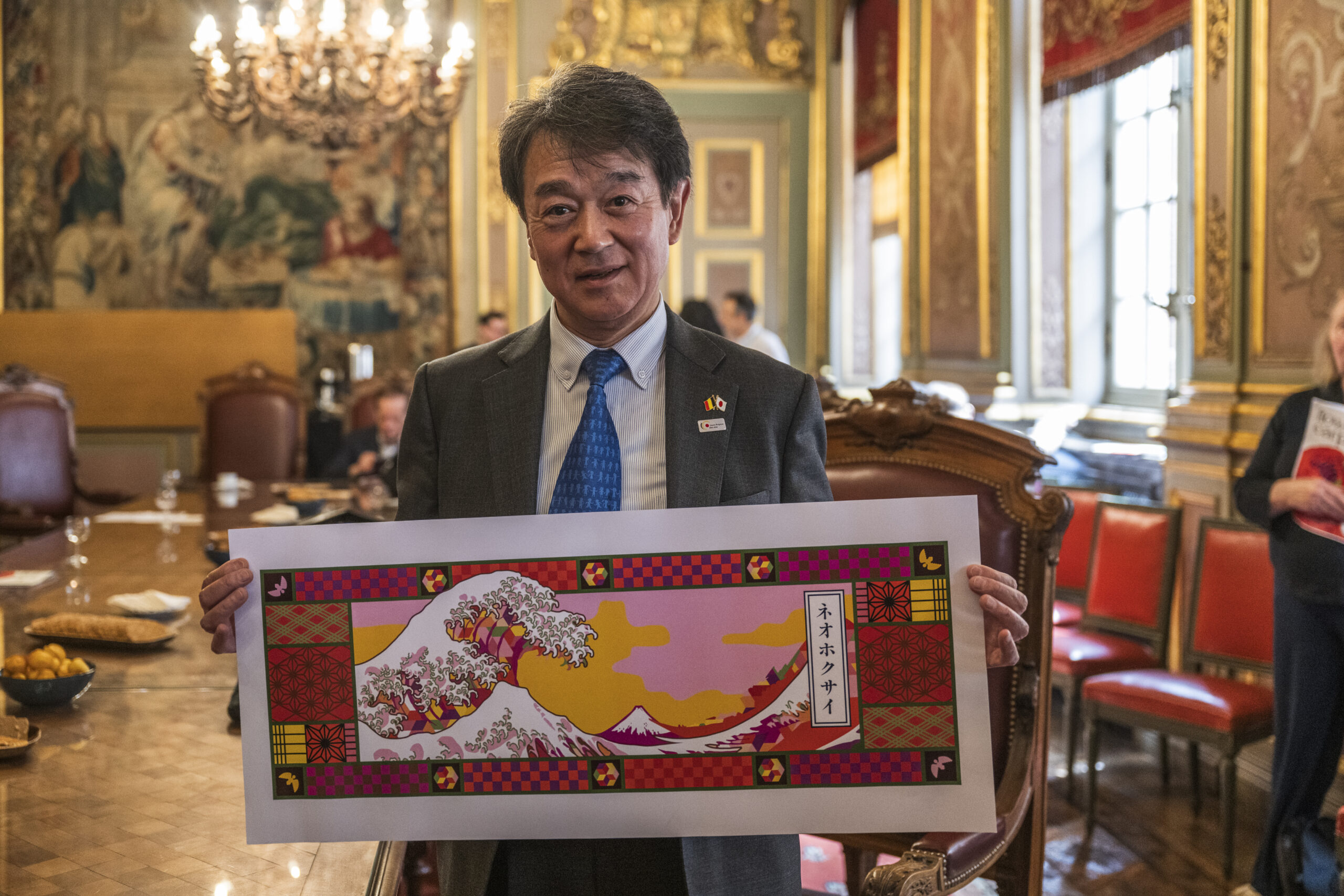
Brussels has unveiled the design for this year’s famous Flower Carpet, which will once again transform the Grand-Place into a vast floral artwork from 13 to 16 August. This year’s edition celebrates 160 years of diplomatic relations between Belgium and Japan, with a new rendition of Katsushika Hokusai’s iconic The Great Wave off Kanagawa.
Created in the early 1830s as part of his renowned Thirty-six Views of Mount Fuji series, the woodblock print is one of the most recognisable works of Japanese art in the world.
This year’s floral composition will cover about 1,300 square metres in Brussels’ UNESCO-listed Grand-Place.
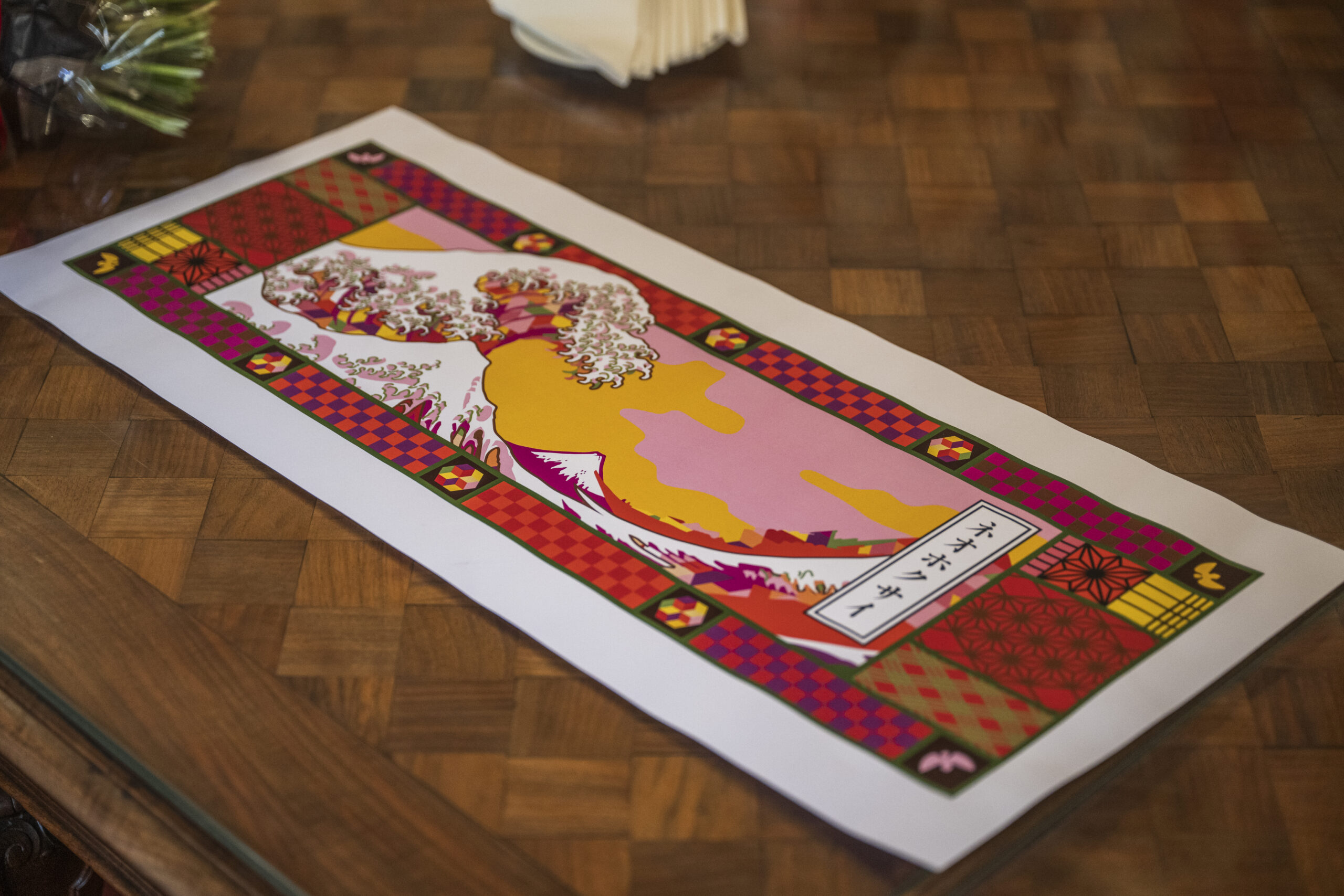
Japanese contemporary artist Hiro Sugiyama will participate in the creation of the carpet alongside his Tokyo-based artistic collective Enlightenment, which blends pop culture with contemporary Japanese aesthetics. Sugiyama explained that their reinterpretation of Hokusai’s famous wave aims to “connect past and future, Japanese culture and contemporary art”.
Japan’s ambassador to Belgium, Takeshi Osuga, highlighted the symbolic role that flowers play in both Japan and Belgium.
“The love of flowers is a universal language. In both Japan and Belgium, flowers hold a special place in our cultural and social lives,” he said.
It is the second collaboration between Belgium and Japan for the Flower Carpet. In 2016, the Grand-Place was transformed into a giant, Japanese-inspired landscape featuring traditional motifs, birds, koi fish, and the beauty of nature, in celebration of 150 years of friendship between the two countries.
Alongside the Grand-Place installation, Brussels will unveil a second floral carpet for the first time. Located at the Brussels Stock Exchange, this one will pay tribute to hops and Belgium’s brewing heritage.
The tradition of the Flower Carpet dates back to 1971, when the first floral display was created on the Grand-Place by landscape architect Etienne Stautemas. Since 1986, the event has been held every two years. Historic photographs from the first edition show smaller floral compositions than today’s monumental creations, which have grown progressively in scale and complexity over the decades.
For decades, the carpets were primarily made using begonias, Stautemas’ favourite flower and a former symbol of Belgian horticultural expertise. However, the number of begonia growers in Belgium has declined sharply, with only a handful remaining today.
This year, organisers will instead rely largely on dahlias, offering a wider palette of colours and textures. Before construction begins, a full-scale design is traced onto a giant canvas spread across the cobblestones of the Grand-Place, whose guild houses and Gothic Town Hall largely date from the reconstruction of the square following the Great Fire of 1695.
Each flower is carefully inserted into rolls of turf, which are watered throughout the event, particularly during periods of extreme summer heat. The grass beneath can grow by up to five centimetres while the installation is on display.
Visitors will be able to stroll around the Grand-Place throughout the busy 15 August holiday weekend. While the carpet can be admired from ground level, the best panoramic view is traditionally from the balcony of Brussels Town Hall. A live webcam will also broadcast both the construction process and the final result.
Every evening from 9 p.m. to 11 p.m., sound and light shows will illuminate the square.
Tickets for access to the Town Hall balcony are available online. Visitors will be admitted from 2:00 pm to 6:00 pm on 13 August and from 10:00 am to 10:00 pm on the following days.