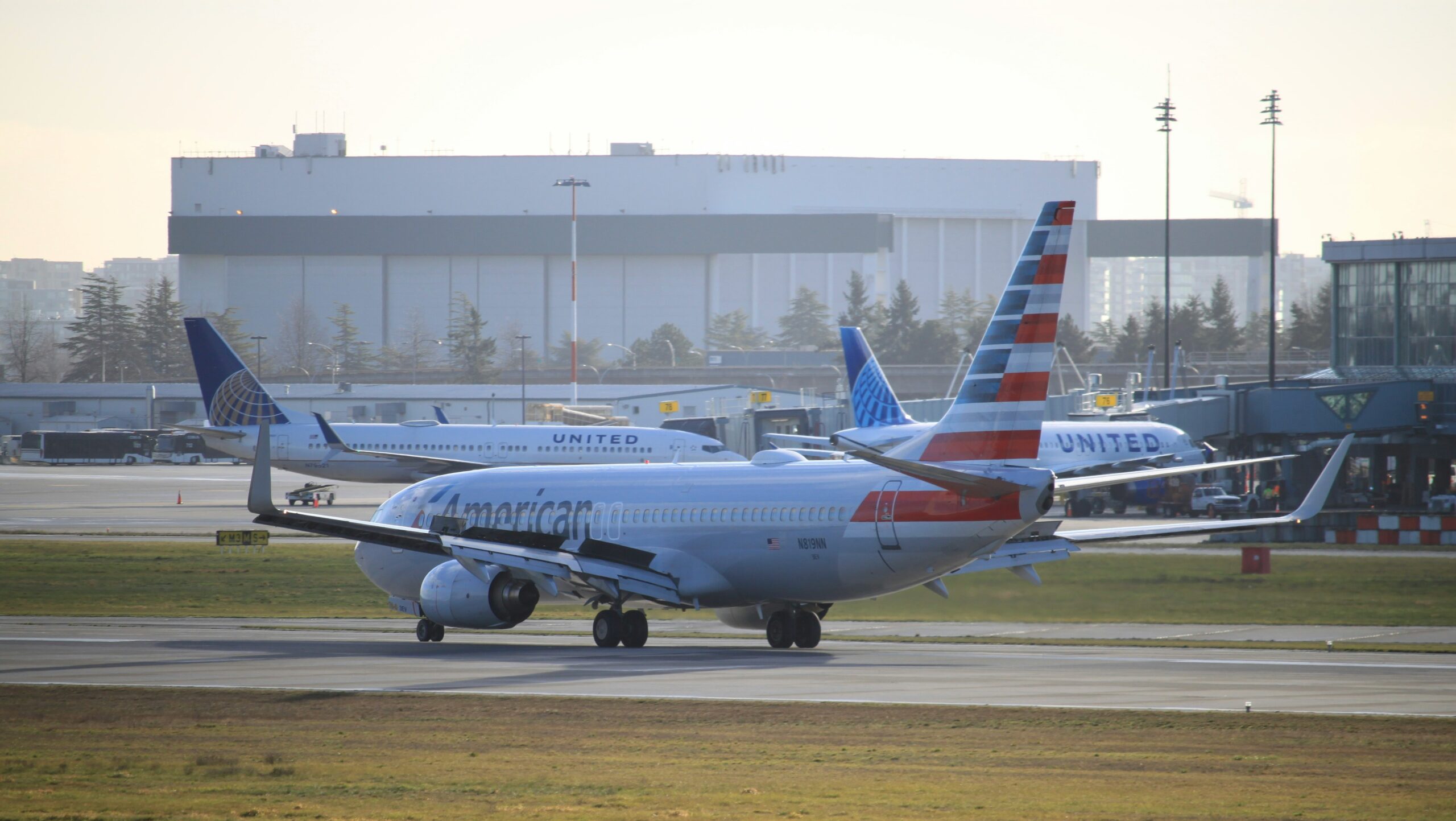



Air travel in the United States descended into turmoil on Sunday, with more than 10,000 flights delayed and over 3,200 cancelled, marking the most severe day of disruption since the government shutdown began over a month ago. The latest wave of cancellations follows the Federal Aviation Administration’s (FAA) decision to impose a 10% reduction in air traffic across 40 major airports in response to critical staffing shortages.
According to the flight tracking platform FlightAware, by 10:00 pm Eastern Time on Sunday, more than 10,000 flights within, into or out of the United States had been delayed. Airports from New York to Los Angeles faced cascading disruptions, with airlines struggling to adjust schedules amid reduced air traffic control capacity. The figures represent the highest level of disruption since the government-mandated flight cuts came into effect on Friday.
Many controllers have been working unpaid and six-day weeks since the shutdown began on 1 October. FAA officials warned that the cuts would remain in place “as long as necessary to ensure safety.”
.@USDOT has many responsibilities, but our number one job is safety.
— Secretary Sean Duffy (@SecDuffy) November 7, 2025
This isn’t about politics – it’s about assessing the data and alleviating building risk in the system as controllers continue working without pay.
It’s safe to fly today, tomorrow, and the day after because… pic.twitter.com/YRrq5sdy4T
A system under strain
Transportation Secretary Sean Duffy said on Sunday that if the shutdown continues, flight operations could be reduced to a “trickle” by the end of the month. “Our system is resilient, but not invincible,” he told CNN. “We are already seeing significant strain on our most critical infrastructure.”
Duffy also confirmed that 12 air traffic control towers across the country were currently facing acute staffing shortages. The FAA estimates that it is operating between 1,000 and 2,000 controllers short of full capacity. “I used to have four controllers retire a day before the shutdown,” Duffy said. “Now up to 20 a day are retiring.”
The situation is particularly concerning as the busy Thanksgiving travel period approaches, with passenger volumes expected to reach record levels. Analysts warn that the disruptions could snowball into a nationwide logistical crisis if no political resolution is reached soon.
Before the shutdown, an average of 4 controllers retired a day.
— Secretary Sean Duffy (@SecDuffy) November 9, 2025
That number has now jumped to 15 to 20 a day.
It’s pretty simple — when Democrats vote 14 times against controllers getting paid, it’s hard to convince them to stay in the profession.
End the shutdown NOW. pic.twitter.com/7MpQhPnFIO
Airlines brace for prolonged disruption
Major US carriers spent the weekend adjusting operations in real time. Delta Air Lines said it had cancelled more than 560 flights and delayed over 1,200 by late Sunday. The airline noted that additional air traffic control staffing shortages had created a “knock-on effect” throughout its network.
“Cancelling a flight is always a last resort after all options have been exhausted,” Delta said in a statement, adding that it had completed all planned cancellations through Tuesday.
Delta is temporarily reducing flights at 40 US airports to comply with federal directives. All planned FAA-directed flight cancellations through Nov. 11 have been completed.
— Delta (@Delta) November 9, 2025
To check your flight status, please use https://t.co/lVlOjYwO0A or the Fly Delta App, where you can also…
Southwest Airlines, which had already reduced its flight schedule by about 4% across 34 airports, cancelled over 220 flights and delayed nearly 1,800 by Sunday night. United Airlines cut around 200 flights and reported over 1,000 delays. The airline announced plans to cancel an additional 190 flights on Monday and 269 on Tuesday.
Passengers at airports nationwide described scenes of frustration and fatigue. Yet for some, the chaos was met with surprising acceptance. At Denver International Airport, Kat and TJ Leahy from Tampa, Florida, said they were prepared to extend their ski holiday in Breckenridge if their return flight was cancelled. “If we get stuck here, that’s OK,” Kat said. “I’ve got all my stuff, and my boss will understand.”
Others, like traveller Eric Rivard from Minneapolis, experienced few issues. “Everything went smoothly for me,” he said on arrival in Denver. “Actually, better than I had expected.”
Hey there! All Southwest Customers, with travel booked through next Wednesday, November 12, may adjust their travel plans at no cost, or receive a refund if they choose not to travel and cancel their reservation. For more information, please visit our Help Center at the link:…
— Southwest Airlines (@SouthwestAir) November 9, 2025
Political talks resume amid mounting pressure
As disruptions mounted, political negotiations appeared to gain new momentum. Late on Sunday, a group of Senate Democrats reportedly reached an agreement with congressional Republicans and the White House to explore a compromise that could reopen government operations.
It was the first sign in weeks of bipartisan progress toward ending the stalemate that has paralysed federal services and left hundreds of thousands of employees without pay. Aviation unions have repeatedly warned that continued political inaction risks compromising safety.
The FAA’s move to limit air traffic, described last week by Administrator Bryan Bedford as an “extraordinary but necessary step,” has become one of the most visible consequences of the shutdown. Bedford defended the decision, saying, “We are not going to wait for a safety problem to manifest when the early indicators tell us we can act today.”
The US Senate moved forward on a measure aimed at reopening the federal government and ending a now 40-day shutdown that has sidelined federal workers, delayed food aid and snarled air travel https://t.co/ROMubBQQWe pic.twitter.com/1yQ3fgt0Cw
— Reuters (@Reuters) November 10, 2025
Economic ripple effects
The impact on the travel sector is already being felt. Airlines for America, the trade association representing major US carriers, estimated that the economic cost could range between 285 and 580 million dollars per day by the end of the week.
National Economic Council Director Kevin Hassett told CBS’s Face the Nation that the timing could not be worse. “Thanksgiving is one of the busiest travel periods of the year,” he said. “If people are unable or unwilling to travel, we could see a measurable hit to fourth-quarter economic growth.”
Beyond aviation, the wider travel and tourism industry is bracing for losses. Hotels, restaurants, and transport services dependent on air arrivals are likely to experience reduced demand. For international travellers, the ongoing uncertainty may deter trips to or through the United States in the coming weeks.
"You're going to have air travel slow to a trickle." Transportation Sec. Sean Duffy said U.S. flights will significantly reduce heading into the Thanksgiving holiday as long as the government shutdown continues. pic.twitter.com/prsy5A2Yyx
— USA TODAY (@USATODAY) November 9, 2025
Global implications for air travel
Europe’s tourism sector, which relies heavily on transatlantic connectivity, is watching developments closely. Any prolonged disruption in the United States could affect flight schedules between major European hubs such as London Heathrow, Paris Charles de Gaulle, and Frankfurt, and American destinations. Airlines operating on these routes may face delays or cancellations if US airspace remains restricted.
The episode underscores how political gridlock can cascade into global transport networks. For European travellers planning to visit the United States during the winter season, travel experts recommend monitoring airline updates, checking flight statuses frequently, and allowing extra time for connections.