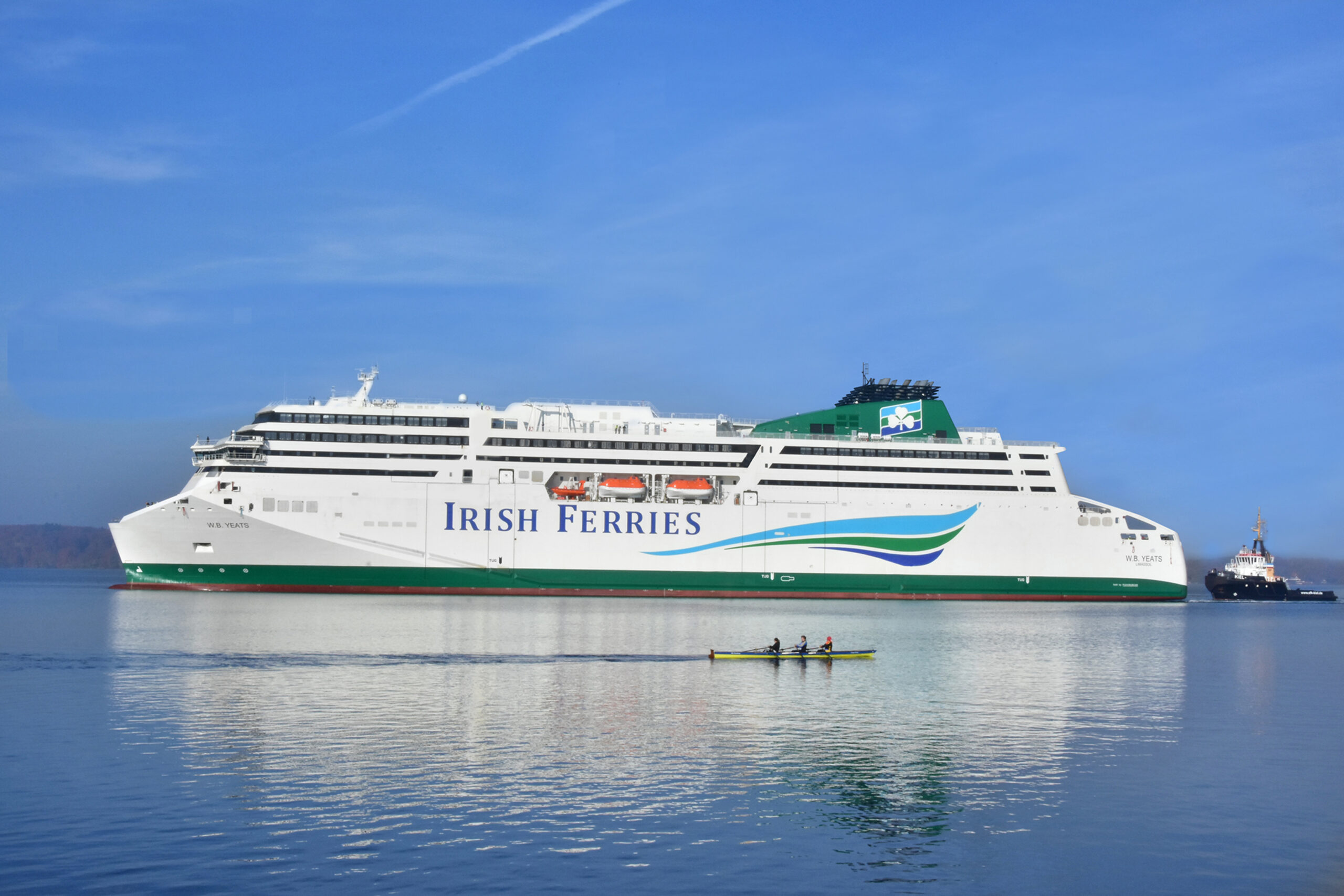



Ferry passengers between Ireland and the United Kingdom are being asked to show passports for the first time in 100 years, as ferry companies follow airlines in introducing passport-only identification.
The move is said to better align ferry company rules with UK Border Force requirements on the “accuracy and integrity of passenger data.” It means that on journeys between the Republic of Ireland and the UK, Channel Islands, and the Isle of Man, passengers will need to present their passport at check-in, regardless of age or nationality. Irish citizens will be able to use passport cards.
The sailings in question are those boarding at the ports of Dublin, Fishguard, Holyhead, Pembroke, and Rosslare with operators including Stena Line and Irish Ferries. Anyone unable to present their passport ID will be refused transit on those routes, ferry firm Stena Line explained in a statement on its website. However, its Northern Ireland services between Belfast and Liverpool, Cairnryan or Heysham remain unaffected.
Meanwhile, Irish Ferries confirmed the same rule would apply to all its passengers, including Irish and UK citizens, from as early as Monday. The operator also warned that passengers who were not British or Irish citizens and were visiting for a short stay of up to six months in the UK may need an Electronic Travel Authorisation (ETA), which allows travel to the UK, Jersey, Guernsey or the Isle of Man for up to six months.
🚨New passport requirements Irish Sea🚨
— Irish Ferries (@Irish_Ferries) August 26, 2026
From 28 September 2026, all passengers, including Irish and British citizens, travelling between the Republic of Ireland and Britain (both directions) will be required to carry a valid passport.
This is to ensure compliance with UK Border… pic.twitter.com/bWsIR7cgeT
Highlighting the change on social media channels, an Irish Foreign Ministry statement urged travellers to “check the requirements of their carrier before travel and ensure they have the necessary documentation with them.”
Before now, passengers could rely on other forms of ID, like driving licences and national identity cards, and some may have already booked or planned trips without having the newly necessary passport ID in place.
Critics have pointed out that the new passport rule is effectively a breach of long-standing Common Travel Area (CTA) open-border arrangements between the United Kingdom, Ireland, the Isle of Man, and the Channel Islands (Jersey and Guernsey).
The timeline for the new rule is also under fire, after being brought into effect at short notice, at a time when wait times for Irish passports are long. The situation, commentators say, could lead to some travellers having to postpone or miss out on travel.
The impact is not only on future bookings, but is already being seen, according to some stakeholders. Tour operators have already reported complaints, including one who told the BBC there had been cancellations due to the new rule.